State Key Laboratory of Plant Genomics and National Center for Plant Gene Research, Institute of Genetics and Developmental Biology, Chinese Academy of Sciences, Beijing, 100101, China.
University of Chinese Academy of Sciences, Beijing, 100049, China.
Cell Res. 2018 Apr;28(4):448-461. doi: 10.1038/s41422-018-0024-8. Epub 2018 Mar 14.
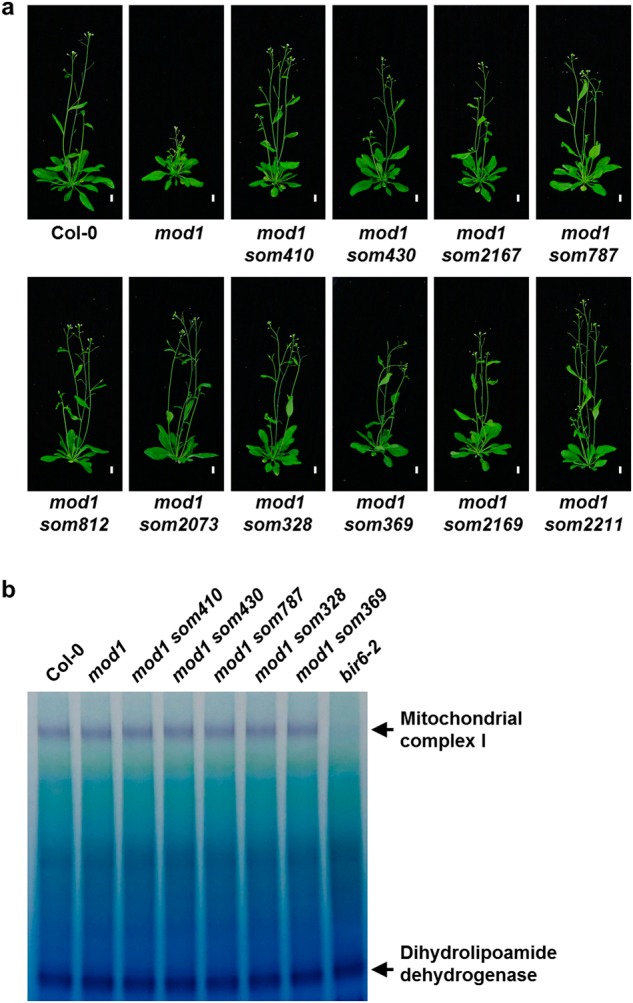
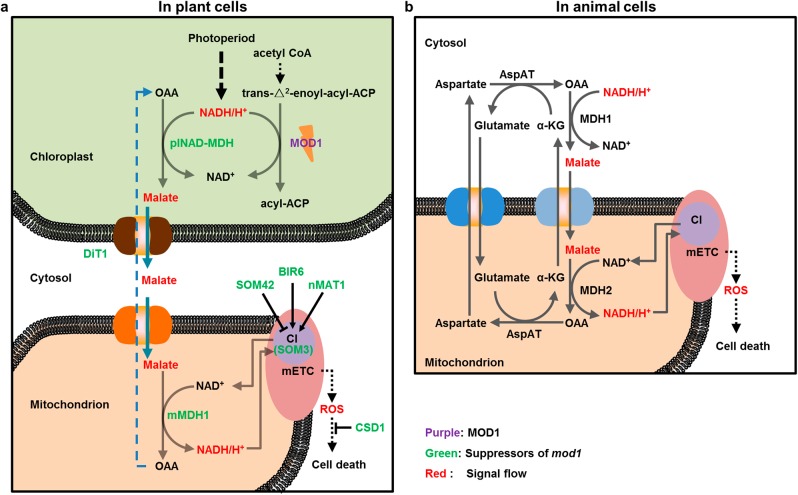
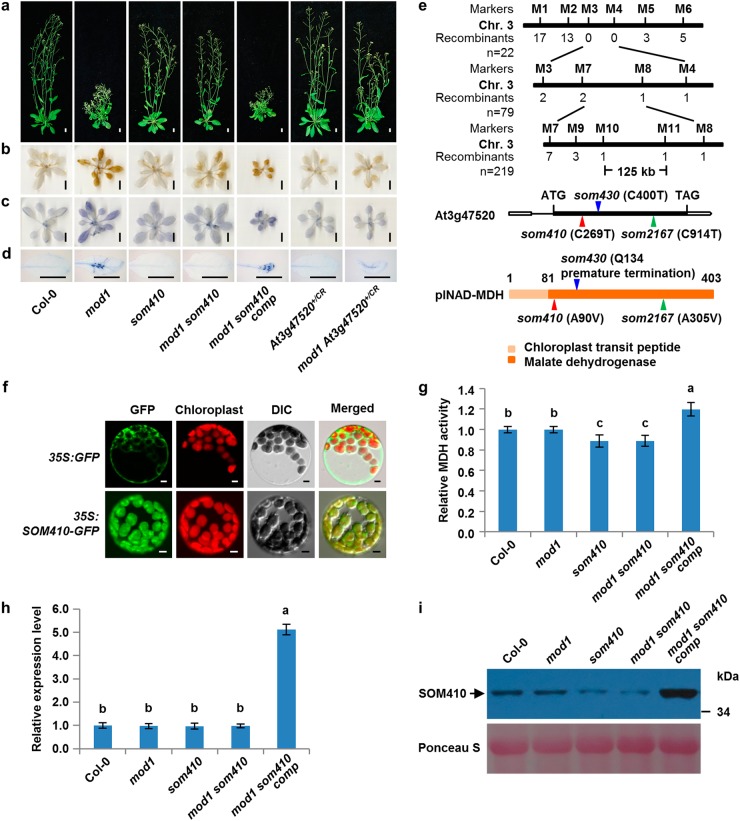
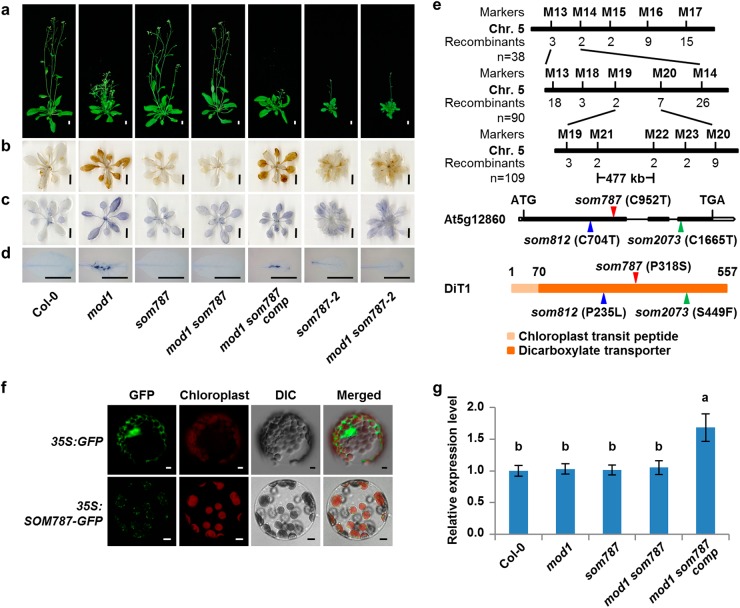
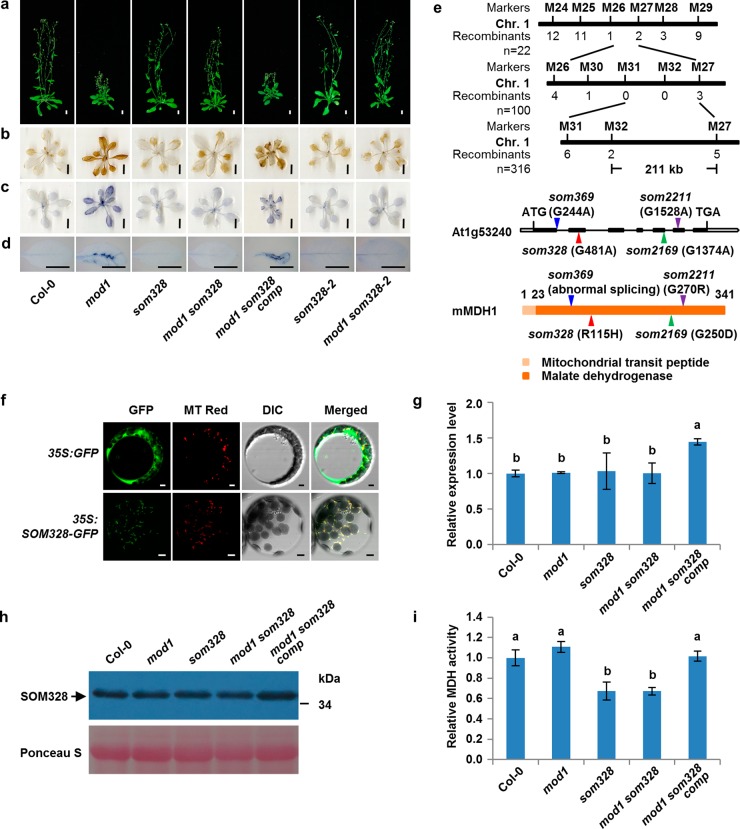
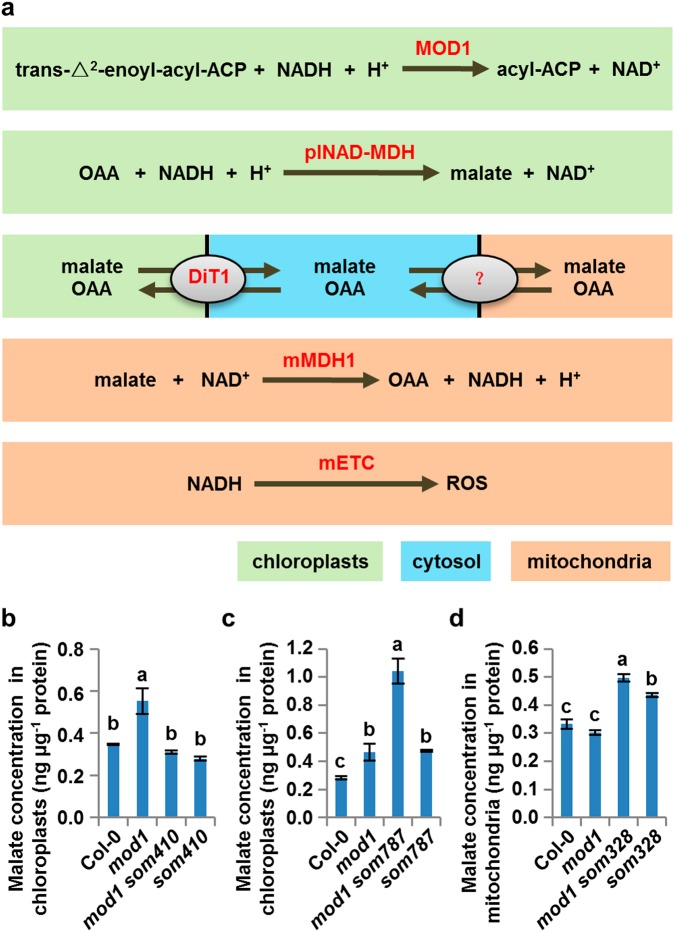
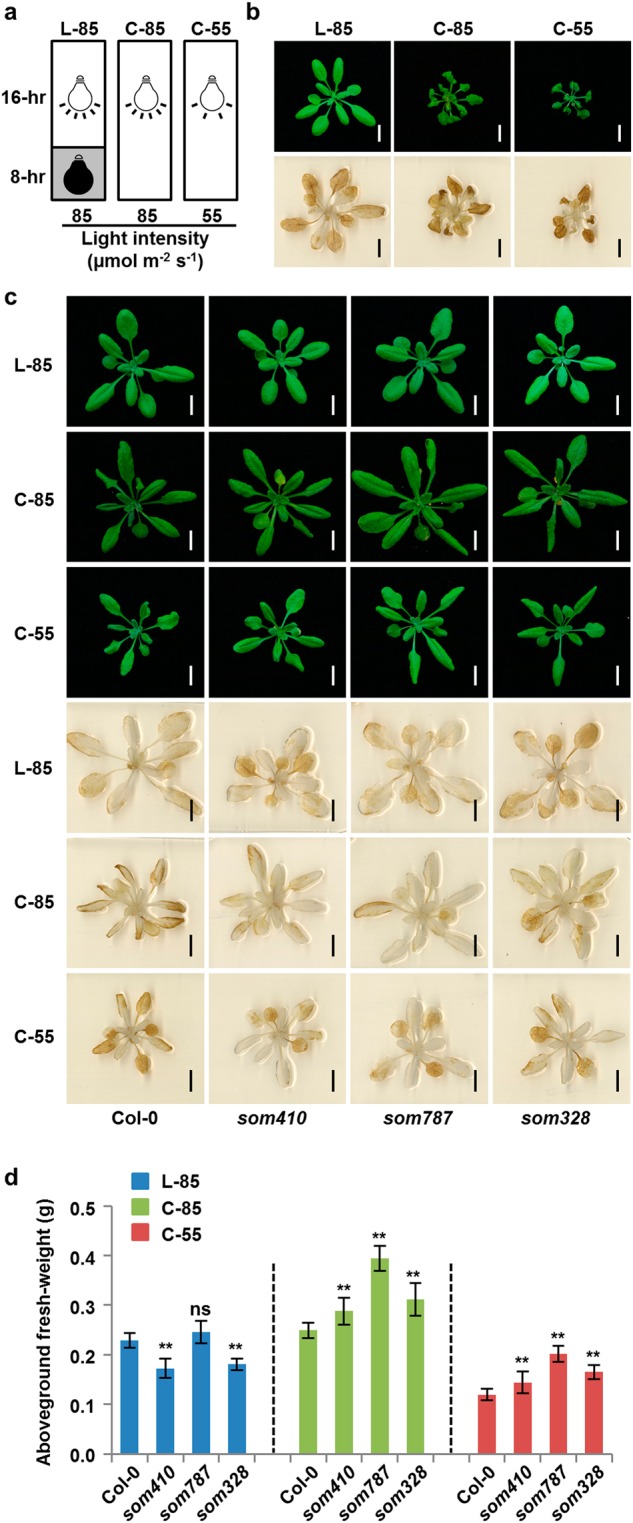
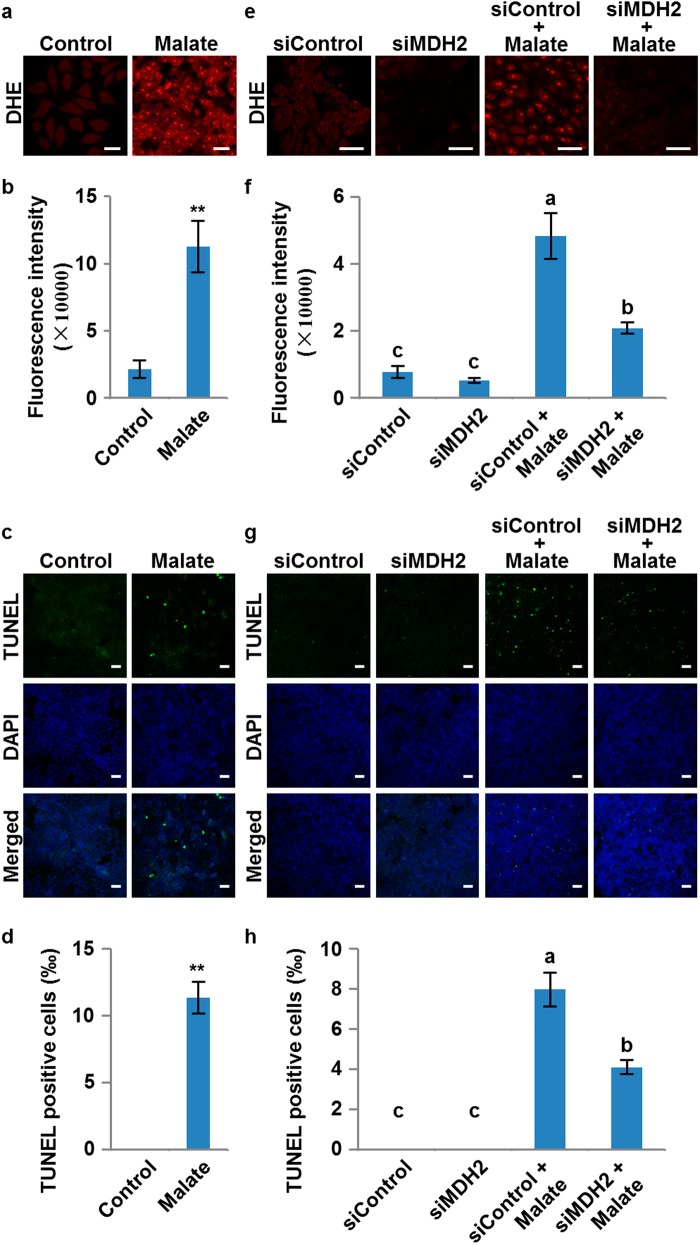
Programmed cell death (PCD) is a fundamental biological process. Deficiency in MOSAIC DEATH 1 (MOD1), a plastid-localized enoyl-ACP reductase, leads to the accumulation of reactive oxygen species (ROS) and PCD, which can be suppressed by mitochondrial complex I mutations, indicating a signal from chloroplasts to mitochondria. However, this signal remains to be elucidated. In this study, through cloning and analyzing a series of mod1 suppressors, we reveal a comprehensive organelle communication pathway that regulates the generation of mitochondrial ROS and triggers PCD. We show that mutations in PLASTIDIAL NAD-DEPENDENT MALATE DEHYDROGENASE (plNAD-MDH), chloroplastic DICARBOXYLATE TRANSPORTER 1 (DiT1) and MITOCHONDRIAL MALATE DEHYDROGENASE 1 (mMDH1) can each rescue the ROS accumulation and PCD phenotypes in mod1, demonstrating a direct communication from chloroplasts to mitochondria via the malate shuttle. Further studies demonstrate that these elements play critical roles in the redox homeostasis and plant growth under different photoperiod conditions. Moreover, we reveal that the ROS level and PCD are significantly increased in malate-treated HeLa cells, which can be dramatically attenuated by knockdown of the human gene MDH2, an ortholog of Arabidopsis mMDH1. These results uncover a conserved malate-induced PCD pathway in plant and animal systems, revolutionizing our understanding of the communication between organelles.
程序性细胞死亡(PCD)是一种基本的生物学过程。质体定位的烯酰-ACP 还原酶 MOSAIC DEATH 1(MOD1)的缺乏会导致活性氧(ROS)和 PCD 的积累,而线粒体复合物 I 的突变可以抑制这种积累,表明存在从叶绿体到线粒体的信号。然而,这种信号仍有待阐明。在这项研究中,通过克隆和分析一系列 mod1 抑制子,我们揭示了一个全面的细胞器通讯途径,该途径调节线粒体 ROS 的产生并引发 PCD。我们表明,质体 NAD 依赖性苹果酸脱氢酶(plNAD-MDH)、质体二羧酸转运蛋白 1(DiT1)和线粒体苹果酸脱氢酶 1(mMDH1)的突变都可以分别挽救 mod1 中的 ROS 积累和 PCD 表型,表明通过苹果酸穿梭从叶绿体直接到线粒体的通讯。进一步的研究表明,这些元素在不同光周期条件下对植物的氧化还原平衡和生长起着关键作用。此外,我们揭示了在添加苹果酸的 HeLa 细胞中 ROS 水平和 PCD 显著增加,而通过敲低人类基因 MDH2(拟南芥 mMDH1 的同源物)可以显著减弱这种增加。这些结果揭示了植物和动物系统中保守的苹果酸诱导的 PCD 途径,彻底改变了我们对细胞器之间通讯的理解。