Perrin Jackie, Bary Aurélie, Vernay Alexandre, Cosson Pierre
Department of Cell Physiology and Metabolism, Faculty of Medicine, University of Geneva, 1 rue Michel Servet, 1211, Geneva 4, Switzerland.
BMC Cell Biol. 2018 Mar 15;19(1):3. doi: 10.1186/s12860-018-0153-4.
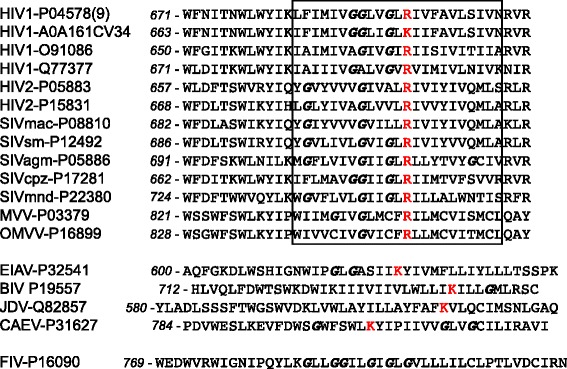
The envelope protein of lentiviruses are type I transmembrane proteins, and their transmembrane domain contains conserved potentially charged residues. This highly unusual feature would be expected to cause endoplasmic reticulum (ER) localization. The aim of this study was to determine by which means the HIV-1 Env protein is transported to the cell surface although its transmembrane domain contains a conserved arginine residue.
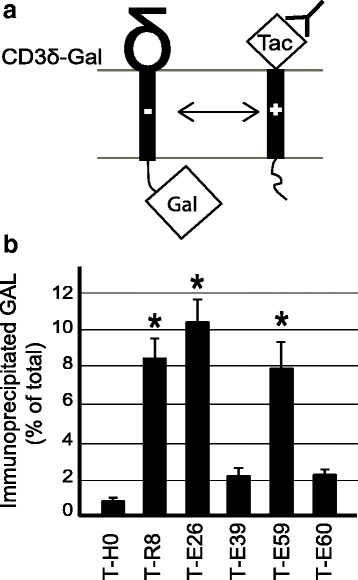
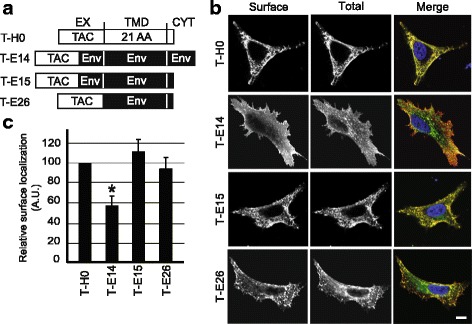
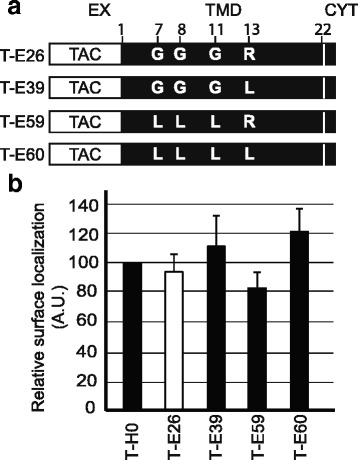
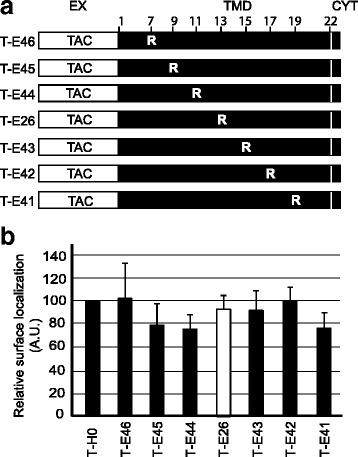
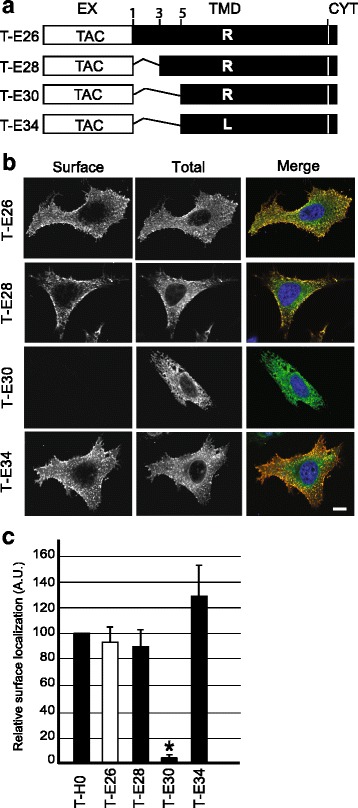
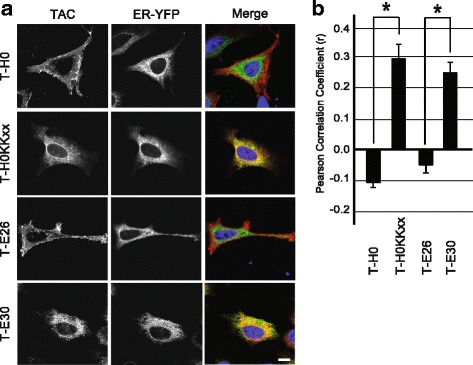
We expressed various chimeric proteins and analyzed the influence of their transmembrane domain on their intracellular localization. The transmembrane domain of the HIV-1 Env protein does not cause ER retention. This is not due to the presence of conserved glycine residues, or to the position of the arginine residue, but to the length of the transmembrane domain. A shortened version of the Env transmembrane domain causes arginine-dependent ER targeting. Remarkably, the transmembrane domain of the HIV-1 Env protein, although it does not confer ER retention, interacts efficiently with negatively charged residues in the membrane.
These results suggest that the intrinsic properties of the HIV-1 Env transmembrane domain allow the protein to escape ER-retention mechanisms, while maintaining its ability to interact with cellular proteins and to influence cellular physiology.
慢病毒的包膜蛋白是I型跨膜蛋白,其跨膜结构域含有保守的潜在带电残基。这种极不寻常的特征预计会导致内质网(ER)定位。本研究的目的是确定尽管HIV-1包膜蛋白的跨膜结构域含有保守的精氨酸残基,但它是通过何种方式转运到细胞表面的。
我们表达了各种嵌合蛋白,并分析了它们的跨膜结构域对其细胞内定位的影响。HIV-1包膜蛋白的跨膜结构域不会导致内质网滞留。这不是由于保守甘氨酸残基的存在,也不是由于精氨酸残基的位置,而是由于跨膜结构域的长度。Env跨膜结构域的缩短版本会导致精氨酸依赖性内质网靶向。值得注意的是,HIV-1包膜蛋白的跨膜结构域虽然不会导致内质网滞留,但能与膜中的带负电荷残基有效相互作用。
这些结果表明,HIV-1包膜蛋白跨膜结构域的内在特性使该蛋白能够逃避内质网滞留机制,同时保持其与细胞蛋白相互作用并影响细胞生理学的能力。