Department of Medical Biochemistry, Amsterdam Cardiovascular Sciences, Academic Medical Center, University of Amsterdam, the Netherlands.
Department of Cell and Chemical Biology, Leiden University Medical Center, the Netherlands.
Haematologica. 2018 Jun;103(6):1073-1082. doi: 10.3324/haematol.2017.183087. Epub 2018 Mar 15.
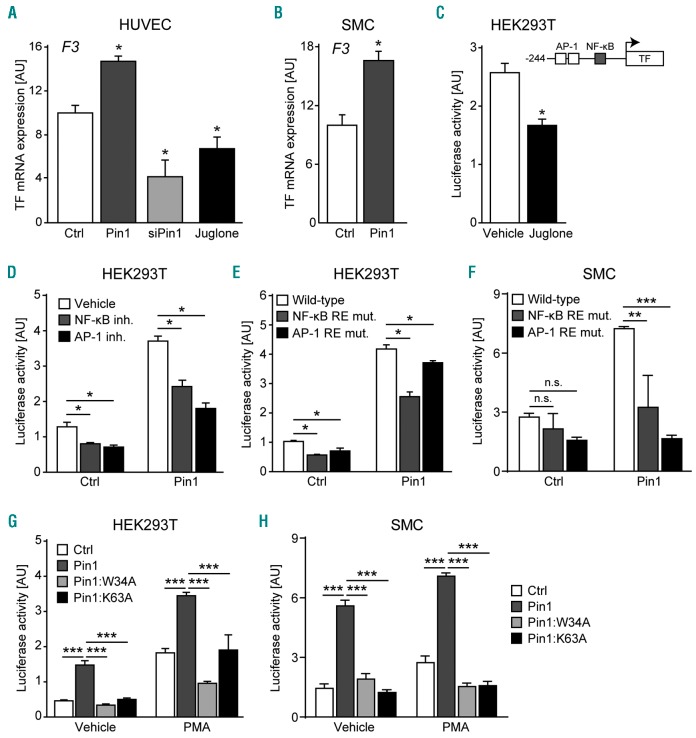
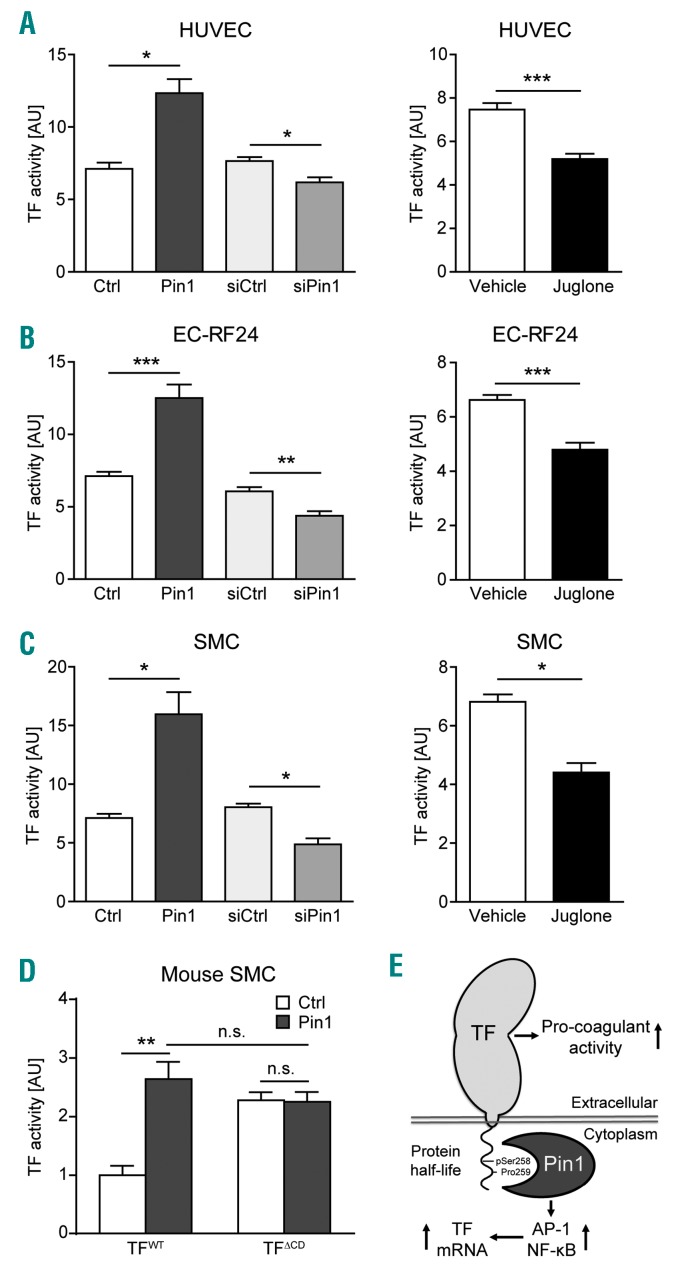
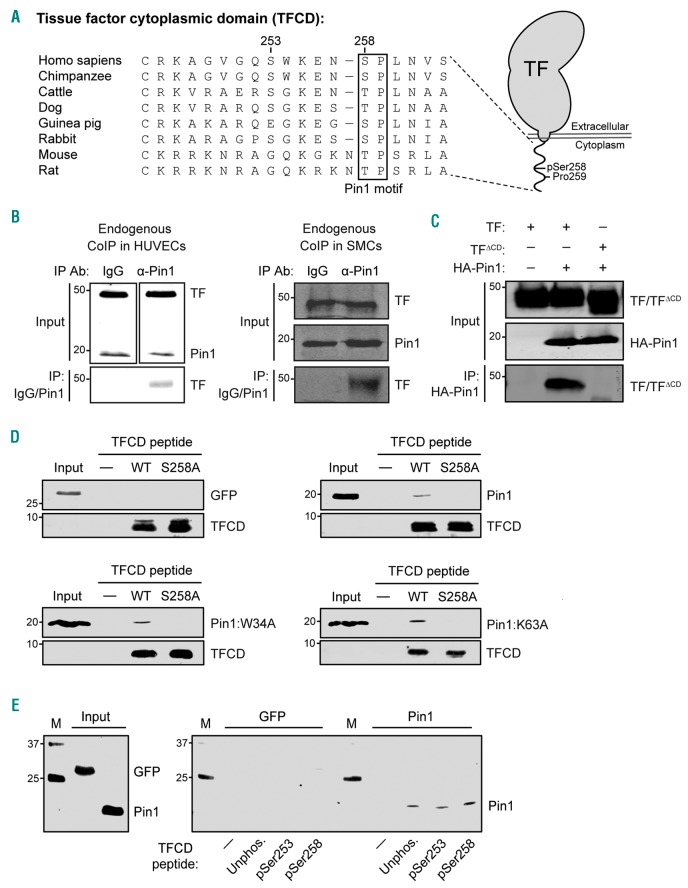
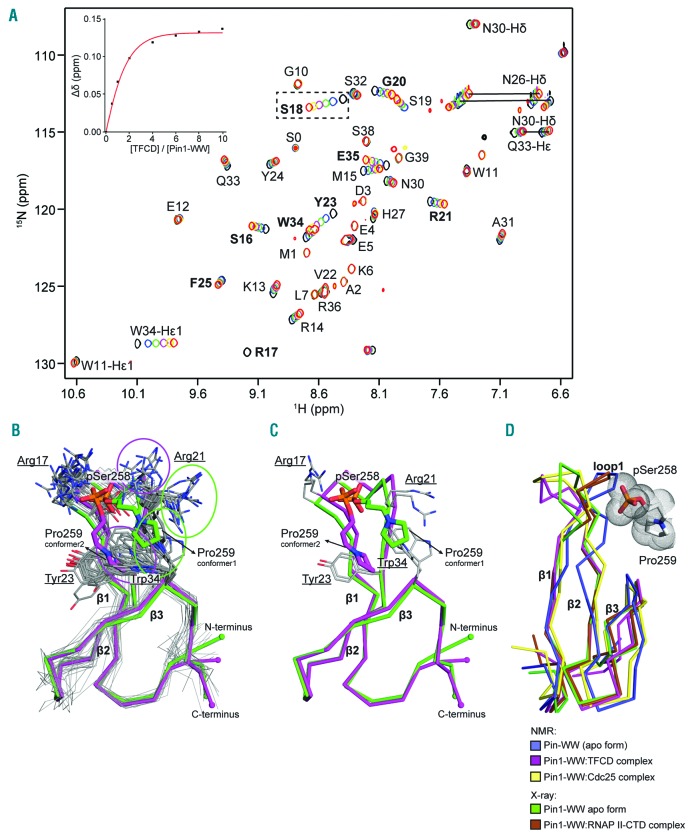
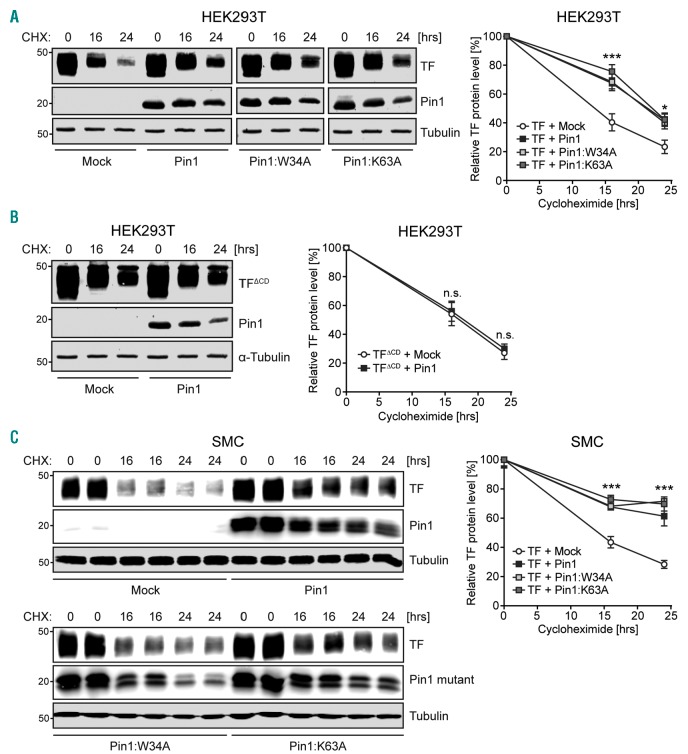
Tissue Factor is a cell-surface glycoprotein expressed in various cells of the vasculature and is the principal regulator of the blood coagulation cascade and hemostasis. Notably, aberrant expression of Tissue Factor is associated with cardiovascular pathologies such as atherosclerosis and thrombosis. Here, we sought to identify factors that regulate Tissue Factor gene expression and activity. Tissue Factor gene expression is regulated by various transcription factors, including activating protein-1 and nuclear factor-κ B. The peptidyl-prolyl isomerase Pin1 is known to modulate the activity of these two transcription factors, and we now show that Pin1 augments Tissue Factor gene expression in both vascular smooth muscle cells and activated endothelial cells activating protein-1 and nuclear factor-κ B signaling. Furthermore, the cytoplasmic domain of Tissue Factor contains a well-conserved phospho-Ser258-Pro259 amino-acid motif recognized by Pin1. Using co-immunoprecipitation and solution nuclear magnetic resonance spectroscopy, we show that the WW-domain of Pin1 directly binds the cytoplasmic domain of Tissue Factor. This interaction occurs the phospho-Ser258-Pro259 sequence in the Tissue Factor cytoplasmic domain and results in increased protein half-life and pro-coagulant activity. Taken together, our results establish Pin1 as an upstream regulator of Tissue Factor-mediated coagulation, thereby opening up new avenues for research into the use of specific Pin1 inhibitors for the treatment of diseases characterized by pathological coagulation, such as thrombosis and atherosclerosis.
组织因子是一种在血管的各种细胞中表达的细胞表面糖蛋白,是血液凝固级联和止血的主要调节剂。值得注意的是,组织因子的异常表达与心血管病理学有关,如动脉粥样硬化和血栓形成。在这里,我们试图确定调节组织因子基因表达和活性的因素。组织因子基因表达受多种转录因子调节,包括激活蛋白-1 和核因子-κB。肽基脯氨酰顺反异构酶 Pin1 已知调节这两种转录因子的活性,我们现在表明 Pin1 增强了血管平滑肌细胞和激活的内皮细胞中组织因子基因的表达,激活蛋白-1 和核因子-κB 信号。此外,组织因子的细胞质结构域包含一个保守的磷酸丝氨酸 258-脯氨酸 259 氨基酸基序,被 Pin1 识别。通过共免疫沉淀和溶液核磁共振波谱,我们表明 Pin1 的 WW 结构域直接与组织因子的细胞质结构域结合。这种相互作用发生在组织因子细胞质结构域的磷酸丝氨酸 258-脯氨酸 259 序列上,导致蛋白半衰期和促凝血活性增加。总之,我们的结果确立了 Pin1 作为组织因子介导的凝血的上游调节剂,从而为研究使用特定的 Pin1 抑制剂治疗以病理性凝血为特征的疾病(如血栓形成和动脉粥样硬化)开辟了新的途径。