Chacko Sujith, Joseph George, Thomson Viji, George Paul, George Oommen, Danda Debashish
Department of Cardiology, Christian Medical College, Vellore, 632004, India.
Department of Rheumatology, Christian Medical College, Vellore, India.
Cardiovasc Intervent Radiol. 2018 Jul;41(7):998-1007. doi: 10.1007/s00270-018-1936-x. Epub 2018 Mar 16.
Use of iodinated contrast agents for angiography in patients with renal insufficiency risks further deterioration of renal function and its adverse sequelae.
To study the effectiveness and safety of carbon dioxide (CO) angiography in guiding percutaneous renal-related interventions in patients with Takayasu arteritis and renal insufficiency.
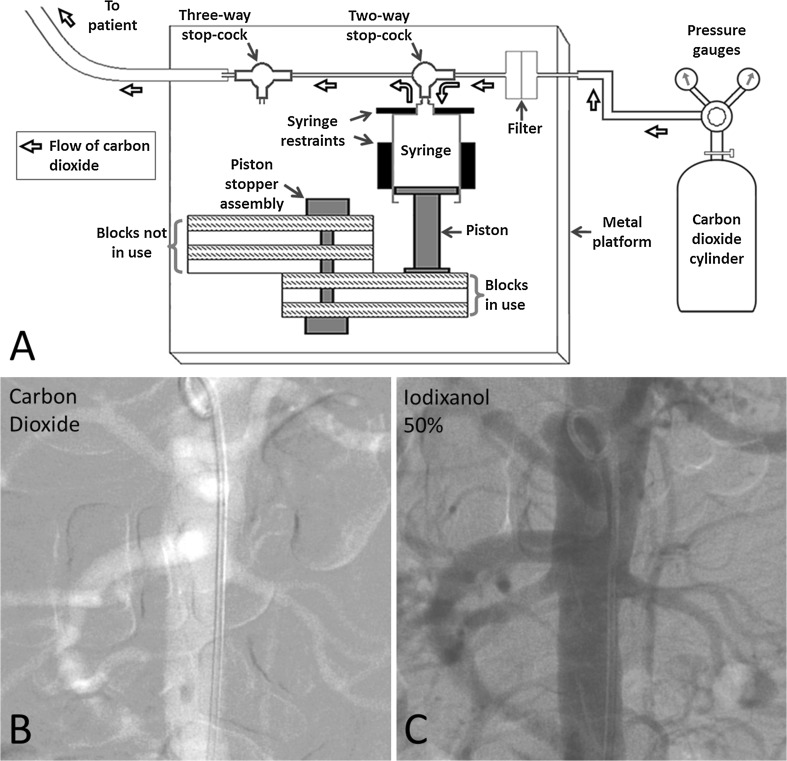
Data on CO angiography-guided interventions were obtained from a 23-year database of 692 Takayasu arteritis patients who underwent percutaneous interventions and were analyzed retrospectively. Follow-up data were also obtained. The CO angiography system used was developed in-house and was pressure-driven.
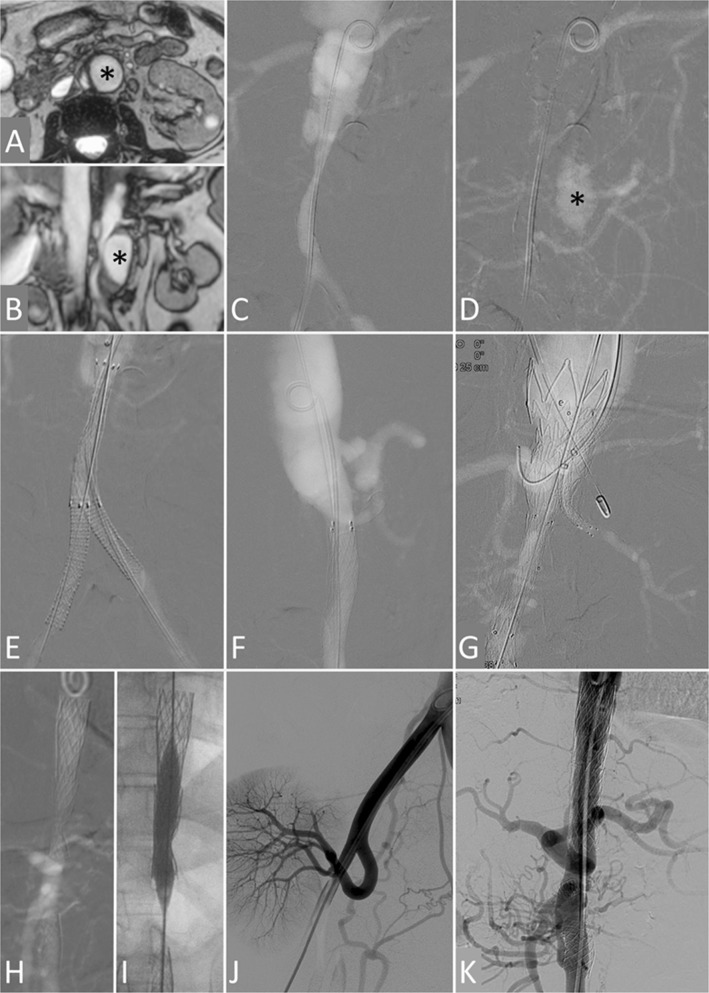
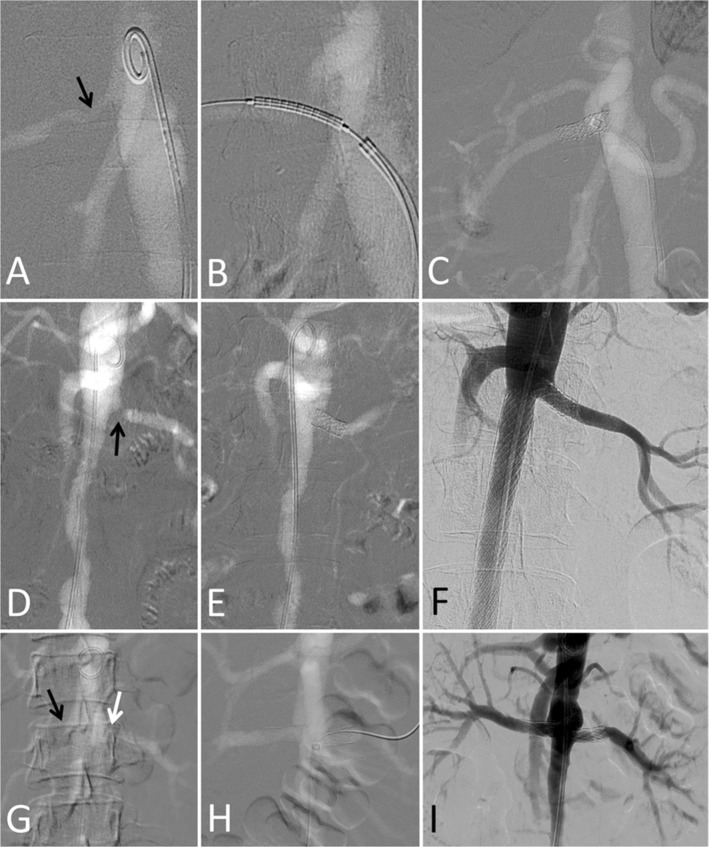
Seven patients (6 female, age 16-59 years, baseline serum creatinine 1.62-4.55 mg/dl, estimated glomerular filtration rate 12.2-36.9 ml/min/1.73 m) underwent CO angiography-guided interventions: five underwent angioplasty or stenting to treat six stenotic/occluded renal arteries, one underwent extensive endovascular repair for spontaneous focal abdominal aortic dissection with false lumen aneurysm and aorto-iliac true lumen narrowing, and one underwent balloon dilatation of previously deployed aortic stents used to treat aortic occlusion at two levels. Follow-up (median 5 years, range 2 months-16 years) was obtained in all patients. All the procedures were successful and resulted in relief of symptoms, better blood pressure control, improvement in left ventricular systolic function and recovery or stabilization of renal function. There were no early or late complications related to CO angiography. Three renal lesions that had restenosis at follow-up were managed successfully by repeat intervention.
CO angiography-guided renal-related interventions are effective and safe in patients with Takayasu arteritis and renal insufficiency; they significantly improve the care of such patients.
肾功能不全患者在血管造影中使用碘化造影剂有导致肾功能进一步恶化及其不良后果的风险。
研究二氧化碳(CO)血管造影在指导大动脉炎合并肾功能不全患者进行经皮肾相关介入治疗中的有效性和安全性。
从一个包含692例接受经皮介入治疗的大动脉炎患者的23年数据库中获取CO血管造影引导下介入治疗的数据,并进行回顾性分析。还获取了随访数据。所使用的CO血管造影系统是自行研发的,由压力驱动。
7例患者(6例女性,年龄16 - 59岁,基线血清肌酐1.62 - 4.55 mg/dl,估计肾小球滤过率12.2 - 36.9 ml/min/1.73 m²)接受了CO血管造影引导下的介入治疗:5例接受血管成形术或支架置入术以治疗6条狭窄/闭塞的肾动脉,1例接受广泛的血管内修复以治疗自发性局灶性腹主动脉夹层伴假腔动脉瘤和主-髂真腔狭窄,1例接受对先前用于治疗两级主动脉闭塞的主动脉支架进行球囊扩张。所有患者均获得随访(中位时间5年,范围2个月 - 16年)。所有手术均成功,症状缓解,血压控制改善,左心室收缩功能改善,肾功能恢复或稳定。未发生与CO血管造影相关的早期或晚期并发症。3例随访时出现再狭窄的肾脏病变通过再次介入成功处理。
CO血管造影引导下的肾相关介入治疗在大动脉炎合并肾功能不全患者中有效且安全;它们显著改善了此类患者的治疗。