Department of Cardiology, Second Affiliated Hospital of Guangzhou Medical University, Guangzhou, China.
Toronto General Research Institute, Division of Cardiovascular Surgery, University Health Network, Toronto, Canada.
Theranostics. 2018 Feb 12;8(7):1766-1781. doi: 10.7150/thno.22788. eCollection 2018.
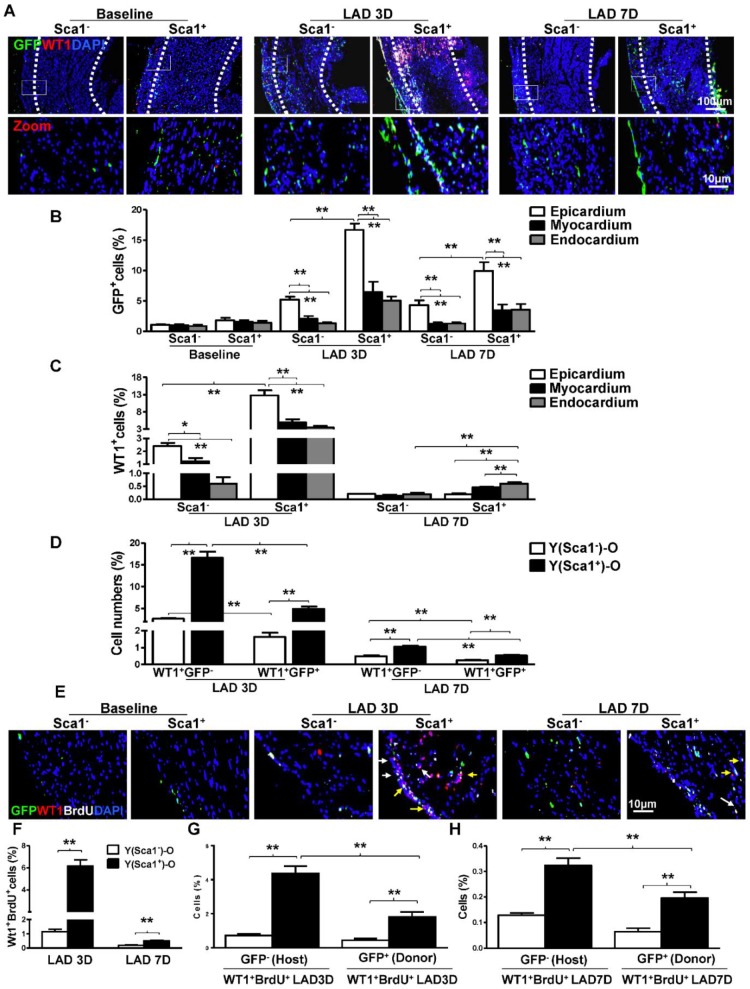
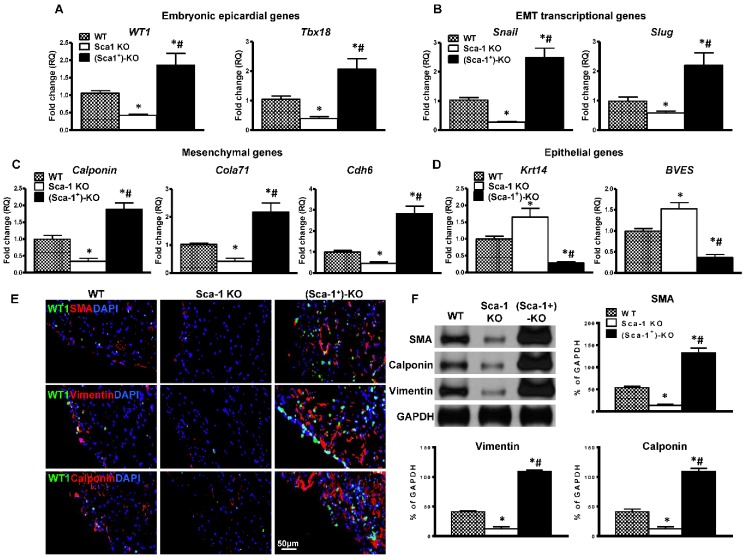
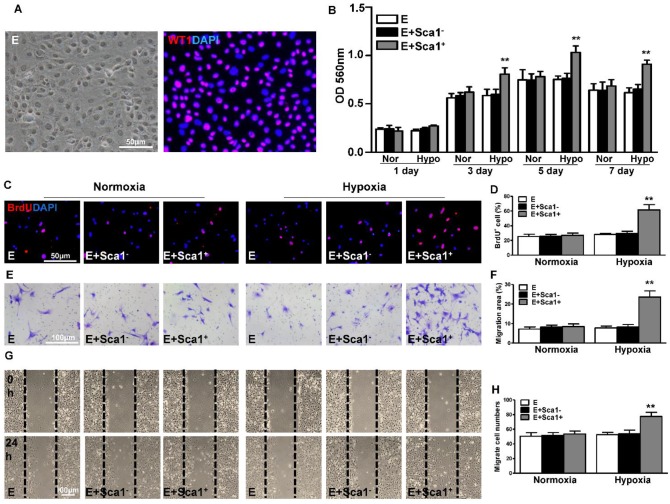
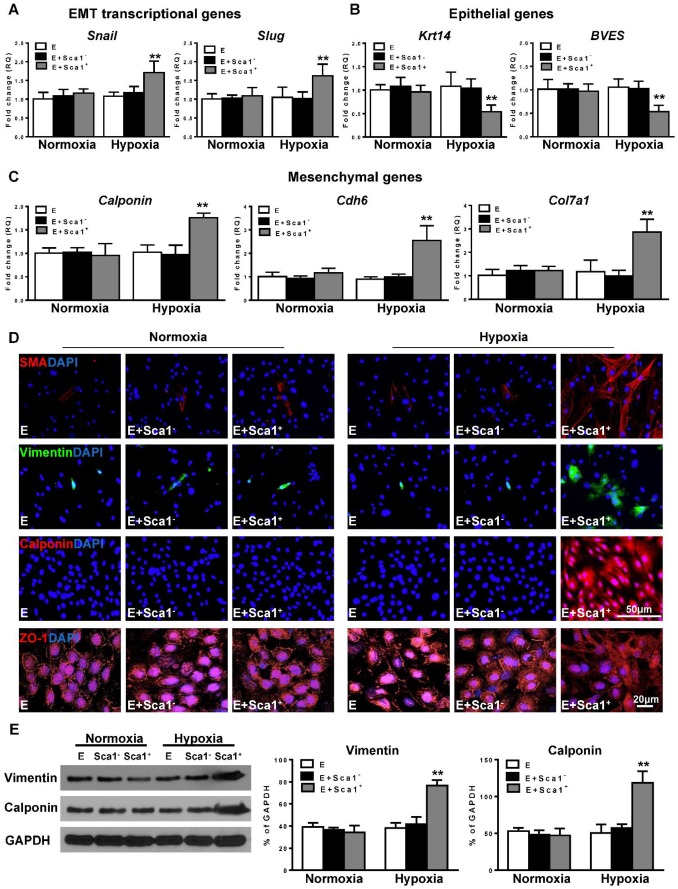
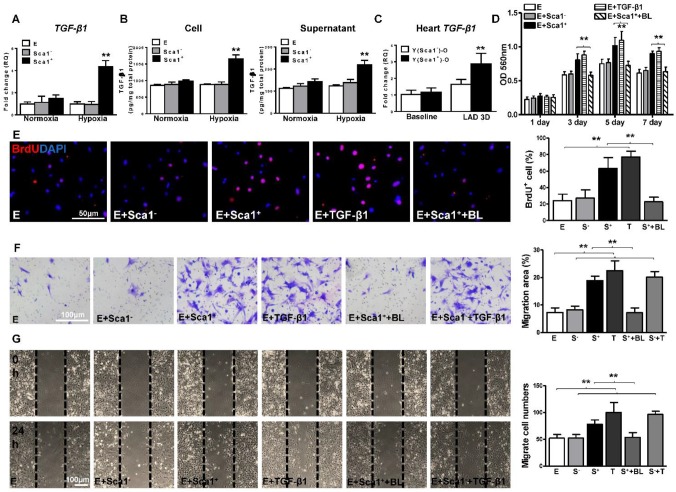
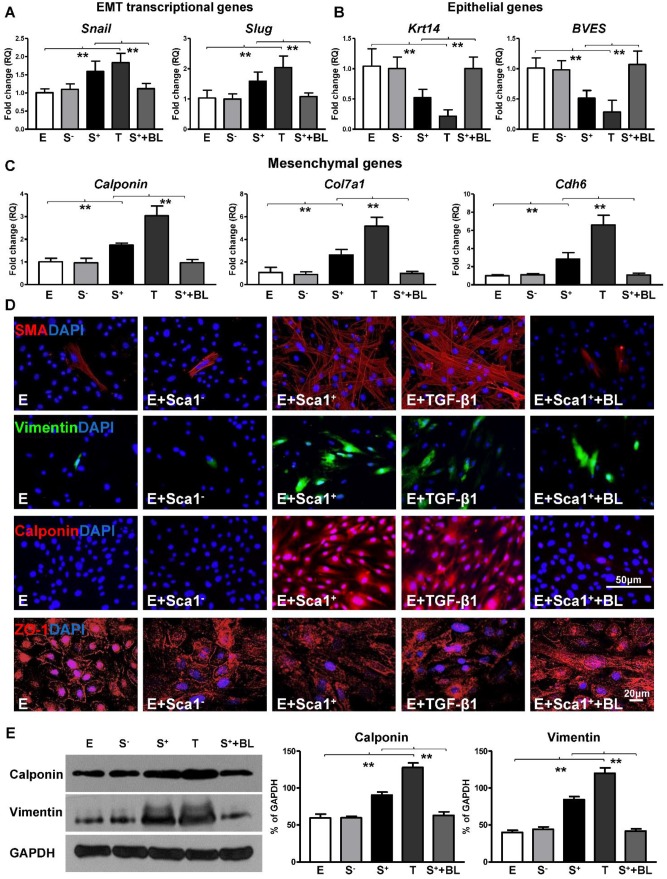
To improve the regenerative capacity of aged individuals, we reconstituted bone marrow (BM) of aged mice with young Sca-1 cells, which repopulated cardiac progenitors and prevented cardiac dysfunction after a myocardial infarction (MI). However, the mechanisms involved were incompletely elucidated. This study aimed to investigate whether young, highly regenerative BM Sca-1 cells exert their cardio-protective effects on the aged heart through reactivation of the epithelial-to-mesenchymal transition (EMT) process. , BM Sca-1 cells were co-cultured with epicardial-derived cells (EPDCs) under hypoxia condition; mRNA and protein levels of EMT genes were measured along with cellular proliferation and migration. , BM Sca-1 or Sca-1 cells from young mice (2-3 months) were transplanted into lethally-irradiated old mice (20-22 months) to generate chimeras. In addition, Sca-1 knockout (KO) mice were reconstituted with wild type (WT) BM Sca-1 cells. The effects of BM Sca-1 cell on EMT reactivation and improvement of cardiac function after MI were evaluated. , BM Sca-1 cells increased EPDC proliferation, migration, and EMT relative to Sca-1 cells and these effects were inhibited by a TGF-β blocker. , more young BM Sca-1 than Sca-1 cells homed to the epicardium and induced greater host EPDC proliferation, migration, and EMT after MI. Furthermore, reconstitution of Sca-1 KO mice with WT Sca-1 cells was associated with the reactivation of EMT and improved cardiac function after MI. Young BM Sca-1 cells improved cardiac regeneration through promoting EPDC proliferation, migration and reactivation of EMT via the TGF-β signaling pathway.
为了提高老年个体的再生能力,我们用年轻的 Sca-1 细胞重建了老年小鼠的骨髓(BM),这些细胞重新 populate 了心脏祖细胞,并预防了心肌梗死(MI)后的心脏功能障碍。然而,其中涉及的机制尚未完全阐明。本研究旨在探讨年轻、高再生能力的 BM Sca-1 细胞是否通过激活上皮-间充质转化(EMT)过程对老年心脏发挥其心脏保护作用。, 在低氧条件下,BM Sca-1 细胞与心外膜来源的细胞(EPDCs)共培养;测量 EMT 基因的 mRNA 和蛋白水平,以及细胞增殖和迁移。, 将来自年轻小鼠(2-3 个月)的 BM Sca-1 或 Sca-1 细胞移植到致死性辐照的老年小鼠(20-22 个月)中以产生嵌合体。此外,用野生型(WT)BM Sca-1 细胞重建 Sca-1 敲除(KO)小鼠。评估 BM Sca-1 细胞对 EMT 再激活和 MI 后心脏功能改善的影响。, BM Sca-1 细胞相对于 Sca-1 细胞增加了 EPDC 的增殖、迁移和 EMT,并且这些作用被 TGF-β 阻断剂抑制。, 与 Sca-1 细胞相比,更多的年轻 BM Sca-1 细胞归巢到心外膜,并在 MI 后诱导更大的宿主 EPDC 增殖、迁移和 EMT。此外,用 WT Sca-1 细胞重建 Sca-1 KO 小鼠与 EMT 的再激活和 MI 后心脏功能的改善相关。, 年轻的 BM Sca-1 细胞通过促进 EPDC 增殖、迁移和 EMT 的 TGF-β 信号通路的再激活来改善心脏再生。