Department of Pharmacology and Pharmacodynamics, Medical University of Lublin, Chodźki 4a St., 20-093, Lublin, Poland.
Department of Physiology, Pomeranian Medical University, Powstańców Wlkp. 72 Av., 70-111, Szczecin, Poland.
Mol Neurobiol. 2018 Nov;55(11):8473-8485. doi: 10.1007/s12035-018-0993-0. Epub 2018 Mar 20.
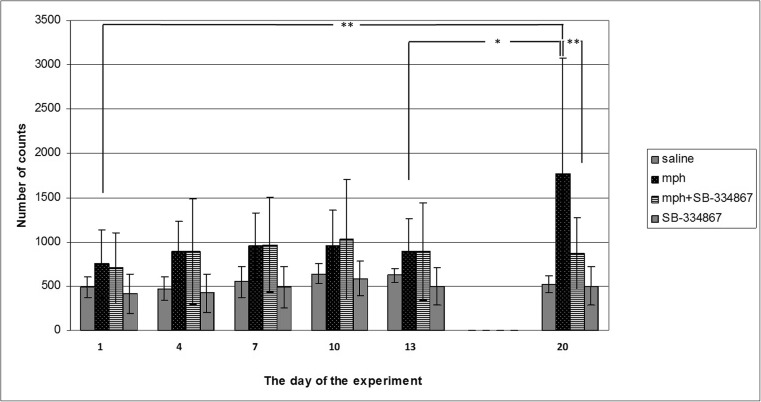
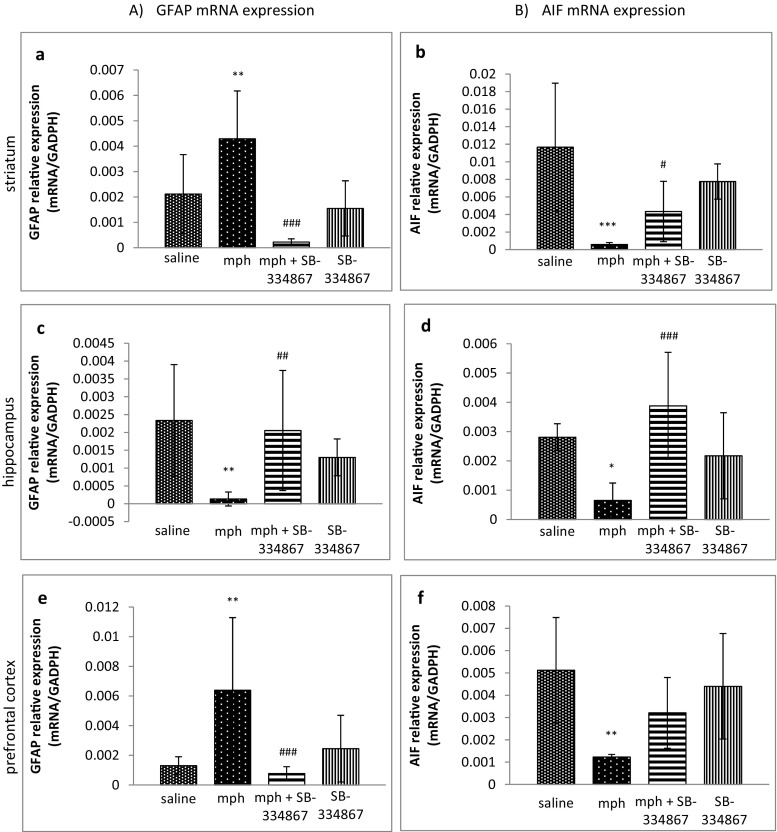
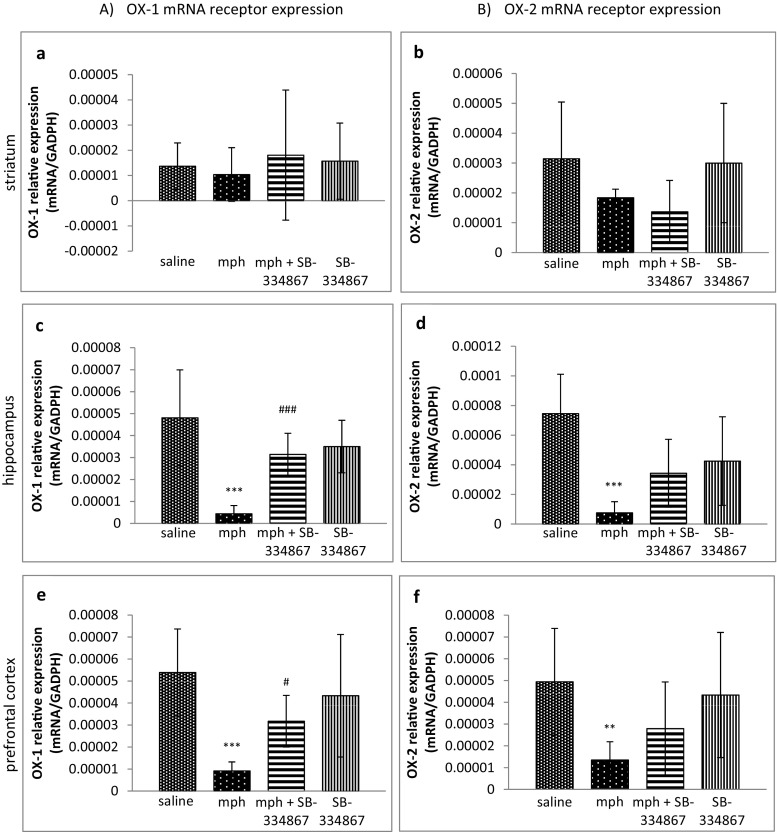
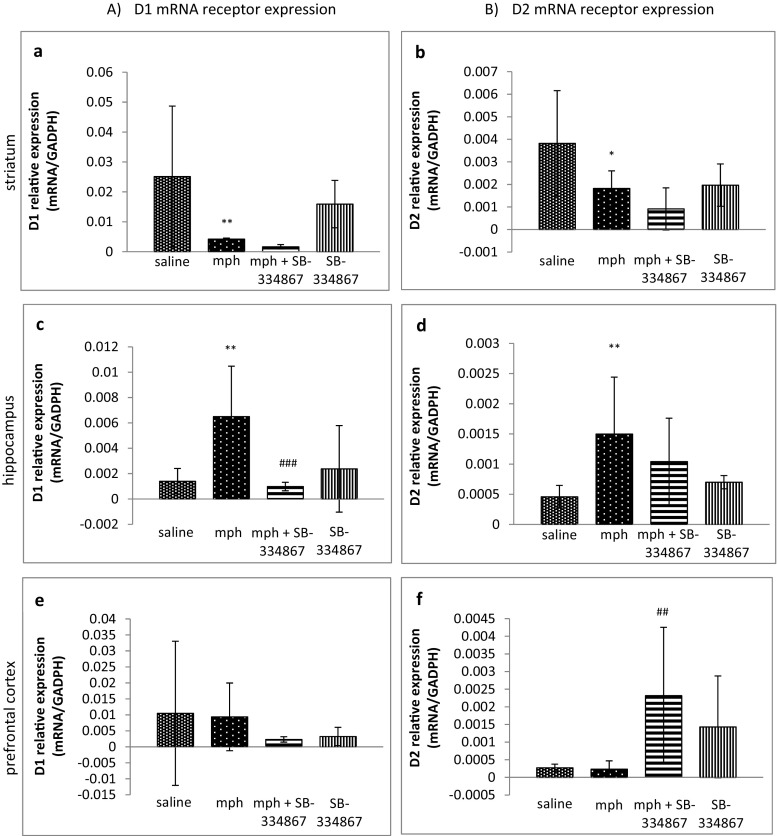
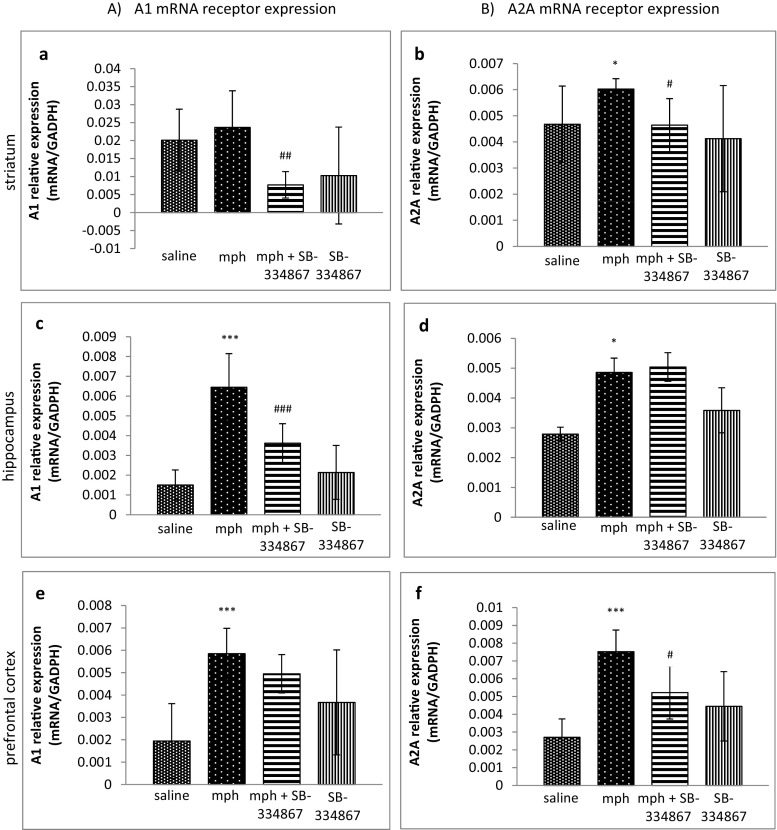
The present study focused upon the role of SB-334867, an orexin-1 receptor antagonist, in the acquisition of morphine-induced sensitization to locomotor activity in mice. Behavioral sensitization is an enhanced systemic reaction to the same dose of an addictive substance, which assumingly increases both the desire for the drug and the risk of relapse to addiction. Morphine-induced sensitization in mice was achieved by sporadic doses (five injections every 3 days) of morphine (10 mg/kg, i.p.), while a challenge dose of morphine (10 mg/kg) was injected 7 days later. In order to assess the impact of orexin system blockade on the acquisition of sensitization, SB-334867 was administered before each morphine injection, except the morphine challenge dose. The locomotor activity test was performed on each day of morphine administration. Brain structures (striatum, hippocampus, and prefrontal cortex) were collected after behavioral tests for molecular experiments in which mRNA expression of orexin, dopamine, and adenosine receptors was explored by the qRT-PCR technique. Additionally, the mRNA expression of markers, such as GFAP and Iba-1, was also analyzed by the same technique. SB-334867 inhibited the acquisition of morphine-induced sensitization to locomotor activity of mice. Significant alterations were observed in mRNA expression of orexin, dopamine, and adenosine receptors and in the expression of GFAP and Iba-1, showing a broad range of interactions in the mesolimbic system among orexin, dopamine, adenosine, and glial cells during behavioral sensitization. Summing up, the orexin system may be an effective measure to inhibit morphine-induced behavioral sensitization.
本研究重点探讨了食欲素-1 受体拮抗剂 SB-334867 在小鼠吗啡诱导的运动活动敏化中的作用。行为敏化是对同一剂量成瘾物质的增强全身反应,假设增加了对药物的渴望和对成瘾复发的风险。通过间歇性给予吗啡(10mg/kg,ip)(五次注射每 3 天一次)来实现小鼠的吗啡诱导敏化,而 7 天后注射挑战剂量的吗啡(10mg/kg)。为了评估食欲素系统阻断对敏化获得的影响,在每次给予吗啡之前给予 SB-334867,除了吗啡挑战剂量。在给予吗啡的每一天都进行运动活动测试。在行为测试后收集脑结构(纹状体、海马体和前额叶皮层),用于通过 qRT-PCR 技术探索食欲素、多巴胺和腺苷受体的 mRNA 表达的分子实验。此外,还通过相同的技术分析 GFAP 和 Iba-1 等标志物的 mRNA 表达。SB-334867 抑制了小鼠吗啡诱导的运动活动敏化的获得。观察到食欲素、多巴胺和腺苷受体的 mRNA 表达以及 GFAP 和 Iba-1 的表达发生了显著变化,表明在行为敏化过程中,中脑边缘系统中食欲素、多巴胺、腺苷和神经胶质细胞之间存在广泛的相互作用。总之,食欲素系统可能是抑制吗啡诱导的行为敏化的有效措施。