Chae Jong-Min, Lee Keun-Oh, Amanov Auezhan
Department of Safety Engineering, Seoul National University of Science and Technology, Seoul 01811, Korea.
Department of Mechanical Engineering, Sun Moon University, Asan 31460, Korea.
Materials (Basel). 2018 Mar 20;11(3):452. doi: 10.3390/ma11030452.
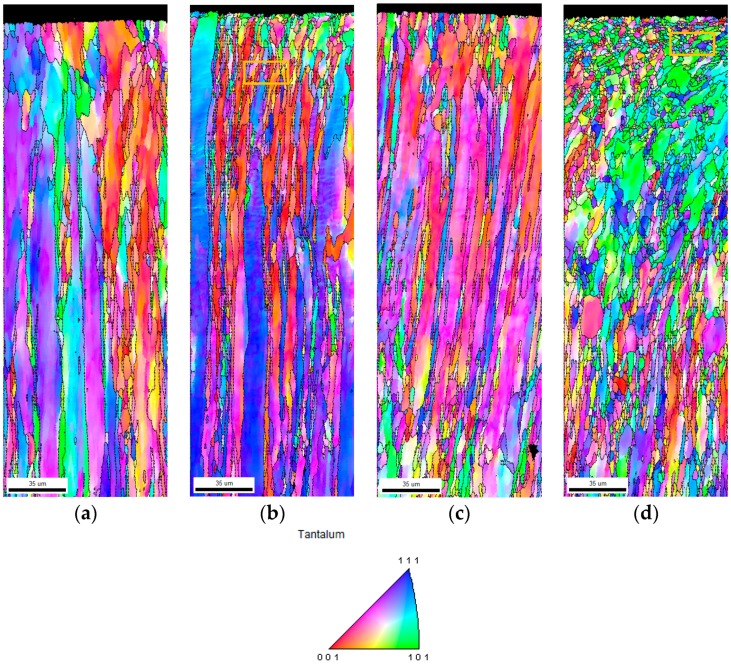
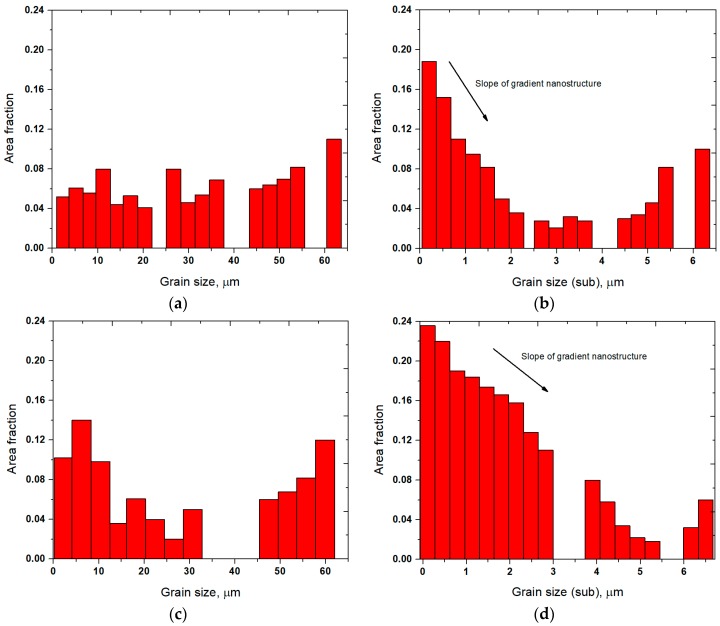
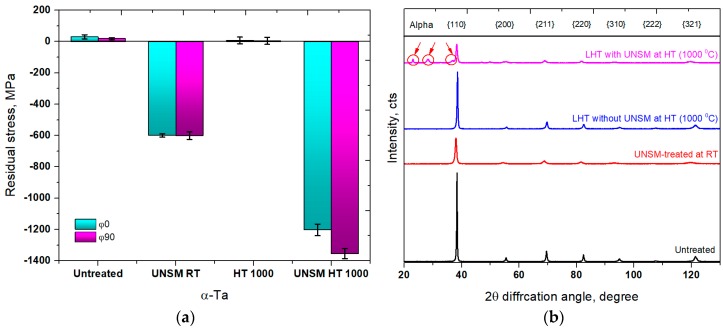
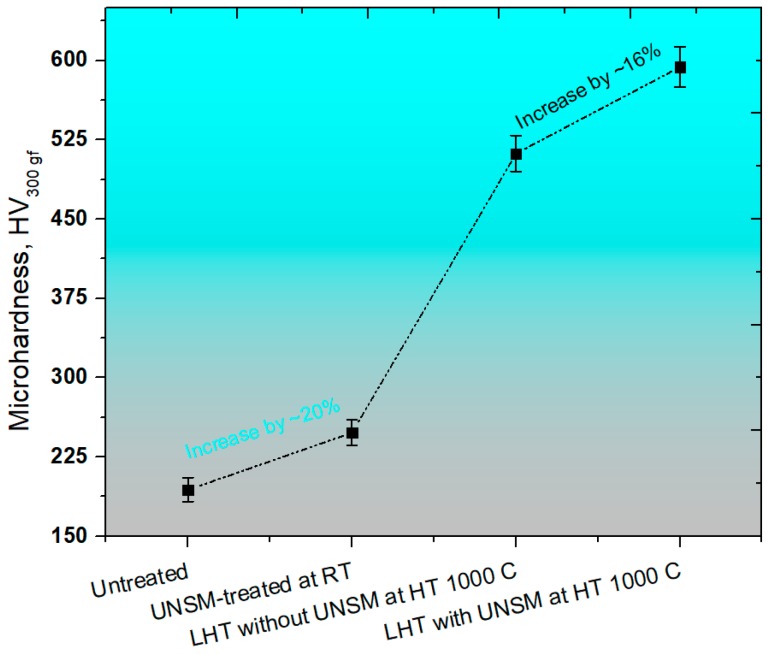
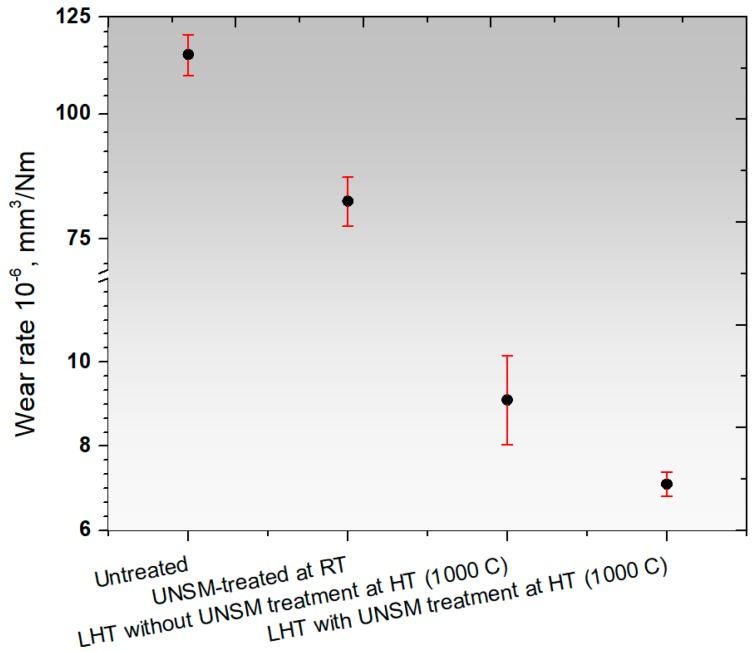
Microstructural evolution and wear performance of Tantalum (Ta) treated by ultrasonic nanocrystalline surface modification (UNSM) at 25 and 1000 °C were reported. The UNSM treatment modified a surface along with subsurface layer with a thickness in the range of 20 to 150 µm, which depends on the UNSM treatment temperature, via the surface severe plastic deformation (S²PD) method. The cross-sectional microstructure of the specimens was observed by electron backscattered diffraction (EBSD) in order to confirm the microstructural alteration in terms of effective depth and refined grain size. The surface hardness measurement results, including depth profile, revealed that the hardness of the UNSM-treated specimens at both temperatures was increased in comparison with those of the untreated ones. The increase in UNSM treatment temperature led to a further increase in hardness. Moreover, both the UNSM-treated specimens with an increased hardness resulted in a higher resistance to wear in comparison with those of the untreated ones under dry conditions. The increase in hardness and induced compressive residual stress that depend on the formation of severe plastically deformed layer with the refined nano-grains are responsible for the enhancement in wear resistance. The findings of this study may be implemented in response to various industries that are related to strength improvement and wear enhancement issues of Ta.
报道了在25℃和1000℃下通过超声纳米晶表面改性(UNSM)处理的钽(Ta)的微观结构演变和磨损性能。UNSM处理通过表面严重塑性变形(S²PD)方法对表面以及厚度在20至150μm范围内的次表层进行了改性,该厚度取决于UNSM处理温度。通过电子背散射衍射(EBSD)观察了试样的横截面微观结构,以确认有效深度和细化晶粒尺寸方面的微观结构变化。包括深度分布的表面硬度测量结果表明,与未处理的试样相比,在两个温度下UNSM处理的试样的硬度都有所增加。UNSM处理温度的升高导致硬度进一步增加。此外,与未处理的试样相比,硬度增加的UNSM处理试样在干燥条件下具有更高的耐磨性。硬度的增加和取决于具有细化纳米晶粒的严重塑性变形层形成的诱导压缩残余应力是耐磨性提高的原因。本研究的结果可应用于与钽的强度提高和磨损增强问题相关的各种行业。