Huang Yide, Zhang Yafei, Ge Lilin, Lin Yao, Kwok Hang Fai
Provincial University Key Laboratory of Cellular Stress Response and Metabolic Regulation, College of Life Sciences, Fujian Normal University, Fuzhou 350117, China.
Faculty of Health Sciences, University of Macau, Avenida de Universidade, Taipa, Macau, China.
Cancers (Basel). 2018 Mar 20;10(3):82. doi: 10.3390/cancers10030082.
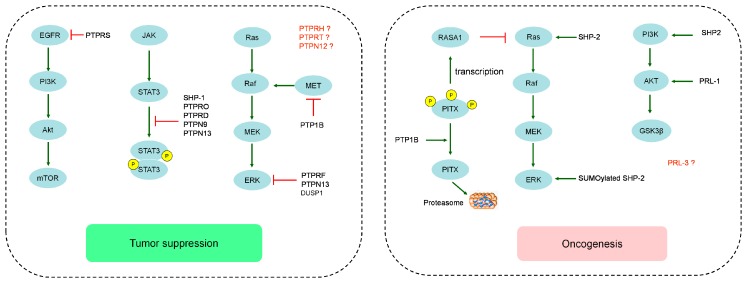
The protein tyrosine phosphatase (PTP) family is involved in multiple cellular functions and plays an important role in various pathological and physiological processes. In many chronic diseases, for example cancer, PTP is a potential therapeutic target for cancer treatment. In the last two decades, dozens of PTP inhibitors which specifically target individual PTP molecules were developed as therapeutic agents. Hepatocellular carcinoma (HCC) is one of the most common malignant tumors and is the second most lethal cancer worldwide due to a lack of effective therapies. Recent studies have unveiled both oncogenic and tumor suppressive functions of PTP in HCC. Here, we review the current knowledge on the involvement of PTP in HCC and further discuss the possibility of targeting PTP in HCC.
蛋白质酪氨酸磷酸酶(PTP)家族参与多种细胞功能,并在各种病理和生理过程中发挥重要作用。在许多慢性疾病中,例如癌症,PTP是癌症治疗的潜在治疗靶点。在过去二十年中,数十种特异性靶向单个PTP分子的PTP抑制剂被开发为治疗药物。肝细胞癌(HCC)是最常见的恶性肿瘤之一,由于缺乏有效的治疗方法,它是全球第二大致命癌症。最近的研究揭示了PTP在HCC中的致癌和肿瘤抑制功能。在此,我们综述了目前关于PTP参与HCC的知识,并进一步讨论了在HCC中靶向PTP的可能性。