Boix Jordi, von Hieber Daniela, Connor Bronwen
Department of Pharmacology and Clinical Pharmacology, Centre for Brain Research, School of Medical Science, Faculty of Medical and Health Sciences, University of Auckland, Auckland, New Zealand.
Front Behav Neurosci. 2018 Mar 6;12:39. doi: 10.3389/fnbeh.2018.00039. eCollection 2018.
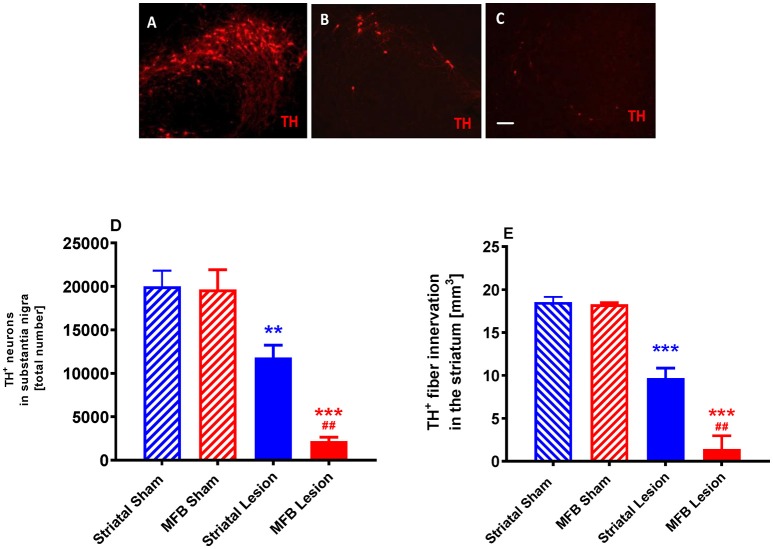
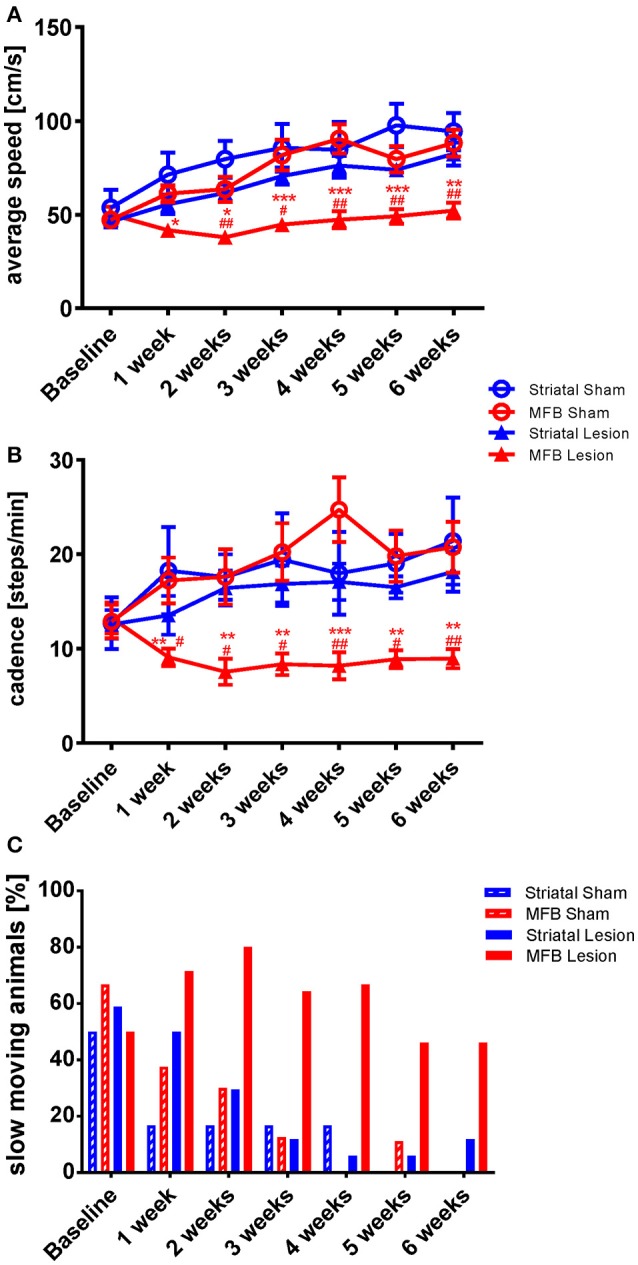
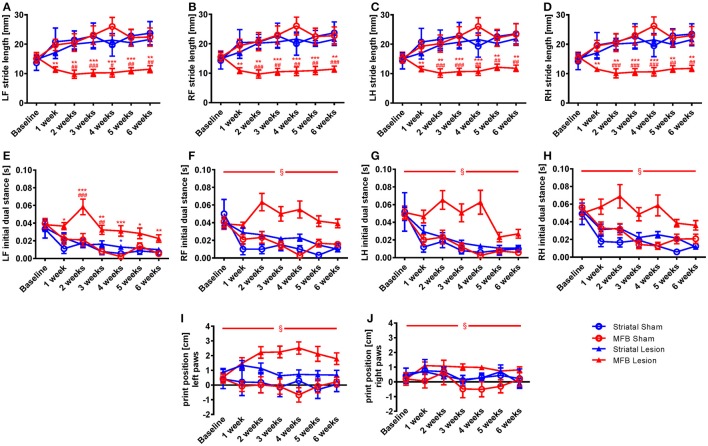
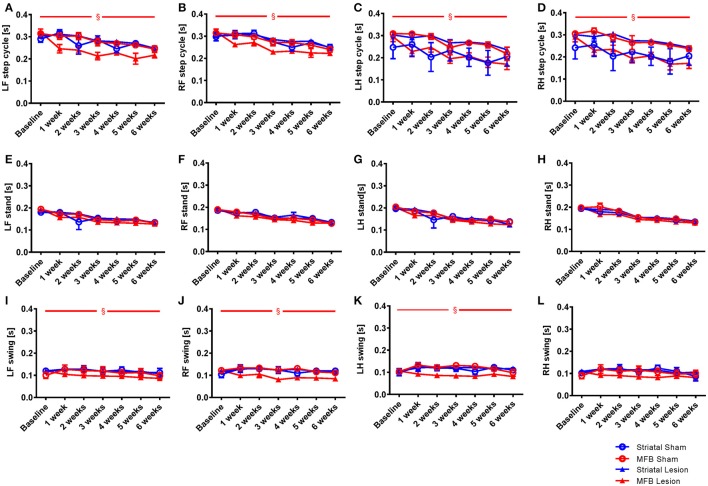
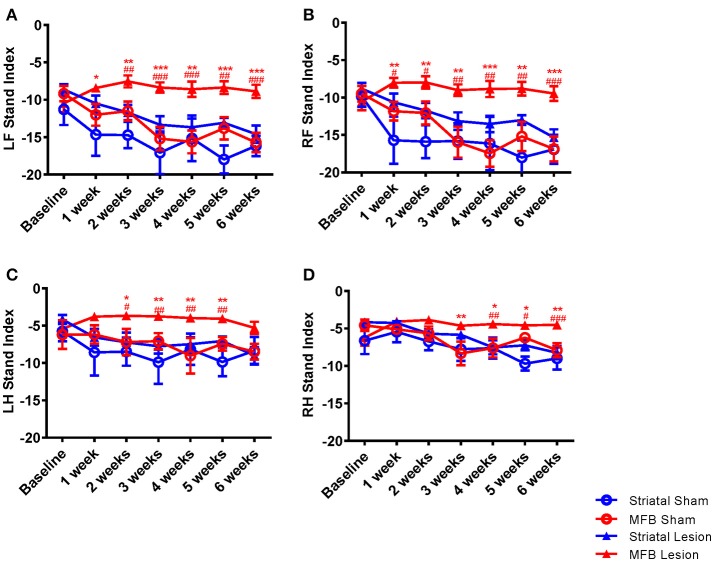
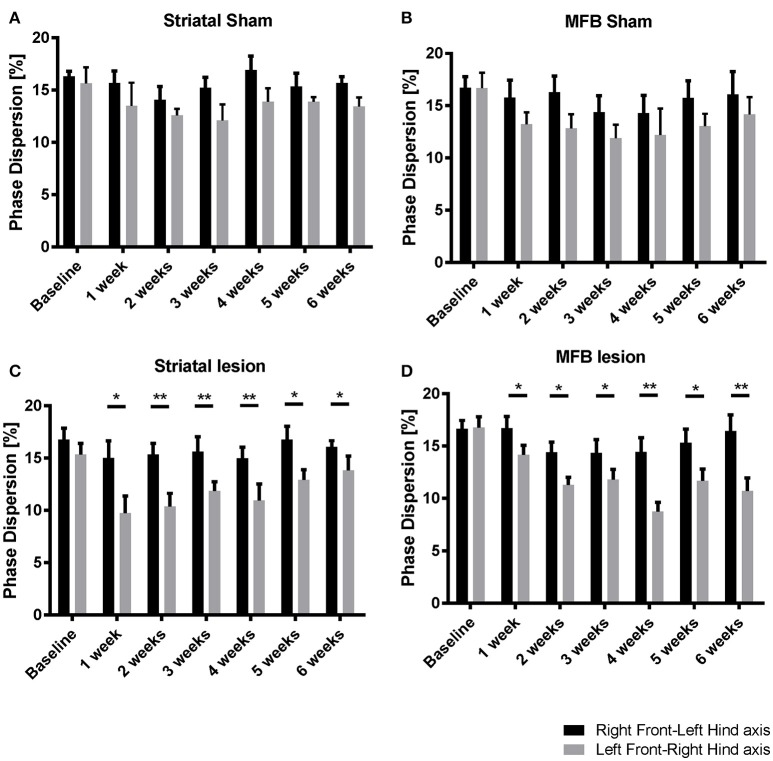
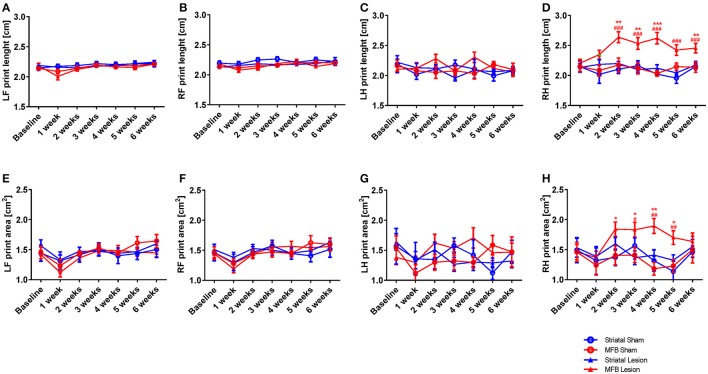
Computer-supported gait analysis has proven to be effective for the comprehensive assessment of gait changes in rodent models of neurodegenerative and neurological disorders. However, full characterization of individual gait parameters is required for specific neurological or neurodegenerative disorders such as Parkinson's disease (PD). Gait disturbances in particular present as the most constraining set of symptoms in PD, finally depriving patients from most activities of normal daily living. In this study, we have characterized the gait pattern abnormalities observed in two rat models of PD: the medial forebrain bundle (MFB) 6-OHDA lesion model and the striatal 6-OHDA lesion model. Our data indicates significant changes in 21 different gait parameters in the MFB lesion cohort. We observed a steady decline in the overall walking speed and cadence, as well as significant alterations in the gait parameters stride length, initial dual stance, paw print position, step cycle, swing phase of the step cycle, stand index, phase dispersion, print length, and print area in at least one of the paws. These alterations correlated with the extent of tyrosine hydroxylase (TH) neuronal loss observed in this group. These alterations were detected as early as 1 week post lesion. In contrast, limited gait dysfunction was detected in the striatal lesion cohort related to the low level of TH neuronal loss detected in this group. In this study we have demonstrated that gait analysis is a reliable method for the detection of motor deficiencies in a MFB 6-OHDA lesion model of PD and may prove a clinically relevant, low impact method of testing functional impairment as early as 1 week post lesion.
计算机辅助步态分析已被证明可有效全面评估神经退行性和神经系统疾病啮齿动物模型中的步态变化。然而,对于帕金森病(PD)等特定的神经系统或神经退行性疾病,需要对个体步态参数进行全面表征。步态障碍尤其是PD中最具限制性的一组症状,最终使患者无法进行大多数正常的日常生活活动。在本研究中,我们表征了在两种PD大鼠模型中观察到的步态模式异常:内侧前脑束(MFB)6-OHDA损伤模型和纹状体6-OHDA损伤模型。我们的数据表明,MFB损伤组中21种不同的步态参数有显著变化。我们观察到总体步行速度和步频稳步下降,并且至少一只爪子的步态参数步长、初始双支撑期、爪印位置、步周期、步周期摆动期、站立指数、相位离散度、爪印长度和爪印面积有显著改变。这些改变与该组中观察到的酪氨酸羟化酶(TH)神经元损失程度相关。这些改变在损伤后1周就被检测到。相比之下,在纹状体损伤组中检测到的步态功能障碍有限,这与该组中检测到的低水平TH神经元损失有关。在本研究中,我们证明了步态分析是检测PD的MFB 6-OHDA损伤模型中运动缺陷的可靠方法,并且可能证明是一种临床相关的、低影响的方法,可在损伤后1周就测试功能损害。