Saghafi Massoud, Khodashahi Mandana, Saadati Nayyereh, Azarian Azita, Rezaieyazdi Zahra, Salehi Maryam, Sahebari Maryam
MD of Rheumatology, Professor, Rheumatic Diseases Research Center, Mashhad University of Medical Sciences, Mashhad, Iran.
MD of Rheumatology, Assistant Professor, Rheumatic Diseases Research Center, Mashhad University of Medical Sciences, Mashhad, Iran.
Electron Physician. 2017 Dec 25;9(12):5940-5947. doi: 10.19082/5940. eCollection 2017 Dec.
Serum cartilage oligomeric matrix protein (COMP) is a non-collagen glycoprotein produced by the cartilage, synovium, tendon, and meniscus. Recent studies showed that COMP is a reliable factor for monitoring cartilage damage.
To determine the relationship between serum COMP concentration and the severity of rheumatoid arthritis (RA).
This cross-sectional study lasted from 2013 to 2015 at the Rheumatology Clinic of Ghaem Hospital, Mashhad, Iran. The study population consisted of eligible patients who presented to our clinic during the study period. Four groups (150 subjects) were included as early RA (50 patients), late RA (50 patients), grades II and III OA (osteoarthritis) (25 cases, 17 grade II and 8 grade III joint destruction), and healthy controls (25 individuals). These were included consecutively. Serum COMP level was assessed by sandwich ELISA technique. In addition, ESR, hs-CRP, serum RF, and anti-CCP were assayed. X-rays of the knees (in OA) and hands (in RA) were examined for the degree of joint damage/erosion using the Short Erosion Scale (SES) in RA and Kellgren-Lawrence grading in OA. Analysis of variance (ANOVA) to compare mean COMP level among the groups and ROC (Receiver Operating Characteristic) analysis to determine the diagnostic accuracy of COMP in diagnosis of late RA were used by SPSS software (ver. 20.0).
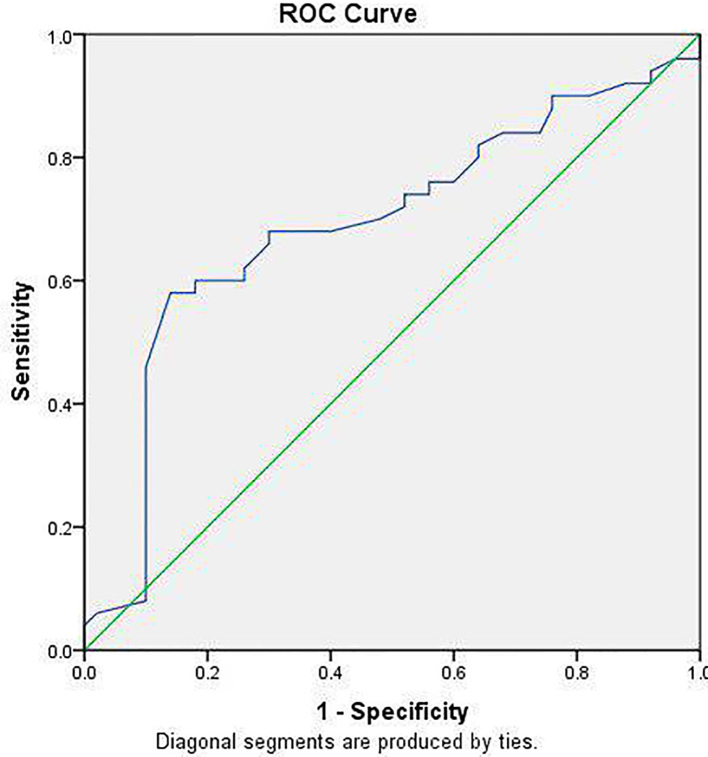
Mean (±SD) serum COMP levels were 18 (±10.6) U/L in early RA, 19.3 (±9.6) U/L in late RA, 10.9 (±4.5) U/L in OA, and 4.2 (±3.8) in controls; p<0.001. Serum COMP level was higher in RA and OA groups when compared to control group. Mean (±SD) SES score was 13.5 (±7.5) in early RA and 16.4 (±9.7) in late RA (p=0.093). There was a significant positive correlation between COMP level and disease severity in early RA (r=0.677, p<0.001) as well as in late RA (r=0.753, p<0.001). Serum COMP level at a concentration of 15.25 U/L had a sensitivity of 68% and specificity of 70% to discriminate late RA from early RA (area under curve= 69% (95% CI: 58% to 79%; p=0.001).
COMP had positive significant correlation with early and late RA severity. This serum biomarker can be a useful and easy tool for monitoring of RA patients either at early or late stages of the disease.
血清软骨寡聚基质蛋白(COMP)是一种由软骨、滑膜、肌腱和半月板产生的非胶原蛋白糖蛋白。最近的研究表明,COMP是监测软骨损伤的可靠指标。
确定血清COMP浓度与类风湿关节炎(RA)严重程度之间的关系。
这项横断面研究于2013年至2015年在伊朗马什哈德加姆医院的风湿病诊所进行。研究对象为研究期间到我们诊所就诊的符合条件的患者。纳入四组(150名受试者),分别为早期RA(50例患者)、晚期RA(50例患者)、II级和III级骨关节炎(OA)(25例,17例II级和8例III级关节破坏)以及健康对照(25人)。这些患者依次纳入。采用夹心ELISA技术评估血清COMP水平。此外,还检测了红细胞沉降率(ESR)、超敏C反应蛋白(hs-CRP)、血清类风湿因子(RF)和抗环瓜氨酸肽(anti-CCP)。对OA患者的膝关节和RA患者的手部进行X线检查,使用RA的短侵蚀量表(SES)和OA的凯尔格伦-劳伦斯分级来评估关节损伤/侵蚀程度。使用SPSS软件(版本20.0)进行方差分析(ANOVA)以比较各组间COMP平均水平,并进行ROC(受试者工作特征)分析以确定COMP在诊断晚期RA中的诊断准确性。
早期RA患者血清COMP平均水平(±标准差)为18(±10.6)U/L,晚期RA患者为19.3(±9.6)U/L,OA患者为10.9(±4.5)U/L,对照组为4.2(±3.8)U/L;p<0.001。与对照组相比,RA组和OA组血清COMP水平更高。早期RA患者SES平均评分(±标准差)为13.5(±7.5),晚期RA患者为16.4(±9.7)(p=0.093)。早期RA(r=0.677,p<0.001)和晚期RA(r=0.753,p<0.001)中COMP水平与疾病严重程度均呈显著正相关。血清COMP浓度为15.25 U/L时,鉴别晚期RA与早期RA的敏感性为68%,特异性为70%(曲线下面积=69%(95%CI:58%至79%;p=0.001)。
COMP与早期和晚期RA严重程度呈显著正相关。这种血清生物标志物可作为监测RA患者疾病早期或晚期的一种有用且简便的工具。