
稳态风下无人机任务分配与路径规划的综合优化。
Integrated optimization of unmanned aerial vehicle task allocation and path planning under steady wind.
机构信息
School of Management, Hefei, Anhui, China.
Key Laboratory of Process Optimization & Intelligent Decision-making, Ministry of Education, Hefei, Anhui, China.
出版信息
PLoS One. 2018 Mar 21;13(3):e0194690. doi: 10.1371/journal.pone.0194690. eCollection 2018.
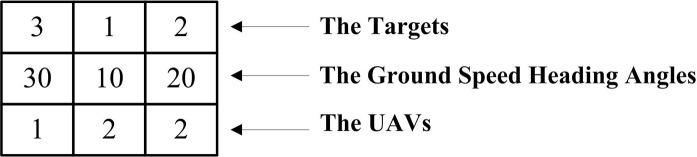
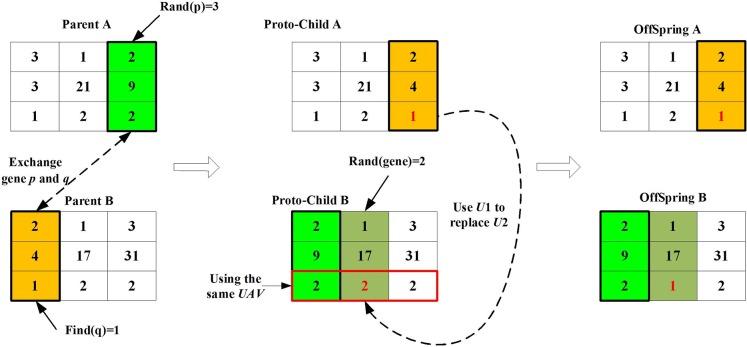
Wind has a significant effect on the control of fixed-wing unmanned aerial vehicles (UAVs), resulting in changes in their ground speed and direction, which has an important influence on the results of integrated optimization of UAV task allocation and path planning. The objective of this integrated optimization problem changes from minimizing flight distance to minimizing flight time. In this study, the Euclidean distance between any two targets is expanded to the Dubins path length, considering the minimum turning radius of fixed-wing UAVs. According to the vector relationship between wind speed, UAV airspeed, and UAV ground speed, a method is proposed to calculate the flight time of UAV between targets. On this basis, a variable-speed Dubins path vehicle routing problem (VS-DP-VRP) model is established with the purpose of minimizing the time required for UAVs to visit all the targets and return to the starting point. By designing a crossover operator and mutation operator, the genetic algorithm is used to solve the model, the results of which show that an effective UAV task allocation and path planning solution under steady wind can be provided.
风对固定翼无人机(UAV)的控制有重大影响,导致其地速和方向发生变化,这对无人机任务分配和路径规划的综合优化结果有重要影响。该综合优化问题的目标从最小化飞行距离变为最小化飞行时间。在这项研究中,将任意两个目标之间的欧几里得距离扩展到考虑固定翼 UAV 最小转弯半径的 Dubins 路径长度。根据风速、UAV 空速和 UAV 地速之间的向量关系,提出了一种计算 UAV 在目标之间飞行时间的方法。在此基础上,建立了以最小化 UAV 访问所有目标并返回起点所需时间为目标的变速 Dubins 路径车辆路径规划问题(VS-DP-VRP)模型。通过设计交叉算子和变异算子,使用遗传算法求解模型,结果表明可以提供在稳定风下有效的 UAV 任务分配和路径规划解决方案。





 Zotero 插件