Gliatis John, Anagnostou Konstantinos, Tsoumpos Pantelis, Billis Evdokia, Papandreou Maria, Plessas Spyridon
Department of Orthopaedic, University Hospital of Patras, Patras 25100, Greece.
Department of Physical Therapy, Technological Educational Institute of Western Greece, Aigion 25100, Greece.
World J Orthop. 2018 Mar 18;9(3):24-34. doi: 10.5312/wjo.v9.i3.24.
To present the long-term results of complex knee injuries, treated early using the Ligament Augmentation and Reconstruction System (LARS) artificial ligament to reconstruct posterior cruciate ligament (PCL).
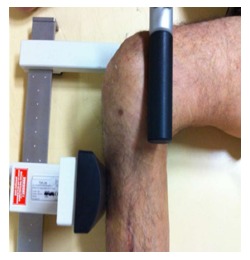
From September 1997 to June 2010, thirty-eight complex knee injuries were treated, where early arthroscopic PCL reconstructions were undergone, using the LARS (Surgical Implants and Devices, Arc-sur-Tille, France) artificial ligament. Exclusion criteria were: Late (> 4 wk) reconstruction, open technique, isolated PCL reconstruction, knee degenerative disease, combined fracture or vascular injury and use of allograft or autograft for PCL reconstruction. Clinical and functional outcomes were assessed with IKDC Subjective Knee Form, KOS-ADLS questionnaire, Lysholm scale and SF-12 Health Survey. Posterior displacement (PD) was measured with the Telos Stress Device.
Seven patients were excluded; two because of co-existing knee osteoarthritis and the remaining five because of failure to attend the final follow-up. The sample consisted of 31 patients with mean age at the time of reconstruction 33.2 ± 12.5 years (range 17-61). The postoperative follow-up was on average 9.27 ± 4.27 years (range 5-18). The mean average IKDC and KOS scores were 79.32 ± 17.1 and 88.1 ± 12.47% respectively. Average PD was 3.61 ± 2.15 mm compared to 0.91 ± 1.17 mm in the uninjured knees (one with grade 1 + and two with grade 2 +). Dial test was found positive in one patient, whereas the quadriceps active drawer test was positive in three patients. None was tested positive on the reverse-pivot shift test. The range of motion (ROM) was normal in thirty knees, in comparison with the contralateral one. There was no extension deficit. Osteoarthritic changes were found in three knees (9.6%).
Early treatment of complex knee injuries, using LARS artificial ligament for PCL reconstruction sufficiently reduces posterior tibia displacement and provides satisfactory long-term functional outcomes.
介绍使用韧带增强与重建系统(LARS)人工韧带早期治疗复杂膝关节损伤并重建后交叉韧带(PCL)的长期结果。
1997年9月至2010年6月,对38例复杂膝关节损伤进行了治疗,这些患者早期接受了关节镜下PCL重建,使用的是LARS(法国阿尔叙尔蒂耶的外科植入物和器械公司)人工韧带。排除标准为:晚期(>4周)重建、开放技术、单纯PCL重建、膝关节退行性疾病、合并骨折或血管损伤以及使用同种异体移植物或自体移植物进行PCL重建。采用IKDC主观膝关节评分表、KOS-ADLS问卷、Lysholm量表和SF-12健康调查评估临床和功能结果。使用Telos应力装置测量后移位(PD)。
7例患者被排除;2例因合并膝关节骨关节炎,其余5例因未参加最终随访。样本包括31例患者,重建时平均年龄为33.2±12.5岁(范围17-61岁)。术后平均随访9.27±4.27年(范围5-18年)。平均IKDC和KOS评分分别为79.32±17.1和88.1±12.47%。平均PD为3.61±2.15mm,而未受伤膝关节的平均PD为0.91±1.17mm(1例为1+级,2例为2+级)。1例患者的旋转试验结果为阳性,3例患者的股四头肌主动抽屉试验结果为阳性。反向轴移试验均未呈阳性。与对侧相比,30例膝关节的活动范围(ROM)正常。无伸直受限。3例膝关节(9.6%)发现有骨关节炎改变。
使用LARS人工韧带早期治疗复杂膝关节损伤并重建PCL可充分减少胫骨后移位,并提供令人满意的长期功能结果。