Escuela de Ingeniería Bioquímica, Pontificia Universidad Católica de Valparaíso, Valparaíso, Chile.
Centro de InmunoBiotecnología, Programa D. de Inmunología, Instituto de Ciencias Biomédica (ICBM), Facultad de Medicina, Universidad de Chile, Santiago, Chile.
PLoS One. 2018 Mar 22;13(3):e0194510. doi: 10.1371/journal.pone.0194510. eCollection 2018.
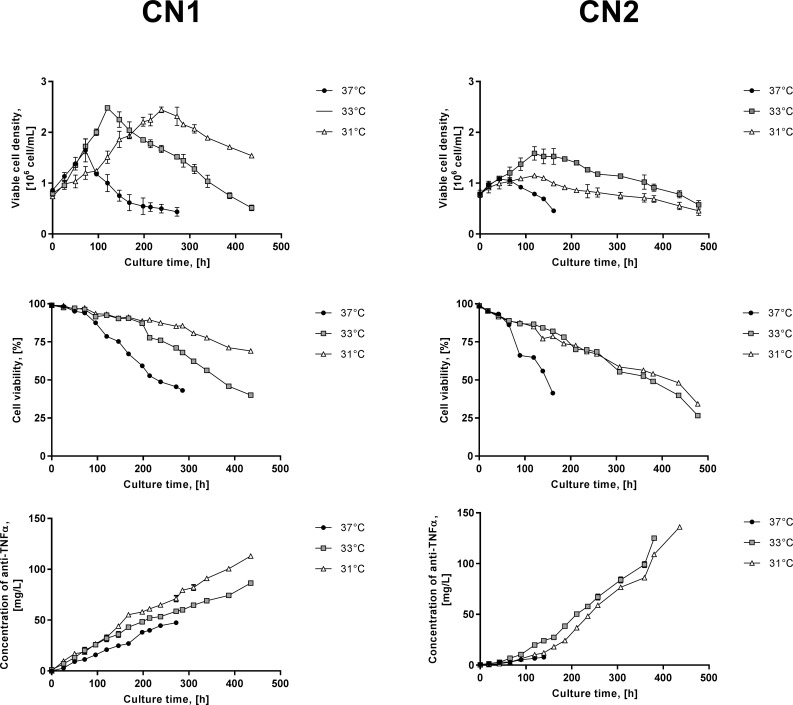
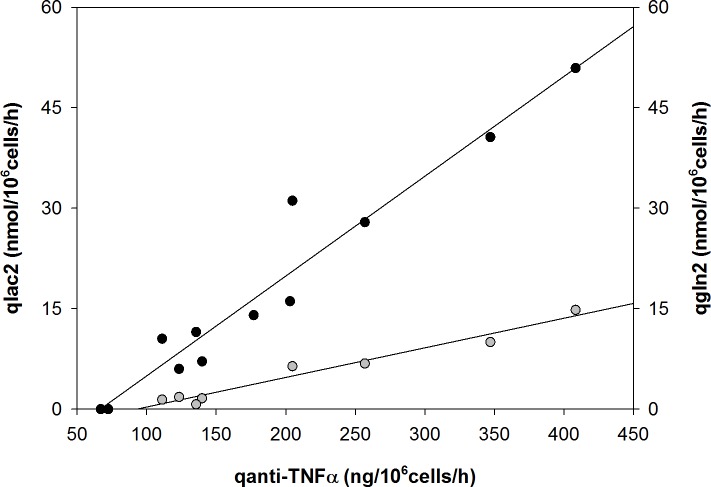
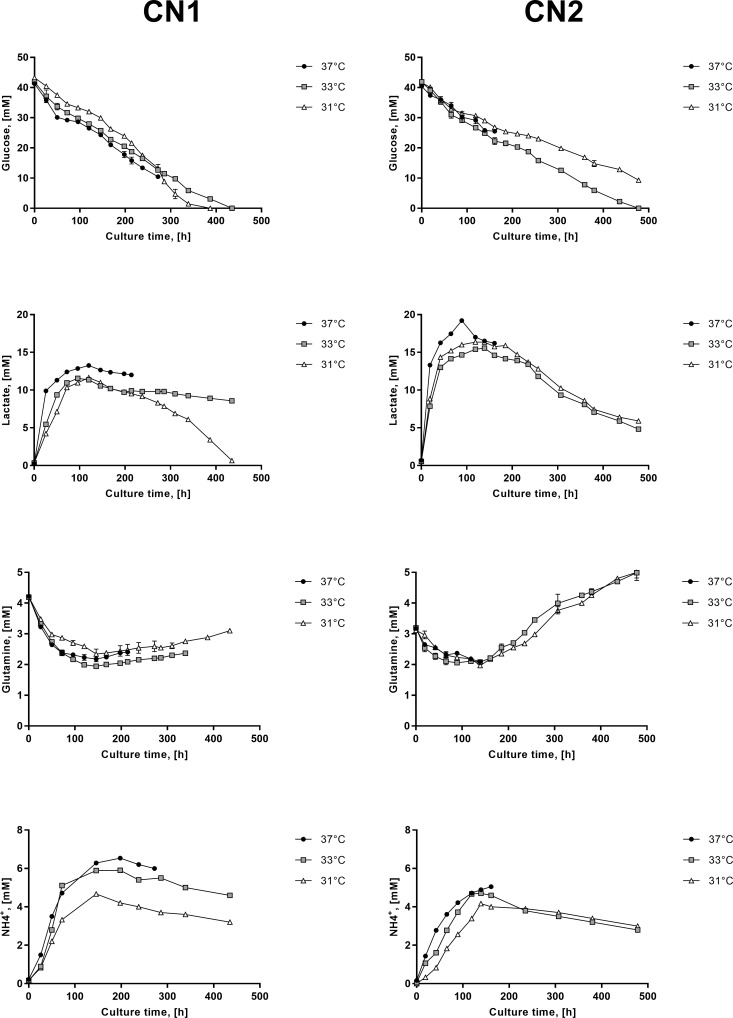
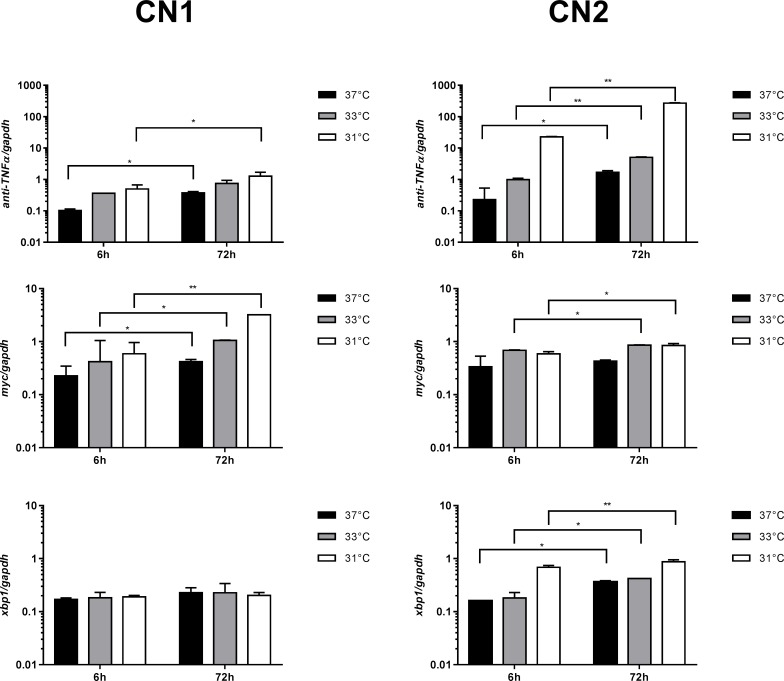
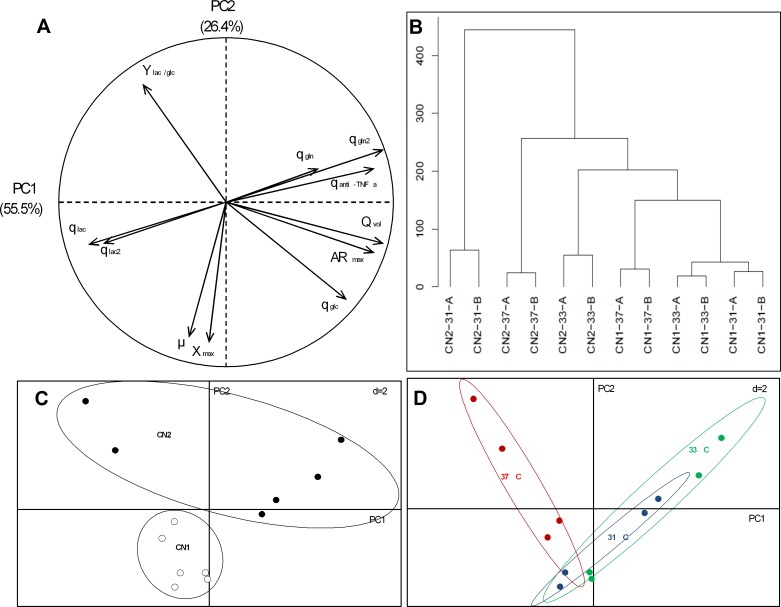
Chinese hamster ovary (CHO) cells are the most frequently used host for commercial production of therapeutic proteins. However, their low protein productivity in culture is the main hurdle to overcome. Mild hypothermia has been established as an effective strategy to enhance protein specific productivity, although the causes of such improvement still remain unclear. The self-regulation of global transcriptional regulatory factors, such as Myc and XBP1s, seems to be involved in increased the recombinant protein production at low temperature. This study evaluated the impact of low temperature in CHO cell cultures on myc and xbp1s expression and their effects on culture performance and cell metabolism. Two anti-TNFα producing CHO cell lines were selected considering two distinct phenotypes: i.e. maximum cell growth, (CN1) and maximum specific anti-TNFα production (CN2), and cultured at 37, 33 and 31°C in a batch system. Low temperature led to an increase in the cell viability, the expression of the recombinant anti-TNFα and the production of anti-TNFα both in CN1 and CN2. The higher production of anti-TNFα in CN2 was mainly associated with the large expression of anti-TNFα. Under mild hypothermia myc and xbp1s expression levels were directly correlated to the maximal viable cell density and the specific anti-TNFα productivity, respectively. Moreover, cells showed a simultaneous metabolic shift from production to consumption of lactate and from consumption to production of glutamine, which were exacerbated by reducing culture temperature and coincided with the increased anti-TNFα production. Our current results provide new insights of the regulation of myc and xbp1s in CHO cells at low temperature, and suggest that the presence and magnitude of the metabolic shift might be a relevant metabolic marker of productive cell line.
中国仓鼠卵巢(CHO)细胞是用于商业生产治疗性蛋白的最常用宿主。然而,其在培养物中的低蛋白产率是需要克服的主要障碍。轻度低温已被确立为提高蛋白比产率的有效策略,尽管其改善的原因仍不清楚。全局转录调控因子(如 Myc 和 XBP1s)的自我调节似乎参与了低温下重组蛋白产量的增加。本研究评估了低温对 CHO 细胞培养物中 myc 和 xbp1s 表达的影响及其对培养性能和细胞代谢的影响。考虑到两种不同的表型,选择了两种产生抗 TNFα 的 CHO 细胞系:即最大细胞生长(CN1)和最大特异性抗 TNFα 产生(CN2),并在批式系统中于 37、33 和 31°C 下进行培养。低温导致细胞活力、重组抗 TNFα 的表达和 CN1 和 CN2 中抗 TNFα 的产生均增加。CN2 中抗 TNFα 产量的增加主要与抗 TNFα 的大量表达有关。在轻度低温下,myc 和 xbp1s 的表达水平分别与最大活细胞密度和特异性抗 TNFα 产率直接相关。此外,细胞表现出从生产到消耗乳酸和从消耗到生产谷氨酰胺的同时代谢转变,降低培养温度会加剧这种转变,并且与抗 TNFα 产量的增加相一致。我们目前的结果提供了 CHO 细胞在低温下调节 myc 和 xbp1s 的新见解,并表明代谢转变的存在和程度可能是生产性细胞系的相关代谢标志物。