Asghari Matin, Abazari Mohammad Foad, Bokharaei Hanieh, Aleagha Maryam Nouri, Poortahmasebi Vahdat, Askari Hassan, Torabinejad Sepehr, Ardalan Abbas, Negaresh Navid, Ataei Atousa, Pazooki Parisa, Poorebrahim Mansour
Department of Molecular Biotechnology, Cell Science Research Center, Royan Institute of Biotechnology, ACECR, Isfahan, Iran.
Department of Genetics, Islamic Azad University, Tehran Medical Branch, Tehran, Iran.
Future Sci OA. 2018 Jan 24;4(3):FSO278. doi: 10.4155/fsoa-2017-0108. eCollection 2018 Mar.
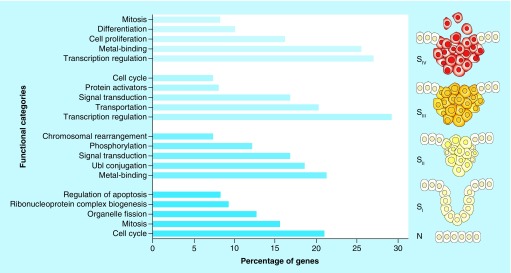
Until now, identification of drug targets for treatment of patients with specific stages of colorectal cancer (CRC) has remained a challenging field of research. Herein, we aimed to identify the key genes and regulatory networks involved in each stage of CRC.
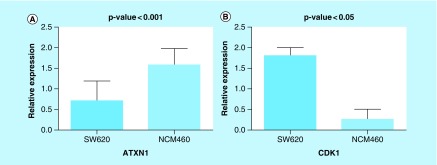
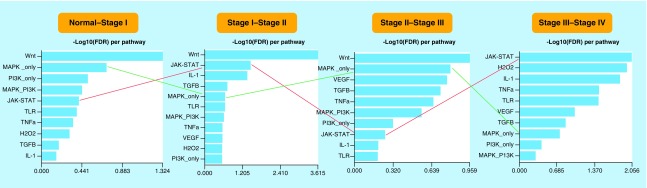
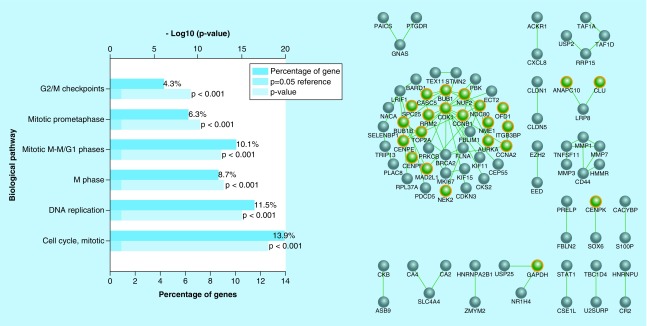
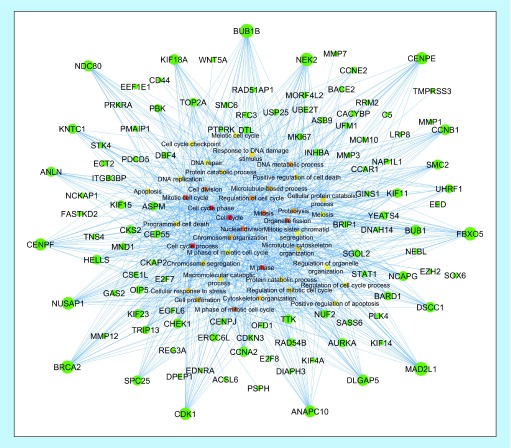
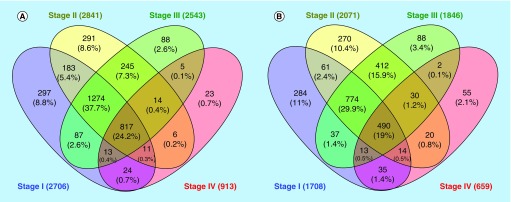
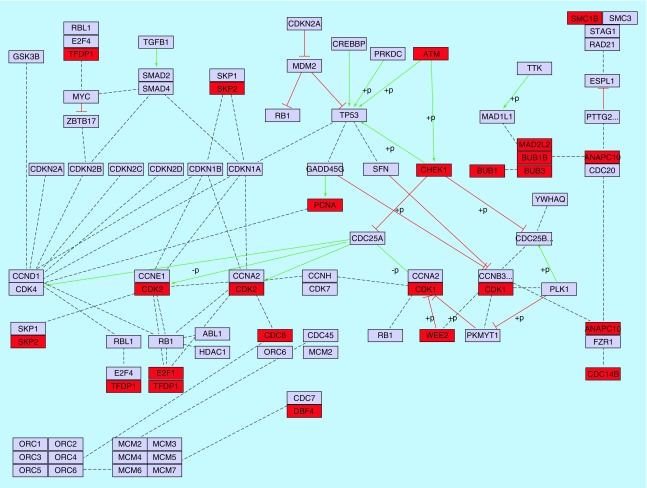
The results of gene expression profiles were integrated with protein-protein interaction networks, and topologically analyzed. The most important regulatory genes (e.g., , , and ) and signaling pathways (e.g., Wnt, MAPK and JAK-STAT) in CRC initiation, progression and metastasis were identified. analysis confirmed some findings.
Our study introduces functional hub genes, subnetworks, prioritizes signaling pathways and novel biomarkers in CRC that may guide further development of targeted therapy programs.
迄今为止,确定用于治疗特定阶段结直肠癌(CRC)患者的药物靶点仍是一个具有挑战性的研究领域。在此,我们旨在确定参与CRC各个阶段的关键基因和调控网络。
将基因表达谱结果与蛋白质-蛋白质相互作用网络整合,并进行拓扑分析。确定了CRC起始、进展和转移过程中最重要的调控基因(如 、 、 和 )和信号通路(如Wnt、MAPK和JAK-STAT)。 分析证实了一些 研究结果。
我们的研究引入了CRC中的功能性枢纽基因、子网络,对信号通路和新型生物标志物进行了优先级排序,这可能会指导靶向治疗方案的进一步发展。