Department of Nephrology, Navy General Hospital of Chinese PLA, Beijing 100048, P.R. China.
Int J Mol Med. 2018 Jun;41(6):3577-3585. doi: 10.3892/ijmm.2018.3573. Epub 2018 Mar 16.
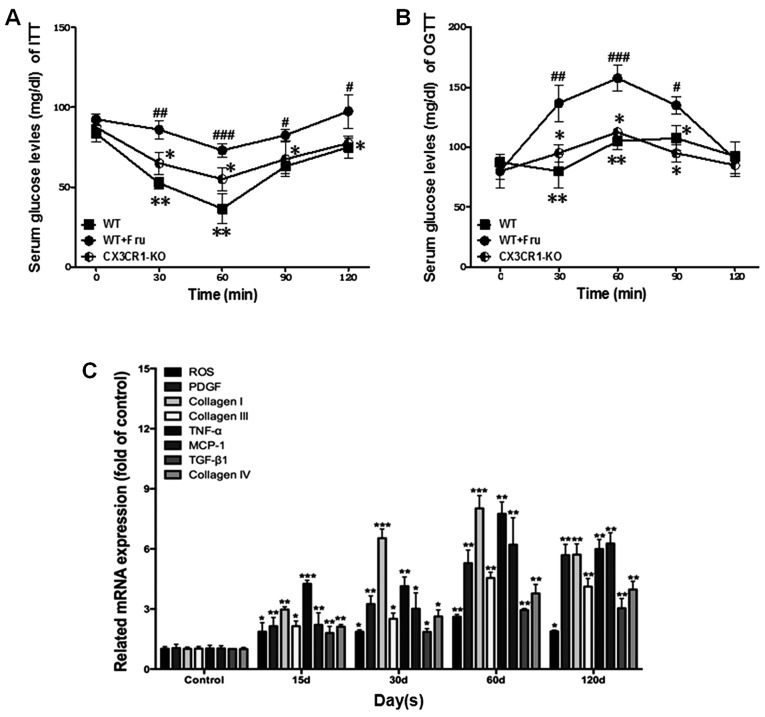
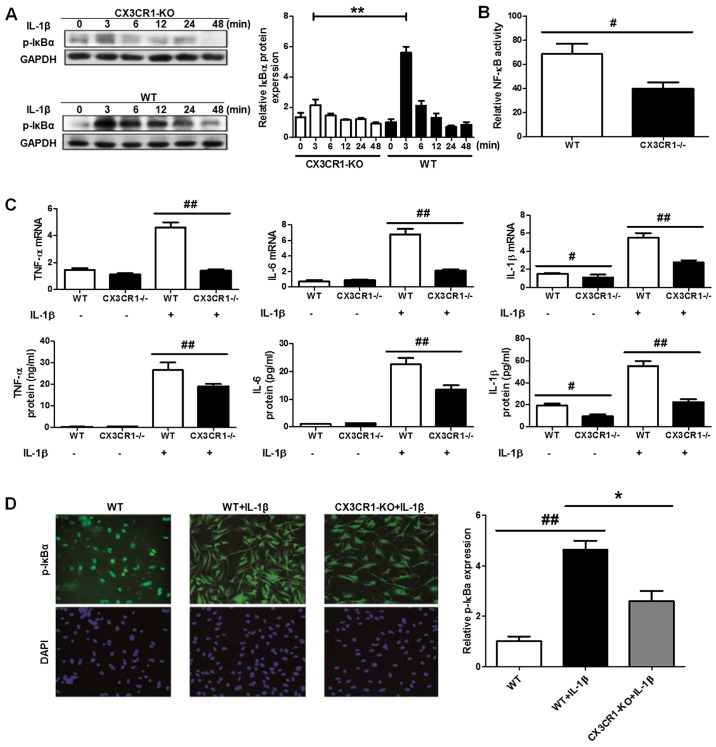
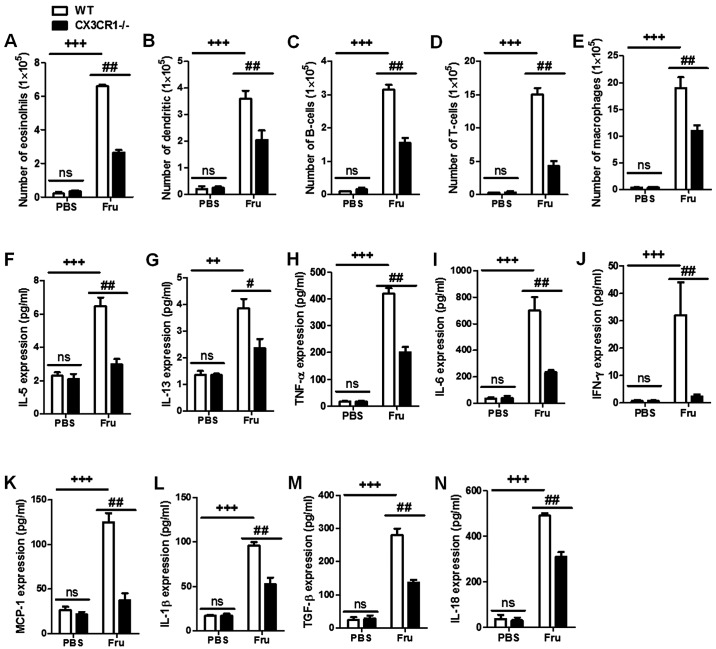
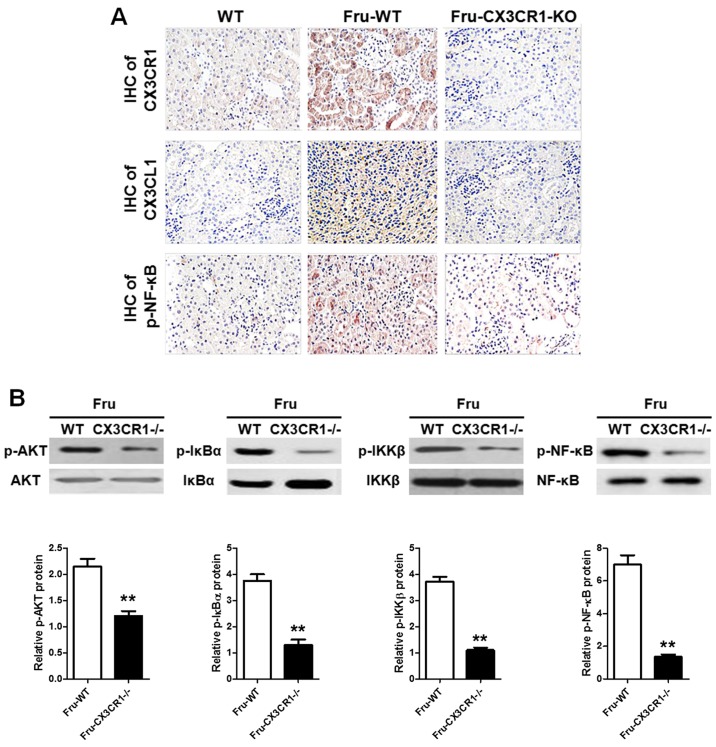
Fructose, the most important functional food additive from the last century, has been widely used in industry, agriculture, light industry, food and medicine. With the improvement of people's living standard and economic level, excess intake of fructose results in metabolic symptoms, including hyperleptinemia, insulin resistance and neuroinflammation is causing high risk of chronic kidney disease development in humans and animals. However, the underlying molecular mechanism of renal injury is still not fully understood, and the development of effective drugs and treatments are delayed. Hence, we investigated the role of crosstalk of CX3CL1-CX3CR1 axis and nuclear factor-κB (NF-κB) signaling pathway in the development of renal injury. CX3CL1-knock-out C57BL/6 mice were constructed and used to analyze the influence of CX3CL1-related signaling pathways on kidney injury of wild‑type (WT) mice and CXECR1 deficiency mice, which were administrated with 30% fructose water. Western blotting, quantitative RT-PCR (qRT-PCR), immunohistochemistry, ELISA, flow cytometry and biochemical indicator analysis were used to determine the levels of renal injury and key signaling pathway associated with renal damage. The results indicated that administration of high fructose intake can cause typical renal inflammatory responses in serum and tissues. Fructose enhances the CX3CL1-CX3CR1 axis and NF-κB activation, and promotes crosstalk of CX3CL1-CX3CR1 and NF-κB pathways. The phosphorylated AKT could be significantly activated in fructose-induced renal injury via CX3CL1-CX3CR1 axis. CX3CR1 expression between WT and CX3CR1-/- mice were evaluated to establish their relationship with injury. Our results indicated that CX3CR1 may be the central and major indicator in the process of renal injury, which mediate AKT pathway and further enhance the NF-κB activation. These findings demonstrated that crosstalk of CX3CL1-CX3CR1 axis and NF-κB signaling pathway play a direct role in fructose-induced kidney injury. Inhibition of CX3CL1-CX3CR1 pathway may suppress renal-related diseases. It may be a potential treatment choice for the clinical diagnoses and treatment in the future.
果糖是上个世纪最重要的功能食品添加剂,广泛应用于工业、农业、轻工业、食品和医药领域。随着人们生活水平和经济水平的提高,果糖摄入过量会导致代谢症状,包括高瘦素血症、胰岛素抵抗和神经炎症,这会使人类和动物患慢性肾病的风险增加。然而,肾脏损伤的潜在分子机制仍不完全清楚,有效药物和治疗方法的开发也因此受到了阻碍。因此,我们研究了 CX3CL1-CX3CR1 轴和核因子-κB(NF-κB)信号通路的串扰在肾脏损伤中的作用。构建了 CX3CL1 敲除 C57BL/6 小鼠,并用于分析 CX3CL1 相关信号通路对野生型(WT)小鼠和 CXECR1 缺乏型小鼠的肾脏损伤的影响,这些小鼠给予 30%果糖水。采用 Western blot、定量 RT-PCR(qRT-PCR)、免疫组织化学、ELISA、流式细胞术和生化指标分析来确定肾脏损伤的水平和与肾损伤相关的关键信号通路。结果表明,高果糖摄入可引起血清和组织中典型的肾脏炎症反应。果糖增强了 CX3CL1-CX3CR1 轴和 NF-κB 的激活,并促进了 CX3CL1-CX3CR1 和 NF-κB 通路的串扰。通过 CX3CL1-CX3CR1 轴,果糖诱导的肾损伤中磷酸化 AKT 可被显著激活。评估 WT 小鼠和 CX3CR1-/-小鼠之间的 CX3CR1 表达,以确定其与损伤的关系。我们的结果表明,CX3CR1 可能是肾脏损伤过程中的中心和主要指标,其介导 AKT 通路并进一步增强 NF-κB 的激活。这些发现表明,CX3CL1-CX3CR1 轴和 NF-κB 信号通路的串扰在果糖诱导的肾脏损伤中发挥直接作用。抑制 CX3CL1-CX3CR1 途径可能抑制与肾脏相关的疾病。它可能是未来临床诊断和治疗的潜在选择。