Fye Haddy K S, Mrosso Paul, Bruce Lesley, Thézénas Marie-Laëtitia, Davis Simon, Fischer Roman, Rwegasira Gration L, Makani Julie, Kessler Benedikt M
1Target Discovery Institute, Nuffield Department of Medicine, University of Oxford, Roosevelt Drive, Oxford, OX3 7FZ UK.
2Muhimbili Wellcome Programme, Muhimbili University of Health and Allied Sciences, PO Box 65001, Dar es Salaam, Tanzania.
Clin Proteomics. 2018 Mar 21;15:14. doi: 10.1186/s12014-018-9190-4. eCollection 2018.
Red blood cell (RBC) physiology is directly linked to many human disorders associated with low tissue oxygen levels or anemia including chronic obstructive pulmonary disease, congenital heart disease, sleep apnea and sickle cell anemia. Parasites such as spp. and directly target RBCs, and surface molecules within the RBC membrane are critical for pathogen interactions. Proteomics of RBC membrane 'ghost' fractions has therefore been of considerable interest, but protocols described to date are either suboptimal or too extensive to be applicable to a larger set of clinical cohorts.
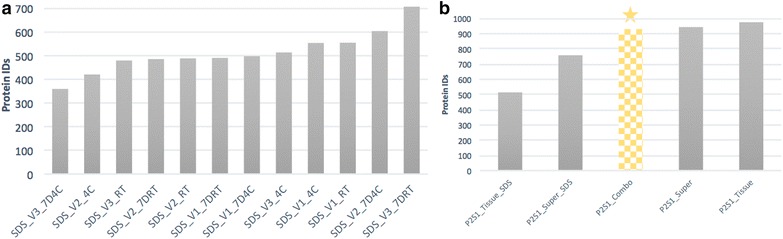
Here, we describe an optimised erythrocyte isolation protocol from blood, tested for various storage conditions and explored using different fractionation conditions for isolating ghost RBC membranes. Liquid chromatography mass spectrometry (LC-MS) analysis on a Q-Exactive Orbitrap instrument was used to profile proteins isolated from the comparative conditions. Data analysis was run on the MASCOT and MaxQuant platforms to assess their scope and diversity.
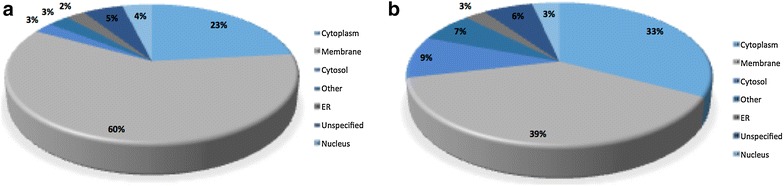
The results obtained demonstrate a robust method for membrane enrichment enabling consistent MS based characterisation of > 900 RBC membrane proteins in single LC-MS/MS analyses. Non-detergent based membrane solubilisation methods using the tissue and supernatant fractions of isolated ghost membranes are shown to offer effective haemoglobin removal as well as diverse recovery including erythrocyte membrane proteins of high and low abundance.
The methods described in this manuscript propose a medium to high throughput framework for membrane proteome profiling by LC-MS of potential applicability to larger clinical cohorts in a variety of disease contexts.
红细胞(RBC)生理学与许多与低组织氧水平或贫血相关的人类疾病直接相关,包括慢性阻塞性肺疾病、先天性心脏病、睡眠呼吸暂停和镰状细胞贫血。诸如 spp. 和 等寄生虫直接靶向红细胞,红细胞膜内的表面分子对于病原体相互作用至关重要。因此,红细胞膜“空壳”组分的蛋白质组学备受关注,但迄今为止所描述的方案要么不够理想,要么过于繁琐,不适用于更大规模的临床队列。
在此,我们描述了一种从血液中分离红细胞的优化方案,对各种储存条件进行了测试,并使用不同的分级分离条件来分离红细胞空壳膜。在Q-Exactive Orbitrap仪器上进行液相色谱质谱(LC-MS)分析,以对从比较条件下分离的蛋白质进行分析。在MASCOT和MaxQuant平台上进行数据分析,以评估其范围和多样性。
所获得的结果证明了一种强大的膜富集方法,能够在单次LC-MS/MS分析中对>900种红细胞膜蛋白进行基于质谱的一致表征。使用分离的空壳膜的组织和上清液组分的非去污剂基膜溶解方法显示出能有效去除血红蛋白,并能实现多种回收率,包括高丰度和低丰度的红细胞膜蛋白。
本手稿中描述的方法提出了一个中高通量框架,用于通过LC-MS对膜蛋白质组进行分析,在各种疾病背景下对更大规模的临床队列具有潜在的适用性。