National Institute of Cancer Research, National Health Research Institutes, Tainan, Taiwan.
Institute of Molecular Medicine, College of Medicine, National Cheng Kung University, Tainan, Taiwan.
J Biomed Sci. 2018 Mar 28;25(1):28. doi: 10.1186/s12929-018-0432-6.
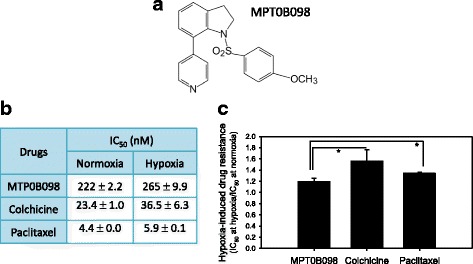
Tumor hypoxia-induced epithelial-mesenchymal transition (EMT) is critical in promoting cancer metastasis. We recently discovered a novel microtubule inhibitor, MPT0B098, that employs a novel antitumor mechanism. It destabilizes hypoxia-inducible factor (HIF)-1α mRNA by blocking the function of human antigen R. Thus, we proposed that MPT0B098 modulates hypoxia-induced EMT.
In vitro IC values were determined through the methylene blue dye assay. To investigate molecular events, reverse transcriptase-polymerase chain reaction, Western blotting, immunofluorescence staining, and wound healing assay were employed.
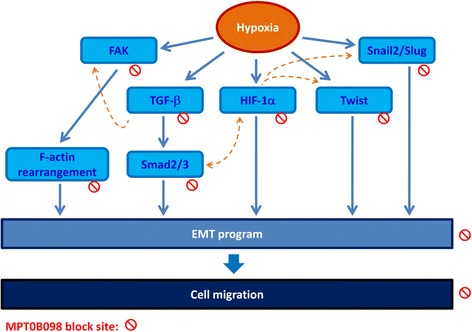
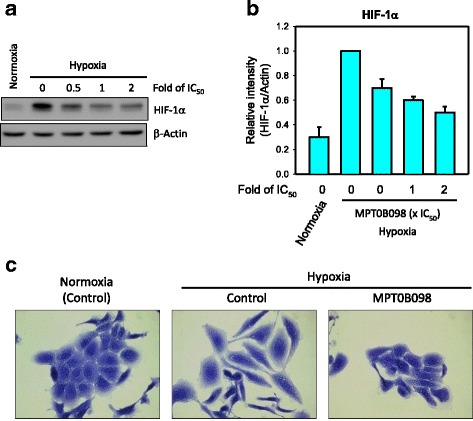
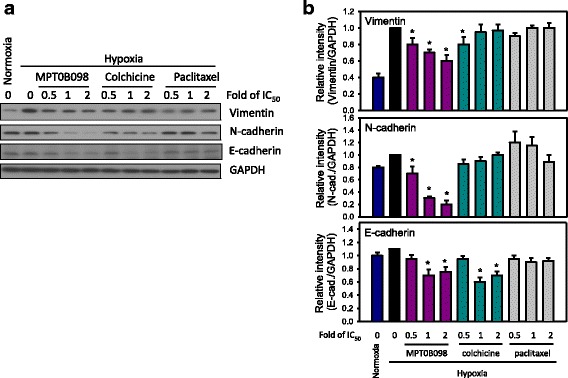
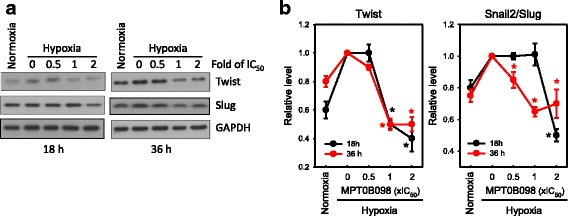
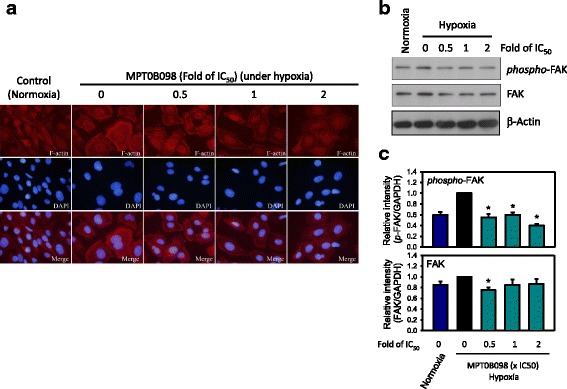
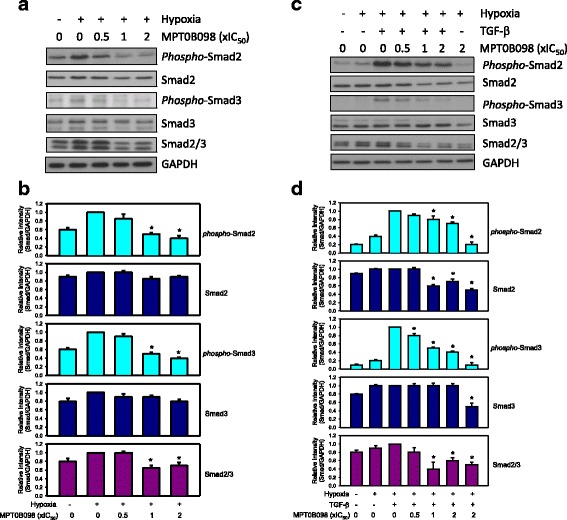
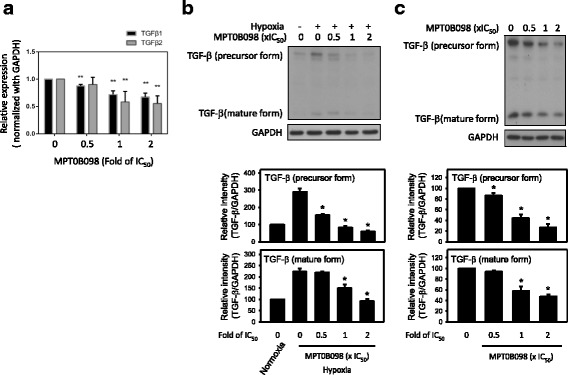
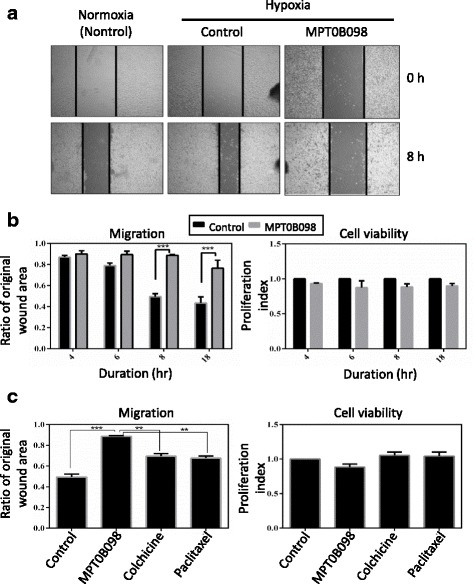
MPT0B098 significantly inhibited HIF-1α expression, epithelial-to-mesenchymal morphology changes, and migratory ability in the human head and neck squamous cell carcinoma cell line OEC-M1. Furthermore, after MPT0B098 treatment, the expression of two mesenchymal markers, vimentin and N-cadherin, was downregulated under hypoxic conditions. Moreover, MPT0B098 suppressed hypoxia-induced EMT in part by inhibiting EMT-activating transcription factors, Twist and SNAI2/Slug. In addition, the inhibition of hypoxia-induced F-actin rearrangement and focal adhesion kinase phosphorylation may have contributed to suppression of EMT by MPT0B098in OEC-M1 cells. MPT0B098 significantly inhibited transforming growth factor(TGF)-β-induced phosphorylation of receptor-associated Smad2/3 by downregulating TGF-β mRNA and protein expression.
Taken together, this study provides a novel insight into the role of MPT0B098 in inhibiting hypoxia-induced EMT, suggesting its potential use for treating head and neck cancers.
肿瘤缺氧诱导的上皮-间充质转化(EMT)在促进癌症转移中起着关键作用。我们最近发现了一种新型微管抑制剂 MPT0B098,它采用了一种新颖的抗肿瘤机制。它通过阻断人抗原 R 的功能来破坏缺氧诱导因子(HIF)-1α mRNA。因此,我们提出 MPT0B098 调节缺氧诱导的 EMT。
通过亚甲蓝染料测定法确定体外 IC 值。为了研究分子事件,我们采用了逆转录-聚合酶链反应、Western blot、免疫荧光染色和划痕愈合试验。
MPT0B098 显著抑制了人头颈部鳞状细胞癌细胞系 OEC-M1 中的 HIF-1α 表达、上皮-间充质形态变化和迁移能力。此外,在 MPT0B098 处理后,在缺氧条件下,两种间充质标志物波形蛋白和 N-钙粘蛋白的表达下调。此外,MPT0B098 通过抑制 EMT 激活转录因子 Twist 和 SNAI2/Slug,部分抑制了缺氧诱导的 EMT。此外,抑制缺氧诱导的 F-肌动蛋白重排和粘着斑激酶磷酸化可能有助于 MPT0B098 在 OEC-M1 细胞中抑制 EMT。MPT0B098 通过下调 TGF-β mRNA 和蛋白表达,显著抑制转化生长因子(TGF)-β诱导的受体相关 Smad2/3 磷酸化。
综上所述,本研究提供了 MPT0B098 抑制缺氧诱导的 EMT 的新见解,表明其在治疗头颈部癌症方面具有潜在用途。