Inuggi Alberto, Campus Claudio, Vastano Roberta, Saunier Ghislain, Keuroghlanian Alejo, Pozzo Thierry
Unit of Robotics, Brain and Cognitive, Istituto Italiano di Tecnologia, Center for Human Technologies, Genova, Italy.
Sciences, Istituto Italiano di Tecnologia, Center for Human Technologies, Genova, Italy.
Front Psychol. 2018 Mar 12;9:303. doi: 10.3389/fpsyg.2018.00303. eCollection 2018.
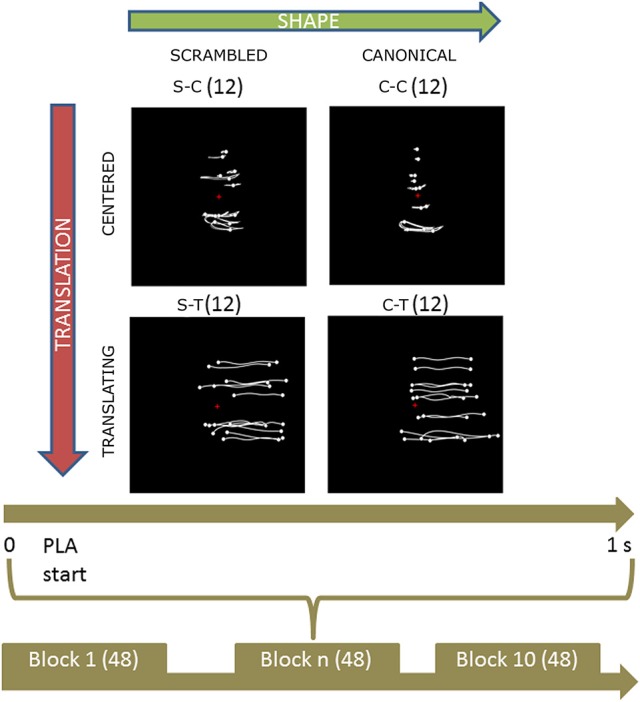
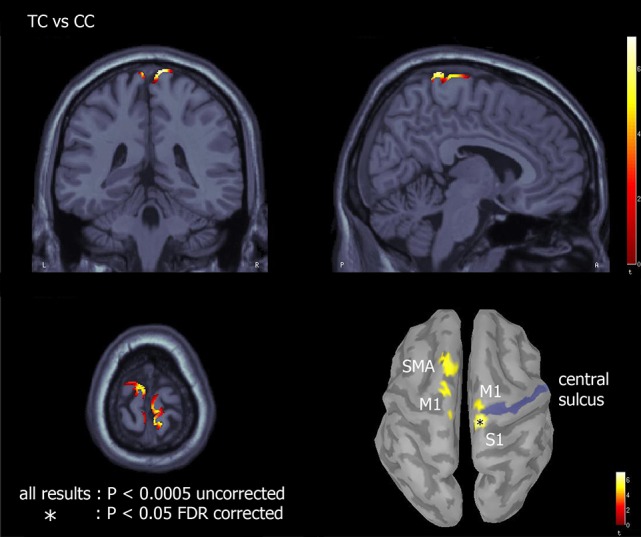
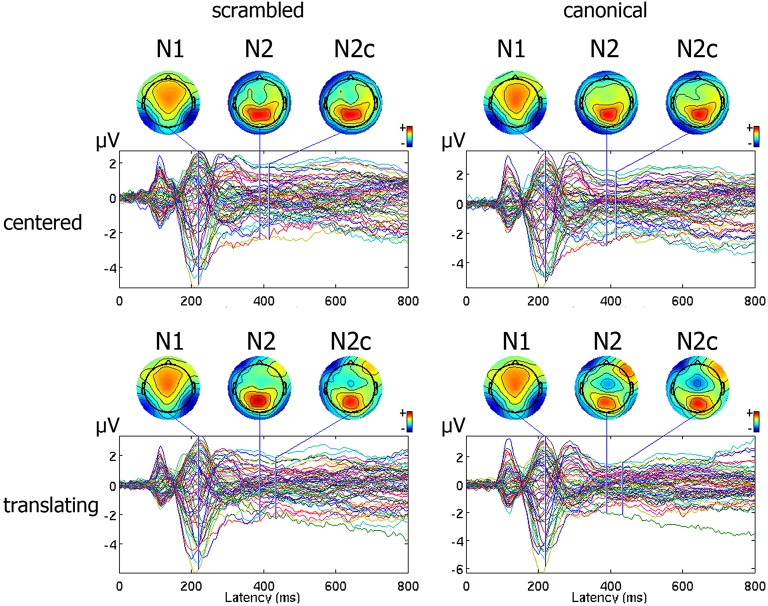
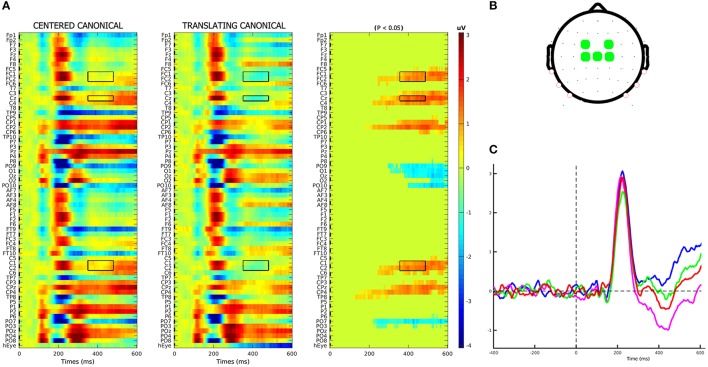
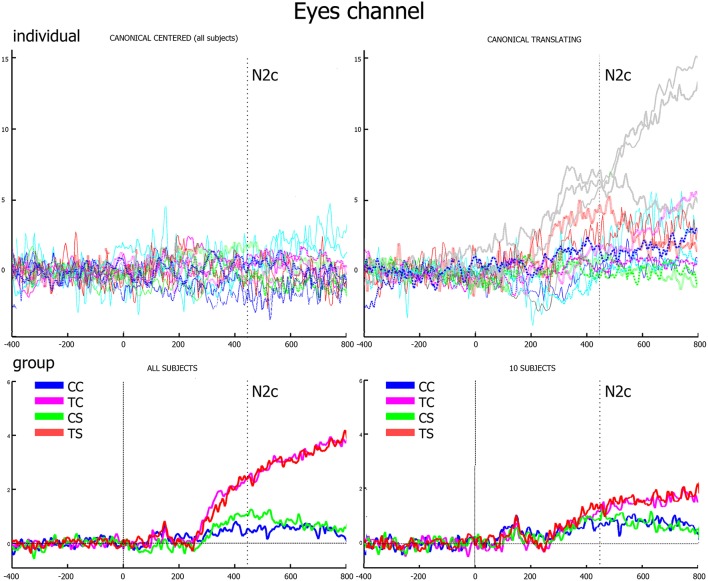
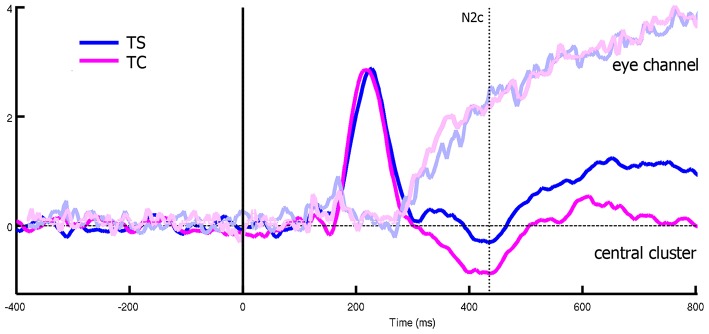
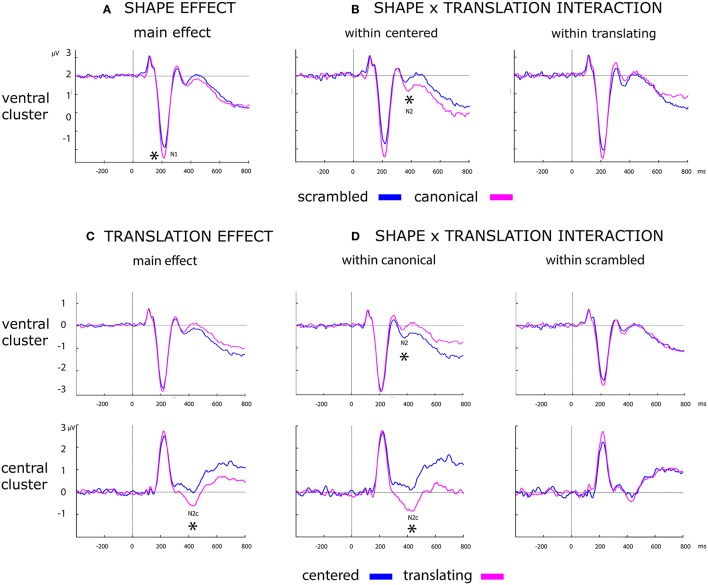
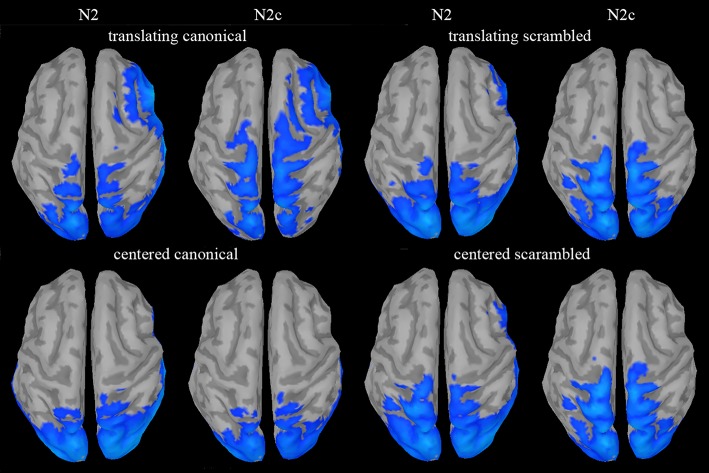
Understanding human motion, to infer the goal of others' actions, is thought to involve the observer's motor repertoire. One prominent class of actions, the human locomotion, has been object of several studies, all focused on manipulating the shape of degraded human figures like point-light walker (PLW) stimuli, represented as walking on the spot. Nevertheless, since the main goal of the locomotor function is to displace the whole body from one position to the other, these stimuli might not fully represent a goal-directed action and thus might not be able to induce the same motor resonance mechanism expected when observing a natural locomotion. To explore this hypothesis, we recorded the event-related potentials (ERP) of canonical/scrambled and translating/centered PLWs decoding. We individuated a novel ERP component (N2c) over central electrodes, around 435 ms after stimulus onset, for translating compared to centered PLW, only when the canonical shape was preserved. Consistently with our hypothesis, sources analysis associated this component to the activation of trunk and lower legs primary sensory-motor and supplementary motor areas. These results confirm the role of own motor repertoire in processing human action and suggest that ERP can detect the associated motor resonance only when the human figure is explicitly involved in performing a meaningful action.
理解人类运动以推断他人行动的目标,被认为涉及观察者的运动技能库。一类突出的行动,即人类行走,已成为多项研究的对象,所有这些研究都集中在操纵像点光步行者(PLW)刺激那样的退化人体图形的形状,这些图形被表示为原地行走。然而,由于运动功能的主要目标是将整个身体从一个位置移动到另一个位置,这些刺激可能无法完全代表有目标导向的行动,因此可能无法诱发观察自然行走时预期的相同运动共振机制。为了探究这一假设,我们记录了规范/打乱以及平移/居中的PLW解码的事件相关电位(ERP)。我们在刺激开始后约435毫秒,在中央电极上发现了一个新的ERP成分(N2c),仅当规范形状得以保留时,与居中的PLW相比,用于平移的PLW。与我们的假设一致,源分析将该成分与躯干和小腿的初级感觉运动及辅助运动区域的激活相关联。这些结果证实了自身运动技能库在处理人类行动中的作用,并表明ERP仅在人体图形明确参与执行有意义的行动时才能检测到相关的运动共振。