Department of Psychology and Center for Neuroscience, Vrije Universiteit Brussel, Pleinlaan 2, 1050, Brussels, Belgium.
Mediathèque Jean Jacquy, Service de Neurologie, CHU-Charleroi, Charleroi, Belgium.
Cerebellum. 2020 Dec;19(6):833-868. doi: 10.1007/s12311-020-01155-1.
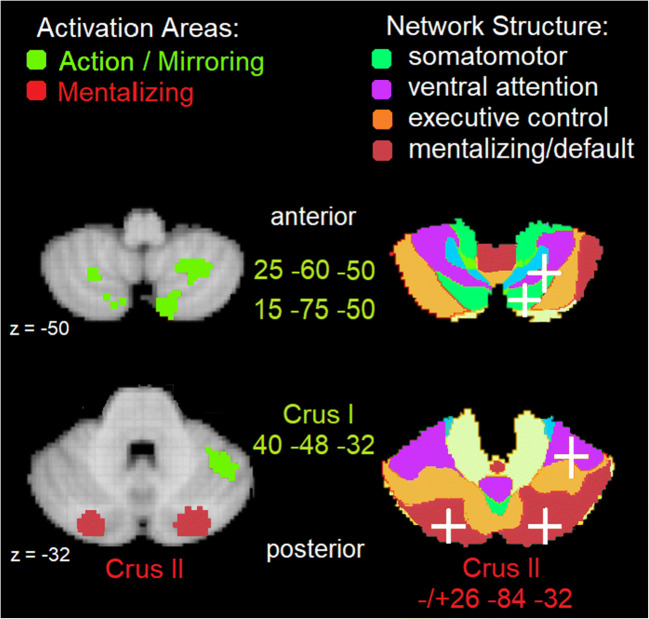
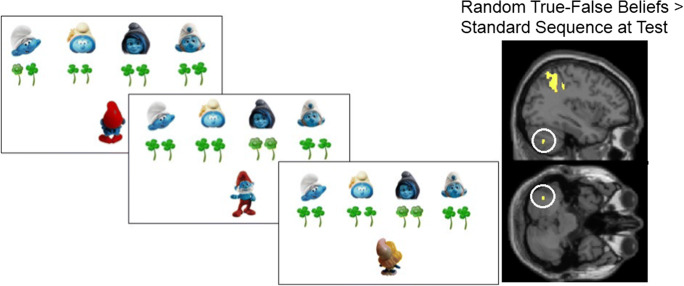
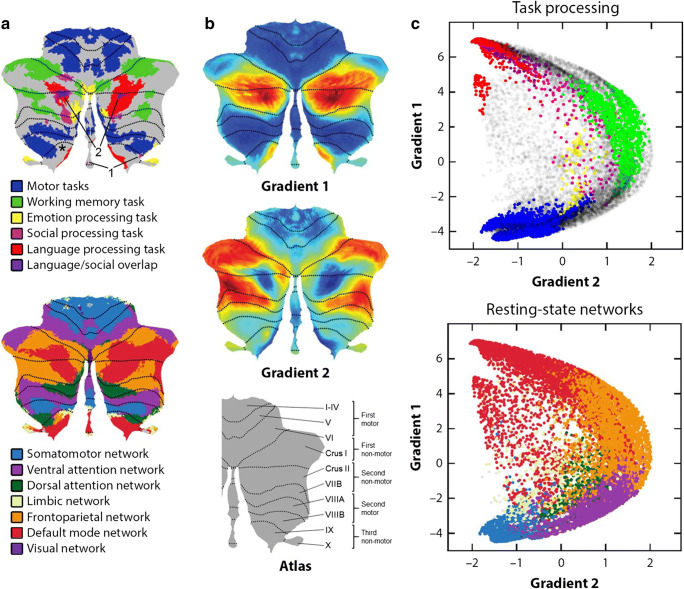
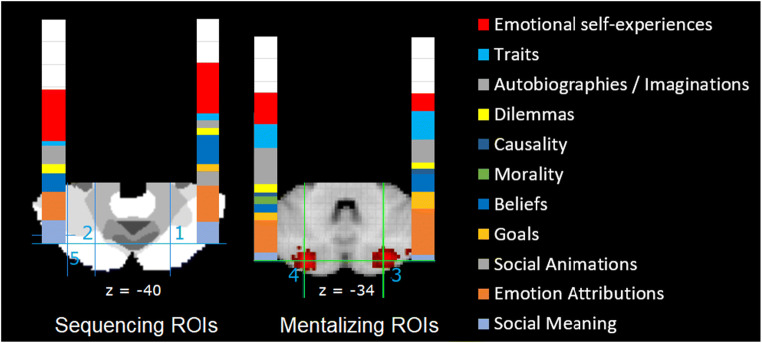
The traditional view on the cerebellum is that it controls motor behavior. Although recent work has revealed that the cerebellum supports also nonmotor functions such as cognition and affect, only during the last 5 years it has become evident that the cerebellum also plays an important social role. This role is evident in social cognition based on interpreting goal-directed actions through the movements of individuals (social "mirroring") which is very close to its original role in motor learning, as well as in social understanding of other individuals' mental state, such as their intentions, beliefs, past behaviors, future aspirations, and personality traits (social "mentalizing"). Most of this mentalizing role is supported by the posterior cerebellum (e.g., Crus I and II). The most dominant hypothesis is that the cerebellum assists in learning and understanding social action sequences, and so facilitates social cognition by supporting optimal predictions about imminent or future social interaction and cooperation. This consensus paper brings together experts from different fields to discuss recent efforts in understanding the role of the cerebellum in social cognition, and the understanding of social behaviors and mental states by others, its effect on clinical impairments such as cerebellar ataxia and autism spectrum disorder, and how the cerebellum can become a potential target for noninvasive brain stimulation as a therapeutic intervention. We report on the most recent empirical findings and techniques for understanding and manipulating cerebellar circuits in humans. Cerebellar circuitry appears now as a key structure to elucidate social interactions.
传统观点认为小脑控制运动行为。尽管最近的研究表明小脑还支持认知和情感等非运动功能,但直到最近 5 年,人们才意识到小脑在社交中也起着重要作用。这种作用在基于个体动作的目标导向行为解释的社会认知中显而易见(社交“镜像”),这与它在运动学习中的原始作用非常接近,同时在对他人心理状态的社会理解中也是如此,例如他们的意图、信念、过去的行为、未来的愿望和个性特征(社会“心理化”)。小脑后部(例如,Crus I 和 Crus II)支持大部分这种心理化作用。最主要的假说认为,小脑有助于学习和理解社交动作序列,通过支持对即将到来或未来社交互动和合作的最佳预测,从而促进社交认知。本文汇集了来自不同领域的专家,讨论了最近在理解小脑在社会认知中的作用,以及理解他人的社会行为和心理状态、小脑对小脑共济失调和自闭症谱系障碍等临床障碍的影响,以及小脑如何成为非侵入性脑刺激作为治疗干预的潜在靶点。我们报告了理解和操纵人类小脑回路的最新实证发现和技术。小脑回路现在似乎是阐明社交互动的关键结构。