School of Chinese Medicine, The University of Hong Kong, Hong Kong SAR, China.
The University of Hong Kong-Shenzhen Institute of Research and Innovation (HKU-SIRI), China.
Acta Pharmacol Sin. 2018 May;39(5):669-682. doi: 10.1038/aps.2018.27. Epub 2018 Mar 29.
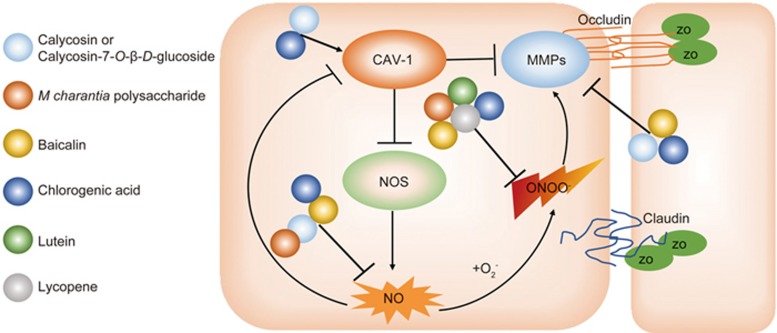
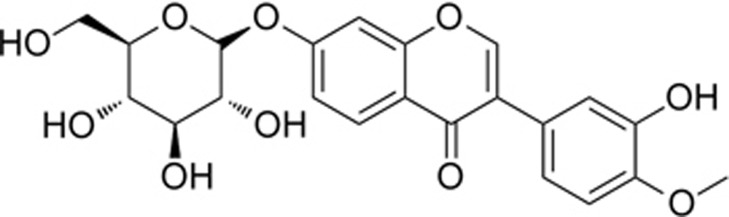
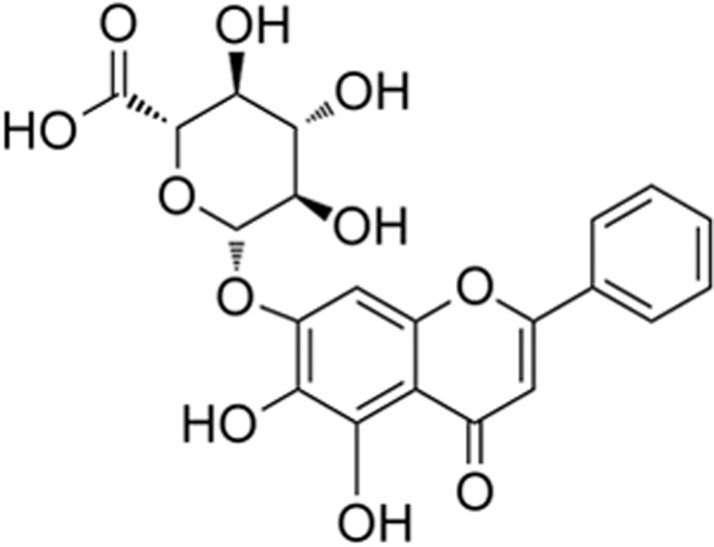
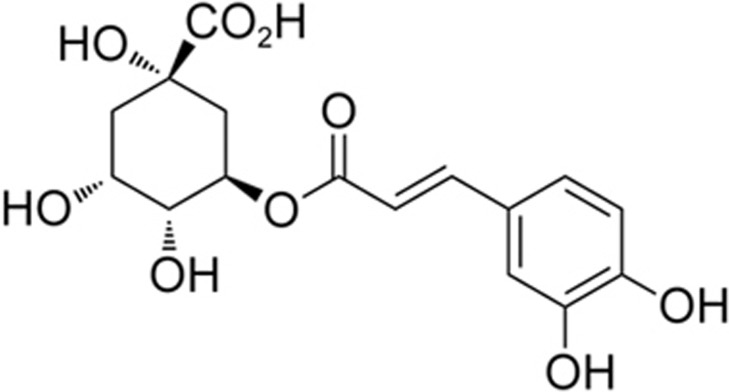
Reactive nitrogen species (RNS) play important roles in mediating cerebral ischemia-reperfusion injury. RNS activate multiple signaling pathways and participate in different cellular events in cerebral ischemia-reperfusion injury. Recent studies have indicated that caveolin-1 and matrix metalloproteinase (MMP) are important signaling molecules in the pathological process of ischemic brain injury. During cerebral ischemia-reperfusion, the production of nitric oxide (NO) and peroxynitrite (ONOO), two representative RNS, down-regulates the expression of caveolin-1 (Cav-1) and, in turn, further activates nitric oxide synthase (NOS) to promote RNS generation. The increased RNS further induce MMP activation and mediate disruption of the blood-brain barrier (BBB), aggravating the brain damage in cerebral ischemia-reperfusion injury. Therefore, the feedback interaction among RNS/Cav-1/MMPs provides an amplified mechanism for aggravating ischemic brain damage during cerebral ischemia-reperfusion injury. Targeting the RNS/Cav-1/MMP pathway could be a promising therapeutic strategy for protecting against cerebral ischemia-reperfusion injury. In this mini-review article, we highlight the important role of the RNS/Cav-1/MMP signaling cascades in ischemic stroke injury and review the current progress of studies seeking therapeutic compounds targeting the RNS/Cav-1/MMP signaling cascades to attenuate cerebral ischemia-reperfusion injury. Several representative natural compounds, including calycosin-7-O-β-D-glucoside, baicalin, Momordica charantia polysaccharide (MCP), chlorogenic acid, lutein and lycopene, have shown potential for targeting the RNS/Cav-1/MMP signaling pathway to protect the brain in ischemic stroke. Therefore, the RNS/Cav-1/MMP pathway is an important therapeutic target in ischemic stroke treatment.
活性氮物种 (RNS) 在介导脑缺血再灌注损伤中发挥重要作用。RNS 激活多种信号通路,并参与脑缺血再灌注损伤中的不同细胞事件。最近的研究表明,窖蛋白-1 和基质金属蛋白酶 (MMP) 是缺血性脑损伤病理过程中的重要信号分子。在脑缺血再灌注期间,两种代表性 RNS(一氧化氮 (NO) 和过氧亚硝酸盐 (ONOO-))的产生下调窖蛋白-1 (Cav-1) 的表达,进而进一步激活一氧化氮合酶 (NOS) 以促进 RNS 的产生。增加的 RNS 进一步诱导 MMP 激活并介导血脑屏障 (BBB) 的破坏,加重脑缺血再灌注损伤中的脑损伤。因此,RNS/Cav-1/MMP 之间的反馈相互作用为在脑缺血再灌注损伤期间加重缺血性脑损伤提供了放大机制。针对 RNS/Cav-1/MMP 途径可能是一种有前途的治疗策略,可用于保护脑免受脑缺血再灌注损伤。在这篇迷你综述文章中,我们强调了 RNS/Cav-1/MMP 信号级联在缺血性中风损伤中的重要作用,并回顾了目前针对 RNS/Cav-1/MMP 信号级联寻求治疗化合物以减轻脑缺血再灌注损伤的研究进展。几种代表性的天然化合物,包括毛蕊异黄酮-7-O-β-D-葡萄糖苷、黄芩苷、苦瓜多糖 (MCP)、绿原酸、叶黄素和番茄红素,已显示出针对 RNS/Cav-1/MMP 信号通路的潜力,以保护缺血性中风中的大脑。因此,RNS/Cav-1/MMP 途径是缺血性中风治疗中的一个重要治疗靶点。