Ellwood Elizabeth R, Kimberly Paul, Guralnick Robert, Flemons Paul, Love Kevin, Ellis Shari, Allen Julie M, Best Jason H, Carter Richard, Chagnoux Simon, Costello Robert, Denslow Michael W, Dunckel Betty A, Ferriter Meghan M, Gilbert Edward E, Goforth Christine, Groom Quentin, Krimmel Erica R, LaFrance Raphael, Martinec Joann Lacey, Miller Andrew N, Minnaert-Grote Jamie, Nash Thomas, Oboyski Peter, Paul Deborah L, Pearson Katelin D, Pentcheff N Dean, Roberts Mari A, Seltzer Carrie E, Soltis Pamela S, Stephens Rhiannon, Sweeney Patrick W, von Konrat Matt, Wall Adam, Wetzer Regina, Zimmerman Charles, Mast Austin R
La Brea Tar Pits & Museum, in Los Angeles, California, and was with the Department of Biological Science at Florida State University, in Tallahassee.
Smithsonian Institution, National Museum of Natural History, in Washington, DC.
Bioscience. 2018 Feb 1;68(2):112-124. doi: 10.1093/biosci/bix143. Epub 2018 Jan 17.
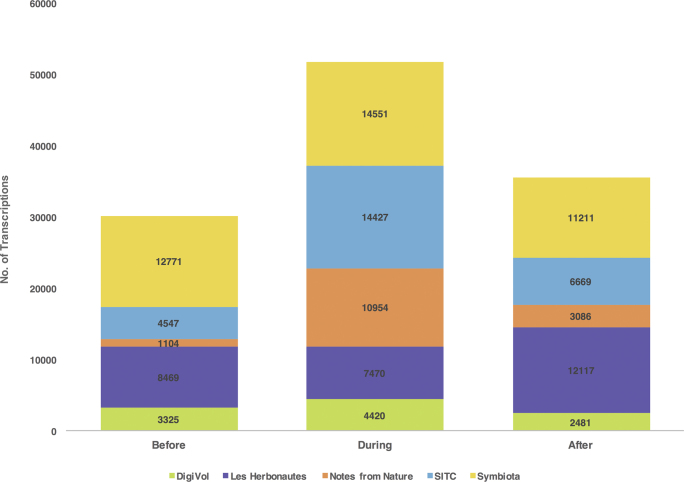
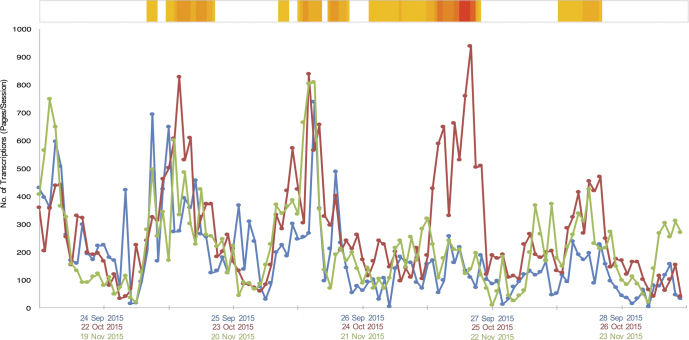
The digitization of biocollections is a critical task with direct implications for the global community who use the data for research and education. Recent innovations to involve citizen scientists in digitization increase awareness of the value of biodiversity specimens; advance science, technology, engineering, and math literacy; and build sustainability for digitization. In support of these activities, we launched the first global citizen-science event focused on the digitization of biodiversity specimens: Worldwide Engagement for Digitizing Biocollections (WeDigBio). During the inaugural 2015 event, 21 sites hosted events where citizen scientists transcribed specimen labels via online platforms (DigiVol, Les Herbonautes, Notes from Nature, the Smithsonian Institution's Transcription Center, and Symbiota). Many citizen scientists also contributed off-site. In total, thousands of citizen scientists around the world completed over 50,000 transcription tasks. Here, we present the process of organizing an international citizen-science event, an analysis of the event's effectiveness, and future directions-content now foundational to the growing WeDigBio event.
生物样本库的数字化是一项至关重要的任务,对将这些数据用于研究和教育的全球群体有着直接影响。近期让公民科学家参与数字化的创新举措提高了人们对生物多样性标本价值的认识;提升了科学、技术、工程和数学素养;并为数字化建设了可持续性。为支持这些活动,我们发起了首个聚焦生物多样性标本数字化的全球公民科学活动:全球生物样本数字化参与活动(WeDigBio)。在2015年的首届活动中,21个地点举办了相关活动,公民科学家通过在线平台(DigiVol、Les Herbonautes、自然笔记、史密森学会转录中心和Symbiota)转录标本标签。许多公民科学家也在非活动现场做出了贡献。全世界数以千计的公民科学家总共完成了超过50000项转录任务。在此,我们介绍组织一场国际公民科学活动的过程、对该活动成效的分析以及未来方向——这些内容现已成为不断发展的WeDigBio活动的基础。