Center for Oncological Research (CORE), University of Antwerp, Wilrijk, Belgium.
StatUa Center for Statistics, University of Antwerp, Belgium.
Mol Oncol. 2018 Jun;12(6):830-854. doi: 10.1002/1878-0261.12197. Epub 2018 May 1.
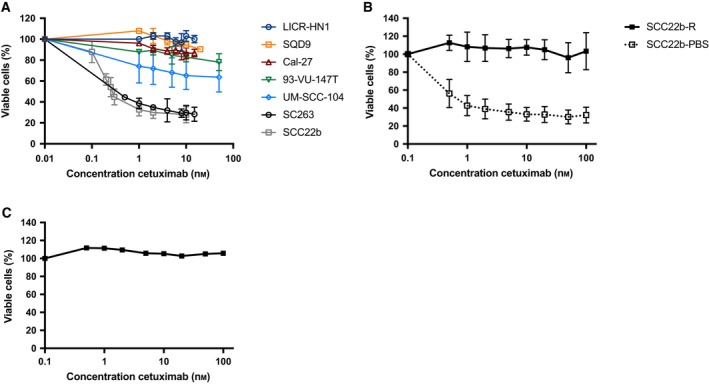
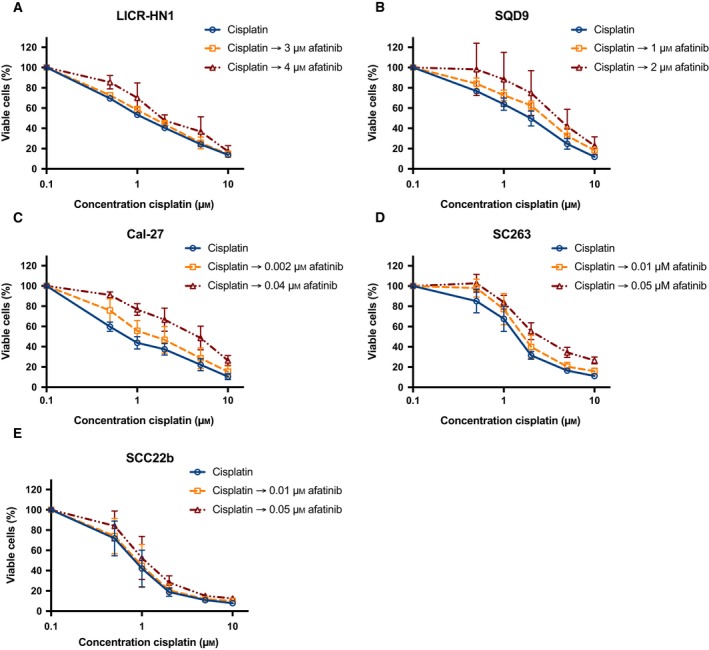
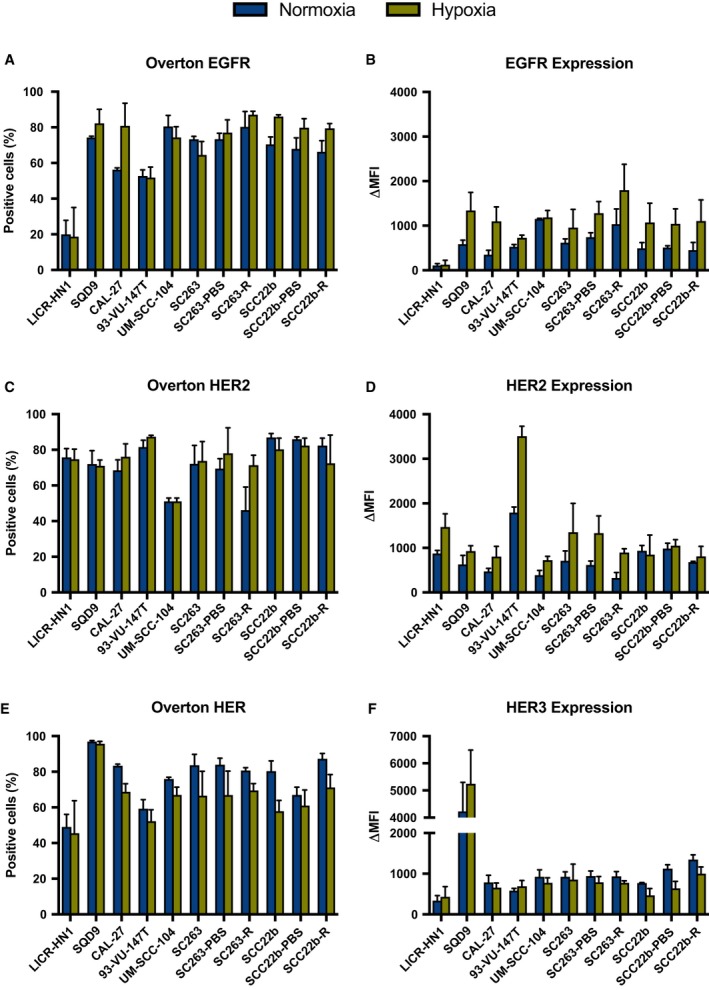
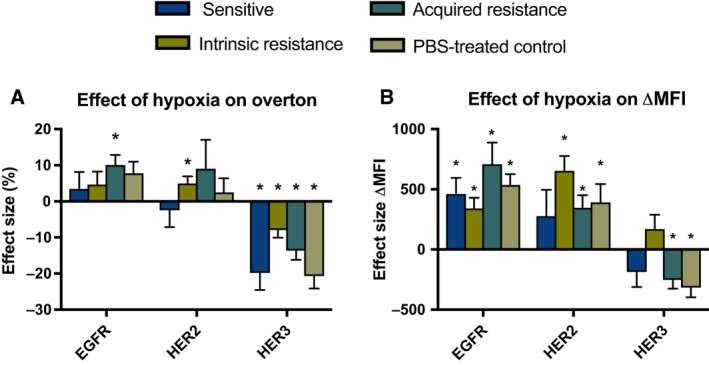
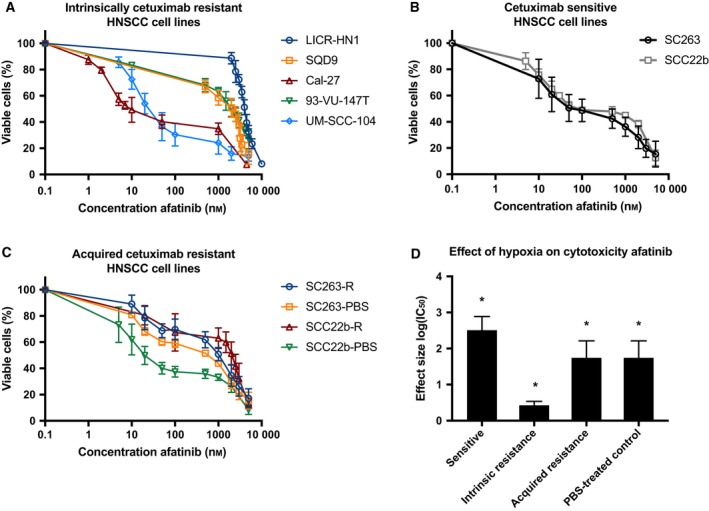
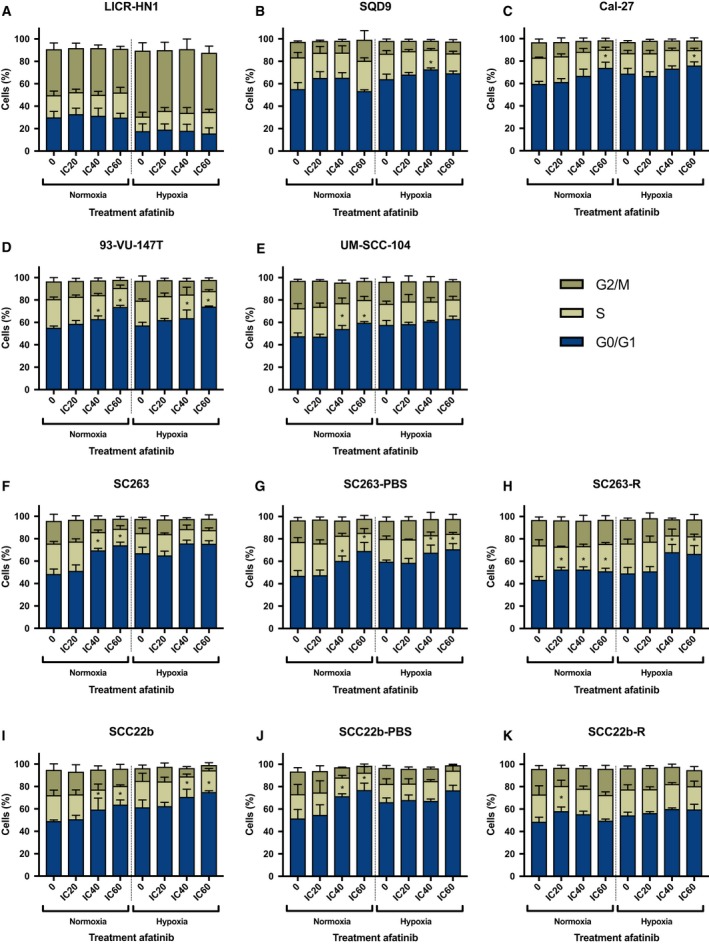
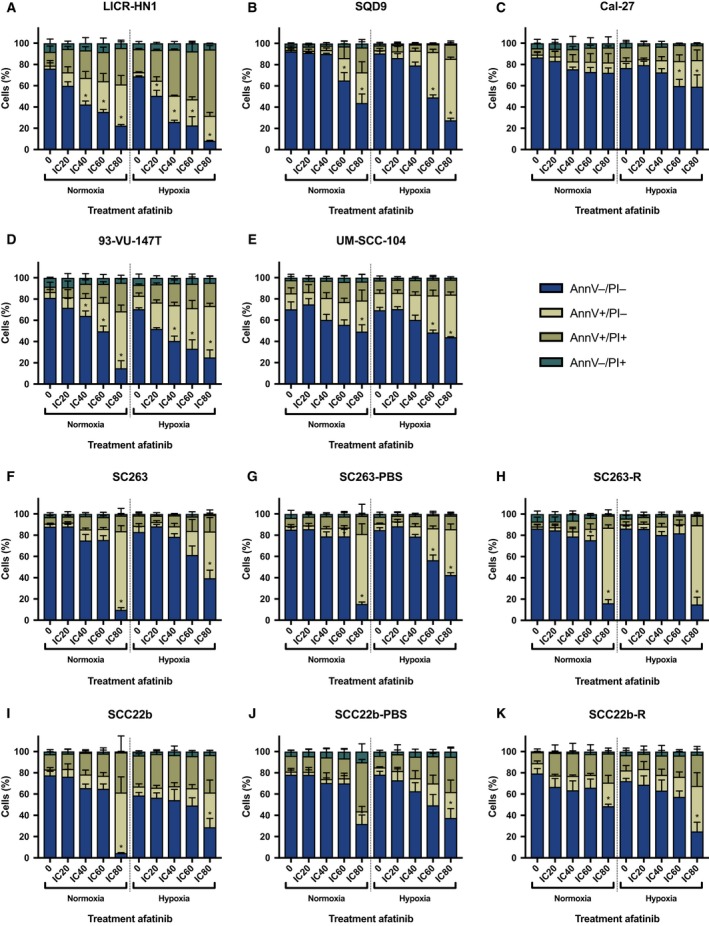
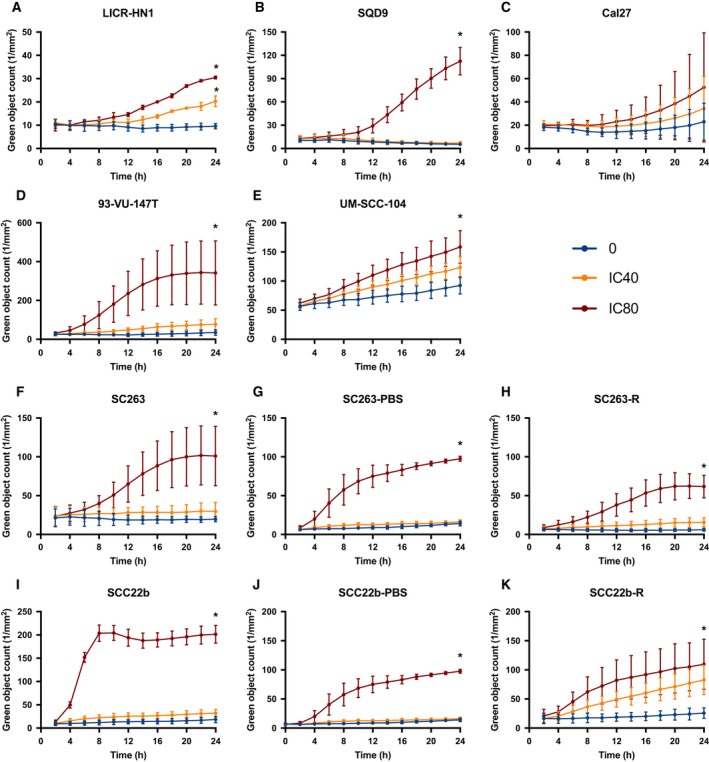
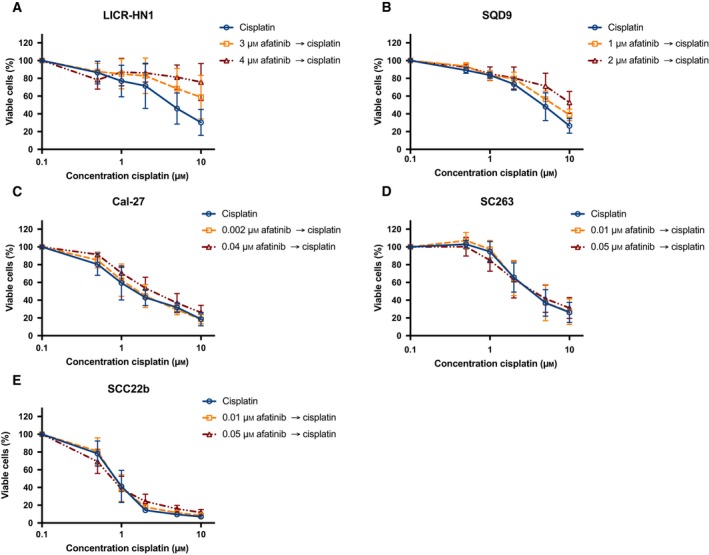
The epidermal growth factor receptor (EGFR, HER1) is a therapeutic target in head and neck squamous cell carcinoma (HNSCC). After initial promising results with EGFR-targeted therapies such as cetuximab, therapeutic resistance has become a major clinical problem, and new treatment options are therefore necessary. Moreover, the relationship between HER receptors, anti-EGFR therapies, and the human papillomavirus (HPV) status in HNSCC is not fully understood. In contrast to first-generation EGFR inhibitors, afatinib irreversibly inhibits multiple HER receptors simultaneously. Therefore, treatment with afatinib might result in a more pronounced therapeutic benefit, even in patients experiencing cetuximab resistance. In this study, the cytotoxic effect of afatinib as single agent and in combination with cisplatin was investigated in cetuximab-sensitive, intrinsically cetuximab-resistant, and acquired cetuximab-resistant HNSCC cell lines with different HPV status under normoxia and hypoxia. Furthermore, the influence of cetuximab resistance, HPV, and hypoxia on the expression of HER receptors was investigated. Our results demonstrated that afatinib was able to establish cytotoxicity in cetuximab-sensitive, intrinsically cetuximab-resistant, and acquired cetuximab-resistant HNSCC cell lines, independent of the HPV status. However, cross-resistance between cetuximab and afatinib might be possible. Treatment with afatinib caused a G /G cell cycle arrest as well as induction of apoptotic cell death. Additive to antagonistic interactions between afatinib and cisplatin could be observed. Neither cetuximab resistance nor HPV status significantly influenced the expression of HER receptors in HNSCC cell lines. In contrast, the expression of EGFR, HER2, and HER3 was significantly altered under hypoxia. Oxygen deficiency is a common characteristic of HNSCC tumors, and these hypoxic tumor regions often contain cells that are more resistant to treatment. However, we observed that afatinib maintained its cytotoxic effect under hypoxia. In conclusion, our preclinical data support the hypothesis that afatinib might be a promising therapeutic strategy to treat patients with HNSCC experiencing intrinsic or acquired cetuximab resistance.
表皮生长因子受体(EGFR,HER1)是头颈部鳞状细胞癌(HNSCC)的治疗靶点。在曲妥珠单抗等 EGFR 靶向治疗最初取得良好效果后,治疗耐药性已成为一个主要的临床问题,因此需要新的治疗选择。此外,HER 受体、抗 EGFR 治疗与 HNSCC 中人类乳头瘤病毒(HPV)状态之间的关系尚未完全清楚。与第一代 EGFR 抑制剂不同,阿法替尼可同时不可逆地抑制多种 HER 受体。因此,即使在经历曲妥珠单抗耐药的患者中,阿法替尼的治疗也可能产生更显著的治疗益处。在这项研究中,在常氧和缺氧条件下,我们研究了阿法替尼单药及其与顺铂联合应用在具有不同 HPV 状态的曲妥珠单抗敏感、固有曲妥珠单抗耐药和获得性曲妥珠单抗耐药的 HNSCC 细胞系中的细胞毒性作用。此外,我们还研究了曲妥珠单抗耐药、HPV 和缺氧对 HER 受体表达的影响。我们的结果表明,阿法替尼能够在曲妥珠单抗敏感、固有曲妥珠单抗耐药和获得性曲妥珠单抗耐药的 HNSCC 细胞系中建立细胞毒性作用,而与 HPV 状态无关。然而,曲妥珠单抗和阿法替尼之间可能存在交叉耐药性。阿法替尼治疗导致 G / G 细胞周期停滞和凋亡细胞死亡的诱导。阿法替尼和顺铂之间可以观察到相加拮抗作用。曲妥珠单抗耐药性或 HPV 状态对 HNSCC 细胞系中 HER 受体的表达没有显著影响。相反,EGFR、HER2 和 HER3 的表达在缺氧下显著改变。缺氧是 HNSCC 肿瘤的共同特征,这些缺氧肿瘤区域通常含有对治疗更耐药的细胞。然而,我们观察到阿法替尼在缺氧条件下保持其细胞毒性作用。总之,我们的临床前数据支持阿法替尼可能是治疗固有或获得性曲妥珠单抗耐药的 HNSCC 患者的一种有前途的治疗策略的假设。