National Clinical Research Center of Kidney Diseases, Jinling Hospital, Nanjing University School of Medicine, Nanjing, P. R. China.
Department of Endocrine, Nanjing Pukou Central Hospital, Nanjing Medical University, Nanjing, P. R. China.
Sci Rep. 2018 Apr 3;8(1):5585. doi: 10.1038/s41598-018-23638-2.
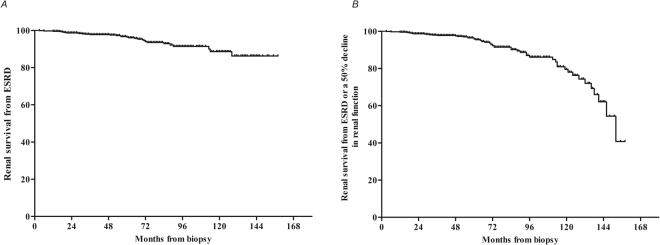
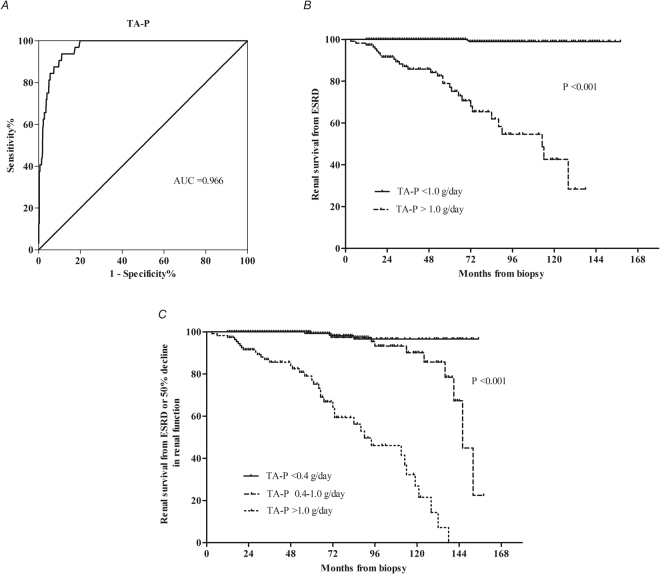
This study investigated the clinicopathological characteristics of Henoch-Schönlein purpura nephritis (HSPN) in Chinese adult patients and analyzed the renal outcomes and prognostic risk factors for progression to end-stage renal disease (ESRD). Adult patients who had biopsy-proven HSPN were studied. Their clinicopathological data, renal prognoses and related risk factors were assessed. A total of 698 patients were studied, including 363 men (52.0%) and 335 women (48.0%). Most of the patients had hematuria (85.8%) and/or proteinuria (82.1%). During a median follow-up of 54.0 months, 32 patients (4.6%) progressed to ESRD. The 5- and 10-year cumulative renal survival rates from ESRD were 96.4% and 88.6%, respectively. Baseline urinary protein, renal insufficiency, glomerular sclerosis and tubular atrophy/interstitial fibrosis were independent predictors of renal outcomes. Both the time-average mean arterial pressure and proteinuria during follow-up also influenced the renal prognosis. The patients with a time-average proteinuria <0.4 g/day had the lowest rates of ESRD or a 50% decline in renal function. In conclusion, identifying of clinical and histological prognostic factors may permit the prediction of renal outcomes. The optimal goal of therapy for HSPN patients may be to lower proteinuria to <0.4 g/day and control hypertension to achieve an ideal renal outcome.
本研究调查了中国成人过敏性紫癜肾炎(HSPN)的临床病理特征,并分析了进展为终末期肾病(ESRD)的肾脏结局和预后危险因素。研究了经活检证实的 HSPN 成人患者。评估了他们的临床病理数据、肾脏预后和相关危险因素。共研究了 698 例患者,其中男性 363 例(52.0%),女性 335 例(48.0%)。大多数患者有血尿(85.8%)和/或蛋白尿(82.1%)。在中位随访 54.0 个月期间,32 例(4.6%)进展为 ESRD。ESRD 的 5 年和 10 年累积肾脏生存率分别为 96.4%和 88.6%。基线尿蛋白、肾功能不全、肾小球硬化和肾小管萎缩/间质纤维化是肾脏结局的独立预测因素。随访期间的平均动脉压和蛋白尿时间平均值也影响肾脏预后。蛋白尿时间平均值<0.4g/天的患者发生 ESRD 或肾功能下降 50%的风险最低。总之,识别临床和组织学预后因素可能有助于预测肾脏结局。HSPN 患者治疗的最佳目标可能是将蛋白尿降低至<0.4g/天并控制高血压,以达到理想的肾脏结局。