Dong Zixian, Gong Jianyang, Liao Rongfeng, Xu Shaojun
Department of Ophthalmology, the First Affiliated Hospital of Anhui Medical University School of Public Health, Anhui Medical University, Hefei, China.
Medicine (Baltimore). 2018 Apr;97(14):e9897. doi: 10.1097/MD.0000000000009897.
Neovascular glaucoma (NVG) is a severe secondary glaucoma with uncontrolled intraocular pressure that leads to serious eye pain and vision loss. Presently, the therapeutic strategies for NVG are diverse, but the therapeutic effects are still not ideal. We performed a network analysis to assess the effect of multiple therapeutic strategies on the treatment of NVG patients.
We searched public electronic databases through April 2017 using the following keywords "neovascular glaucoma," "iris neovascularization," "hemorrhagic glaucoma," and "random" without language restrictions. The outcome considered in the present analysis was treatment success rate. A network meta-analysis and multilevel mixed-effects logistic regression were used to compare regimens.
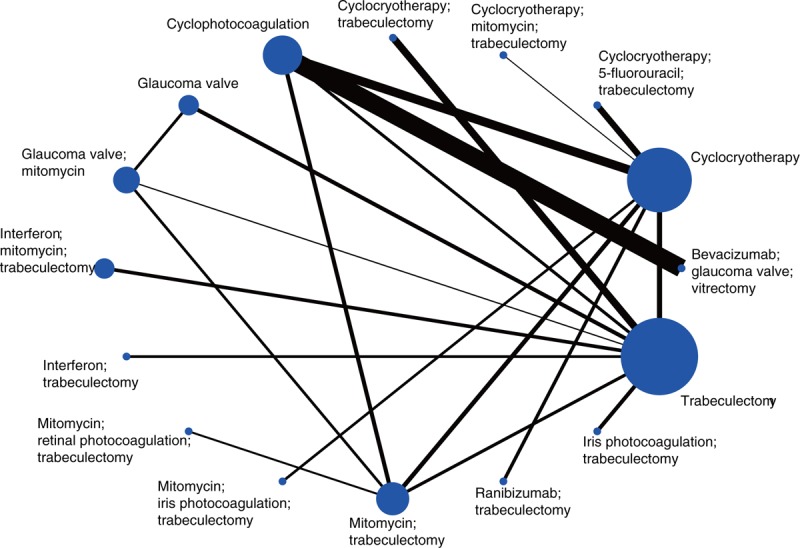
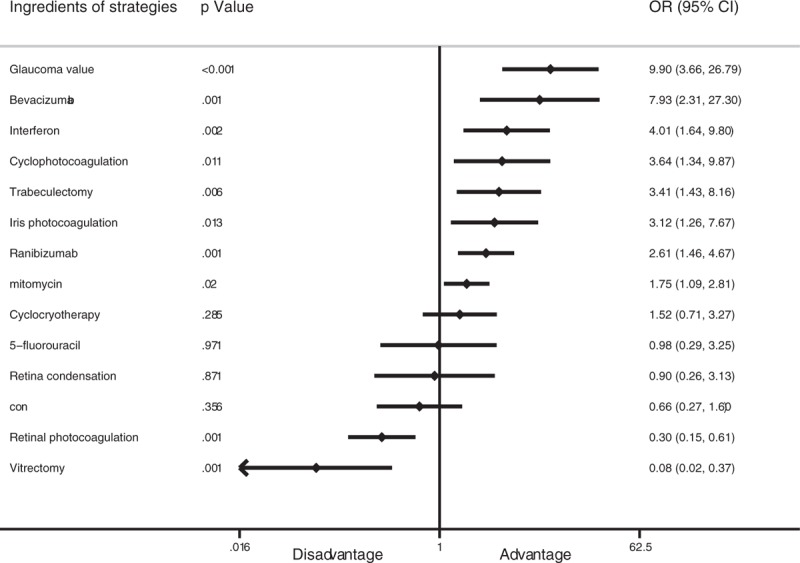
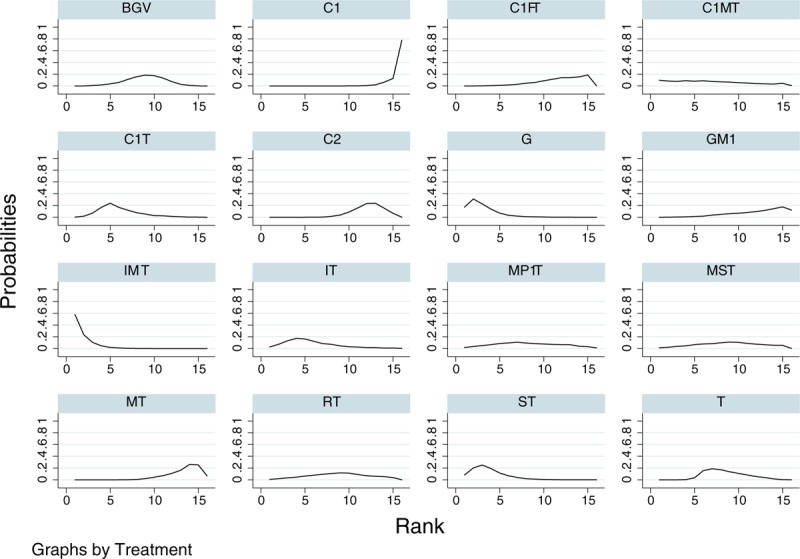
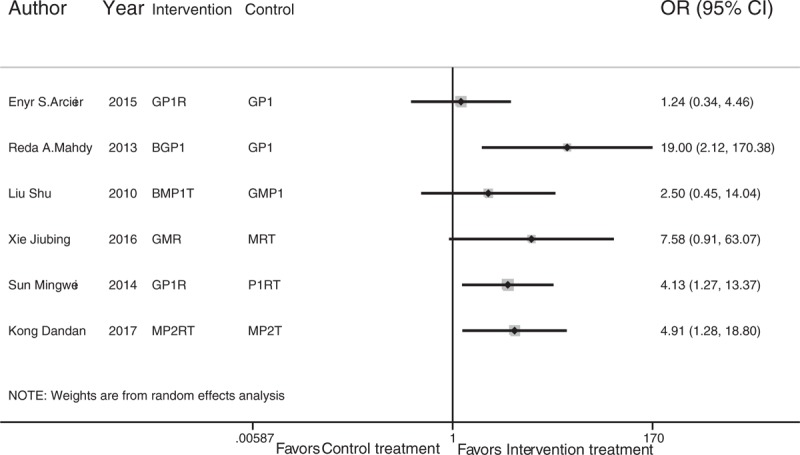
We included 27 articles assessing a total of 1884 NVG patients in our analysis. According to the network analysis, interferon and mitomycin plus trabeculectomy (94.9%), glaucoma valve implantation (86.9%), and iris photocoagulation plus trabeculectomy (81.9%) were the most likely to improve treatment success rate in NVG patients. The multilevel logistic regression analysis showed that glaucoma valve, bevacizumab, interferon, cyclophotocoagulation, trabeculectomy, iris photocoagulation, ranibizumab, and mitomycin had advantages in terms of improving treatment success rate in NVG patients. However, the application of retinal photocoagulation and vitrectomy reduced patient treatment success rate.
The regimen including mitomycin, interferon, and trabeculectomy was the most likely to improve the treatment success rate in NVG patients. The application of glaucoma valve and bevacizumab were more beneficial for improving patient treatment success rate as a surgery and as an agent, respectively.
新生血管性青光眼(NVG)是一种严重的继发性青光眼,眼压失控会导致严重的眼痛和视力丧失。目前,NVG的治疗策略多种多样,但治疗效果仍不理想。我们进行了一项网状分析,以评估多种治疗策略对NVG患者治疗的效果。
我们使用“新生血管性青光眼”“虹膜新生血管形成”“出血性青光眼”和“随机”等关键词,在2017年4月前搜索了公共电子数据库,无语言限制。本分析中考虑的结果是治疗成功率。采用网状荟萃分析和多水平混合效应逻辑回归来比较治疗方案。
我们的分析纳入了27篇评估总共1884例NVG患者的文章。根据网状分析,干扰素联合丝裂霉素加小梁切除术(94.9%)、青光眼阀植入术(86.9%)和虹膜光凝术加小梁切除术(81.9%)最有可能提高NVG患者的治疗成功率。多水平逻辑回归分析表明,青光眼阀、贝伐单抗、干扰素、睫状体光凝术、小梁切除术、虹膜光凝术、雷珠单抗和丝裂霉素在提高NVG患者治疗成功率方面具有优势。然而,视网膜光凝术和玻璃体切除术的应用降低了患者的治疗成功率。
包含丝裂霉素、干扰素和小梁切除术的治疗方案最有可能提高NVG患者的治疗成功率。青光眼阀的应用和贝伐单抗分别作为一种手术和一种药物,在提高患者治疗成功率方面更有益。