Department of Integrative Structural and Computational Biology, The Scripps Research Institute, Jupiter, FL, 33458, USA.
Department of Molecular Medicine, The Scripps Research Institute, Jupiter, FL, 33458, USA.
Nat Commun. 2018 Apr 6;9(1):1338. doi: 10.1038/s41467-018-03648-4.
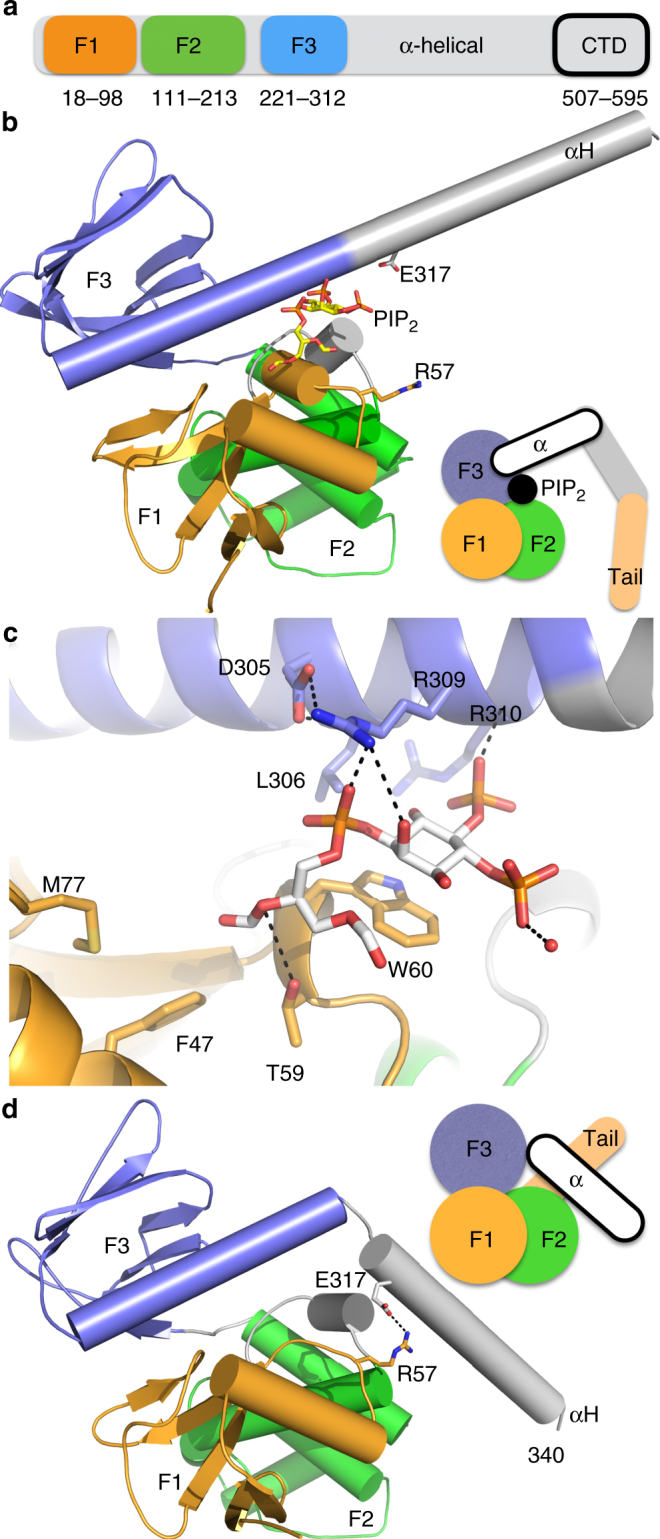
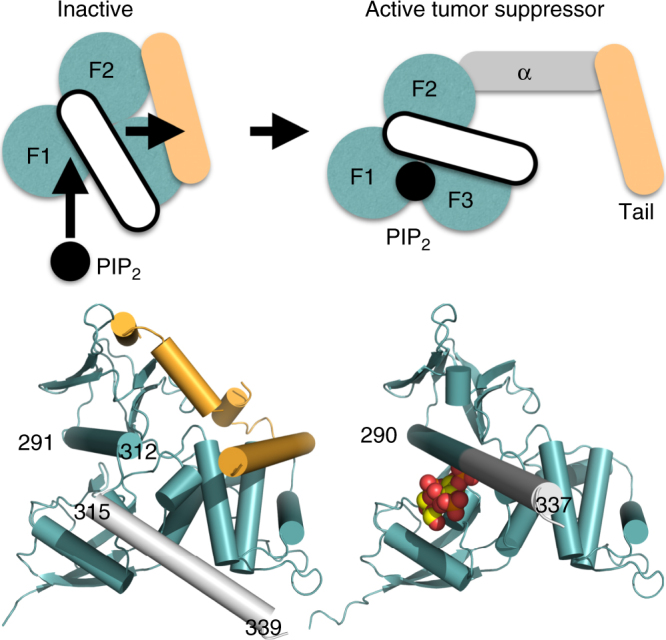
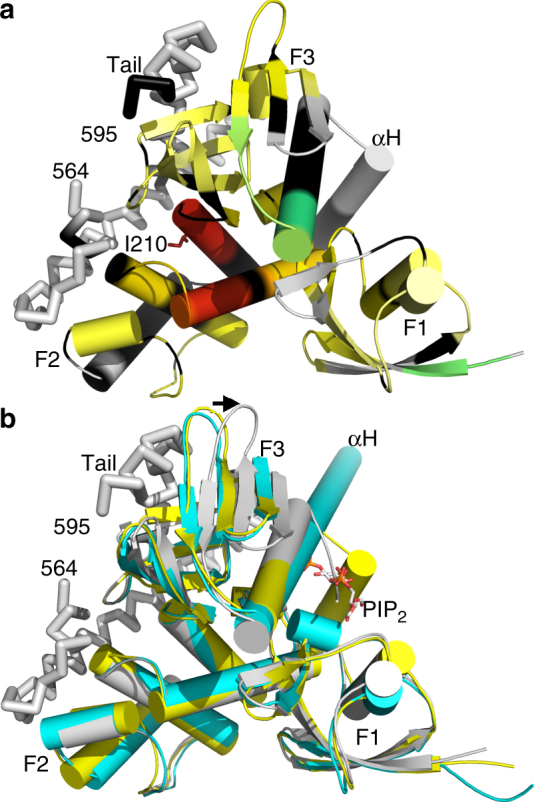
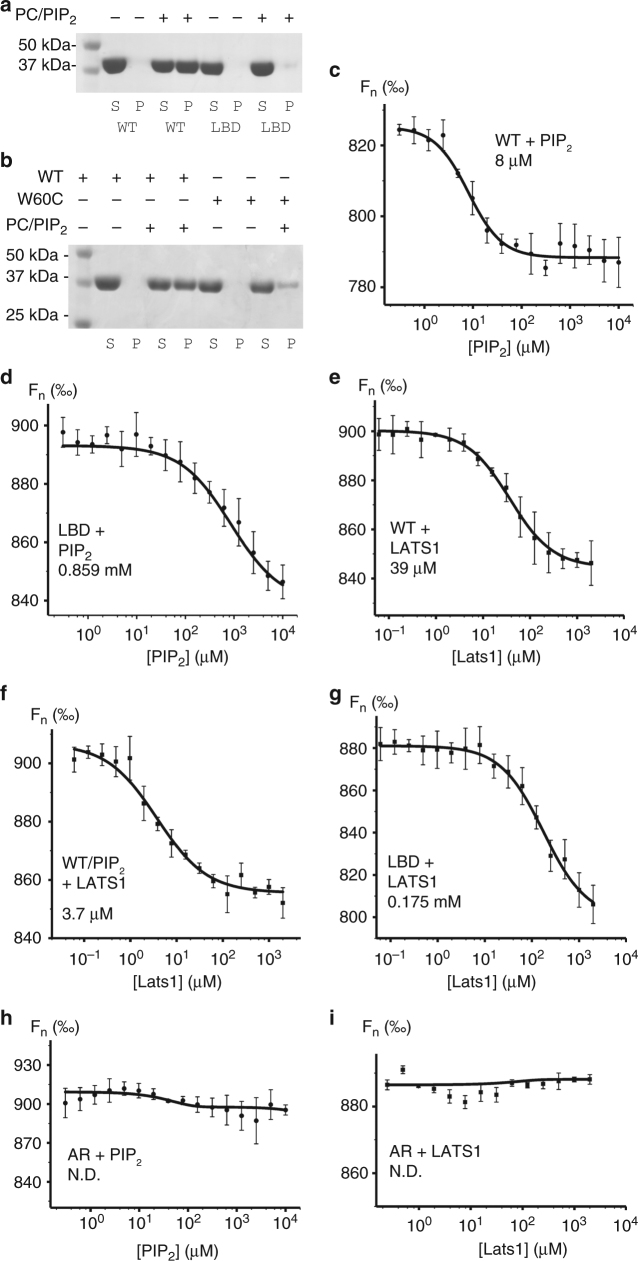
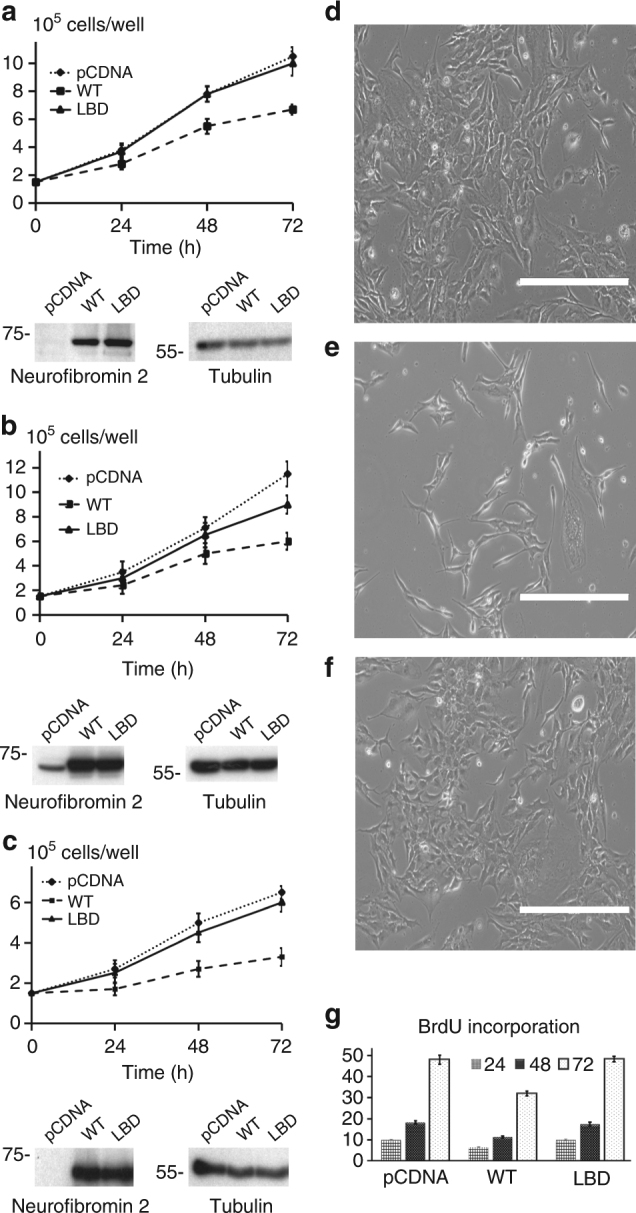
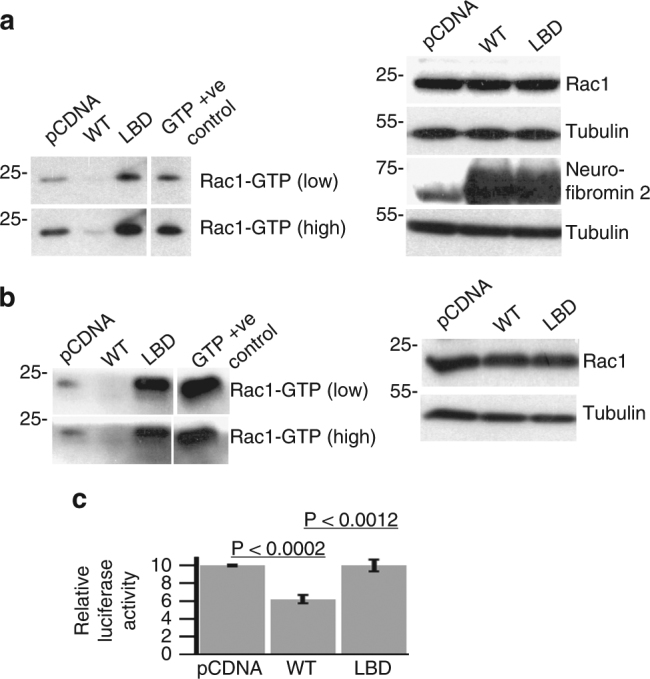
Neurofibromatosis type 2 (NF2) is a tumor-forming disease of the nervous system caused by deletion or by loss-of-function mutations in NF2, encoding the tumor suppressing protein neurofibromin 2 (also known as schwannomin or merlin). Neurofibromin 2 is a member of the ezrin, radixin, moesin (ERM) family of proteins regulating the cytoskeleton and cell signaling. The correlation of the tumor-suppressive function and conformation (open or closed) of neurofibromin 2 has been subject to much speculation, often based on extrapolation from other ERM proteins, and controversy. Here we show that lipid binding results in the open conformation of neurofibromin 2 and that lipid binding is necessary for inhibiting cell proliferation. Collectively, our results provide a mechanism in which the open conformation is unambiguously correlated with lipid binding and localization to the membrane, which are critical for the tumor-suppressive function of neurofibromin 2, thus finally reconciling the long-standing conformation and function debate.
神经纤维瘤病 2 型(NF2)是一种由 NF2 缺失或功能丧失突变引起的神经系统肿瘤形成疾病,该基因编码肿瘤抑制蛋白神经纤维瘤素 2(也称为 schwannomin 或 merlin)。神经纤维瘤素 2 是 ezrin、radixin、moesin(ERM)蛋白家族的成员,调节细胞骨架和细胞信号转导。神经纤维瘤素 2 的肿瘤抑制功能与构象(开放或关闭)之间的相关性一直备受猜测,通常基于对其他 ERM 蛋白的推断,并且存在争议。在这里,我们表明脂质结合导致神经纤维瘤素 2 处于开放构象,并且脂质结合对于抑制细胞增殖是必需的。总之,我们的结果提供了一种机制,其中开放构象与脂质结合和定位到膜上明确相关,这对于神经纤维瘤素 2 的肿瘤抑制功能至关重要,从而最终解决了长期存在的构象和功能争论。