Rouhani Shada A, Israel Kerling, Leandre Fernet, Pierre Sosthène, Bollman Brennan, Marsh Regan H
Brigham and Women's Hospital, 75 Francis Street, Boston, MA, 02115, USA.
Harvard Medical School, 25 Shattuck Street, Boston, MA, 02115, USA.
Int J Emerg Med. 2018 Apr 6;11(1):22. doi: 10.1186/s12245-018-0182-y.
In many resource-limited settings, emergency medicine (EM) is underdeveloped and formal EM training limited. Residencies and fellowships are an ideal long-term solution but cannot meet immediate needs for emergency providers, while short-term programs are often too limited in content. We describe a third method successfully implemented in Haiti: a medium-duration certificate program to meet the immediate need for emergency specialists.
In conjunction with the Haitian Ministry of Health and National Medical School, we developed and implemented a novel, 6-month EM certificate program to build human resources for health and emergency care capacity. The program consisted of didactic and supervised clinical components, covering core content in EM. Didactics included lectures, simulations, hands-on skill-sessions, and journal clubs. Supervised clinical time reinforced concepts and taught an EM approach to patient care.
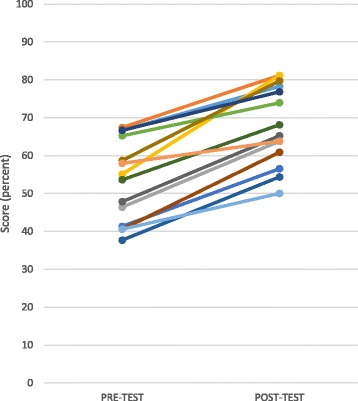
Fourteen physicians from around Haiti successfully completed the program; all improved from their pre-test to post-test. At the end of the program and 9-month post-program evaluations, participants rated the program highly, and most felt they used their new knowledge daily. Participants found clinical supervision and simulation particularly useful. Key components to our program's success included collaboration with the Ministry of Health and National Medical School, supervised clinical time, and the continual presence of a course director. The program could be improved by a more flexible curriculum and by grouping participants by baseline knowledge levels.
Medium-duration certificate programs offer a viable option for addressing immediate human resource gaps in emergency care, and our program offers a model for implementation in resource-limited settings. Similar options should be considered for other emerging specialties in resource-limited settings.
在许多资源有限的地区,急诊医学发展不足,正规的急诊医学培训也很有限。住院医师培训和专科培训是理想的长期解决方案,但无法满足对急诊医疗人员的迫切需求,而短期项目的内容往往过于有限。我们描述了一种在海地成功实施的第三种方法:一个为期中等时长的证书项目,以满足对急诊专家的迫切需求。
我们与海地卫生部和国家医学院合作,开发并实施了一个新颖的、为期6个月的急诊医学证书项目,以建设卫生人力资源和急诊护理能力。该项目包括理论教学和临床督导部分,涵盖急诊医学的核心内容。理论教学包括讲座、模拟、实践技能课程和学术交流会。临床督导时间强化了相关概念,并教授了急诊医学的患者护理方法。
来自海地各地的14名医生成功完成了该项目;所有人的测试后成绩都比测试前有所提高。在项目结束时以及项目结束9个月后的评估中,参与者对该项目评价很高,大多数人觉得他们每天都在运用新知识。参与者发现临床督导和模拟特别有用。我们项目成功的关键因素包括与卫生部和国家医学院的合作、临床督导时间以及课程主任的持续参与。该项目可以通过更灵活的课程设置以及根据基线知识水平对参与者进行分组来改进。
中等时长的证书项目为解决急诊护理中迫在眉睫的人力资源缺口提供了一个可行的选择,我们的项目为在资源有限的地区实施提供了一个范例。对于资源有限地区的其他新兴专科,也应考虑类似的选择。