Wang Yong, Dansette Patrick M, Pigeon Pascal, Top Siden, McGlinchey Michael J, Mansuy Daniel, Jaouen Gérard
PSL , Chimie ParisTech , 11 rue Pierre et Marie Curie , F-75005 Paris , France.
Sorbonne Universités , UPMC Univ Paris 6 , UMR 8232 CNRS , IPCM , Place Jussieu , F-75005 Paris , France . Email:
Chem Sci. 2017 Nov 16;9(1):70-78. doi: 10.1039/c7sc04213b. eCollection 2018 Jan 7.
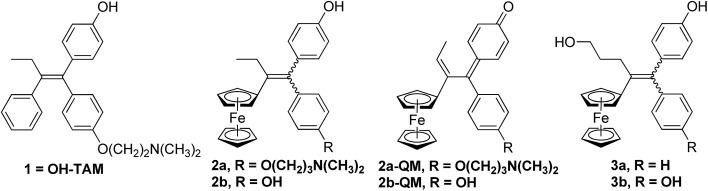
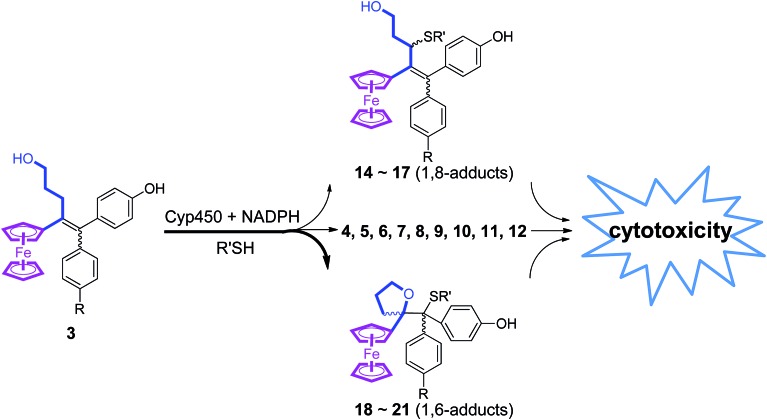
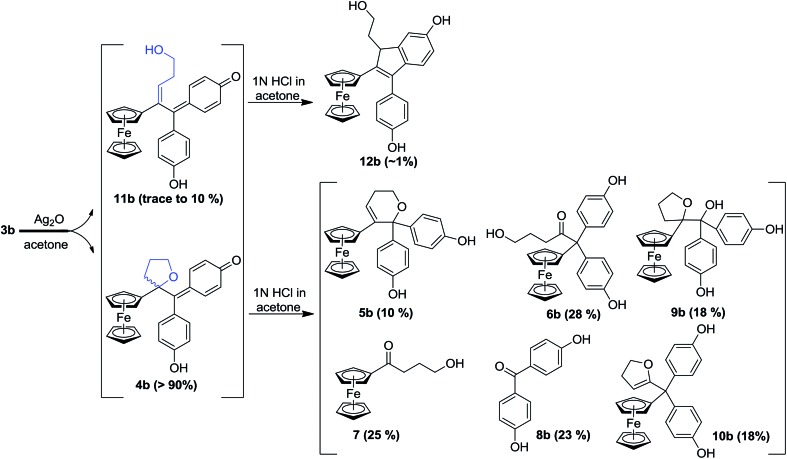
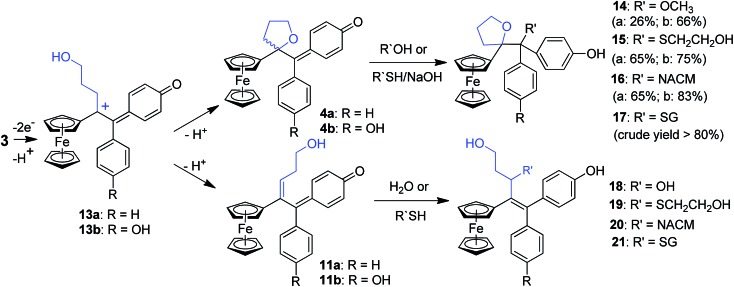
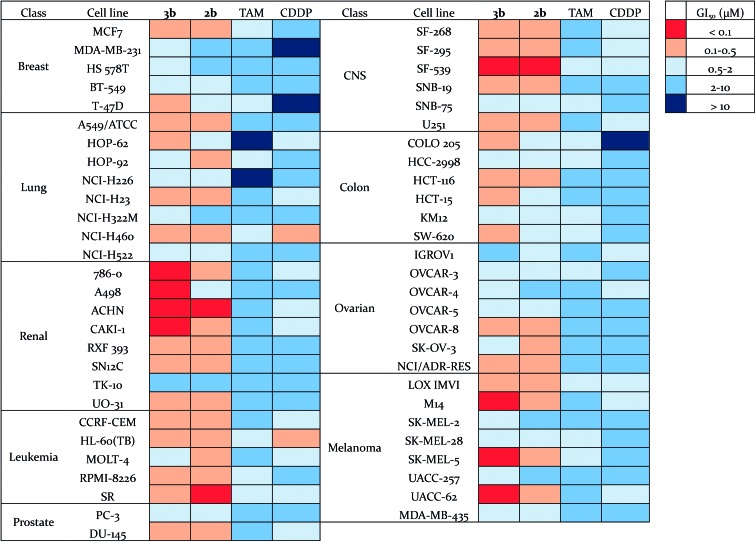
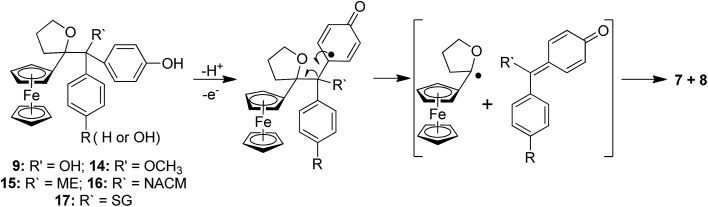
Organometallic compounds bearing the redox motif [ferrocenyl--phenol] have very promising antiproliferative properties which have been further improved by incorporating pertinent substituents able to engender new mechanisms. Here we show that novel ferrociphenols bearing a hydroxypropyl chain exhibit strong antiproliferative effects, in most cases much better than those of cisplatin, tamoxifen, or of previously described ferrociphenols devoid of this terminal OH. This is illustrated, in the case of one of these compounds, by its IC values of 110 nM for MDA-MB-231 triple negative breast cancer cells and of 300 nM for cisplatin-resistant A2780cisR human ovarian cancer cells, and by its GI values lower than 100 nM towards a series of melanoma and renal cancer cell lines of the NCI-60 panel. Interestingly, oxidative metabolism of these hydroxypropyl-ferrociphenols yields two kinds of quinone methides (QMs) that readily react with various nucleophiles, such as glutathione, to give 1,6- and 1,8-adducts. Protonation of these quinone methides generates numerous reactive metabolites leading eventually to many rearrangement and cleavage products. This unprecedented and fully characterized metabolic profile involving a wide range of electrophilic metabolites that should react with cell macromolecules may be linked to the remarkable profile of antiproliferative activities of this new series. Indeed, the great diversity of unexpected reactive metabolites found upon oxidation will allow them to adapt to various situations present in the cancer cell. These data initiate a novel strategy for the rational design of anticancer molecules, thus opening the way to new organometallic potent anticancer drug candidates for the treatment of chemoresistant cancers.
带有氧化还原基序[二茂铁基-苯酚]的有机金属化合物具有非常有前景的抗增殖特性,通过引入能够产生新机制的相关取代基,这些特性得到了进一步改善。在此我们表明,带有羟丙基链的新型二茂铁苯酚表现出很强的抗增殖作用,在大多数情况下,其效果远优于顺铂、他莫昔芬或先前描述的不含该末端羟基的二茂铁苯酚。以其中一种化合物为例,其对MDA-MB-231三阴性乳腺癌细胞的IC值为110 nM,对顺铂耐药的A2780cisR人卵巢癌细胞的IC值为300 nM,并且其对NCI-60 panel中的一系列黑色素瘤和肾癌细胞系的GI值低于100 nM,这些都说明了这一点。有趣的是,这些羟丙基-二茂铁苯酚的氧化代谢产生了两种醌甲基化物(QMs),它们很容易与各种亲核试剂(如谷胱甘肽)反应,生成1,6-和1,8-加合物。这些醌甲基化物的质子化产生了许多反应性代谢产物,最终导致许多重排和裂解产物。这种前所未有的、完全表征的代谢谱涉及一系列应该与细胞大分子反应的亲电代谢产物,可能与这个新系列显著的抗增殖活性谱有关。事实上,氧化后发现的大量意想不到的反应性代谢产物的多样性将使它们能够适应癌细胞中存在的各种情况。这些数据开创了一种合理设计抗癌分子的新策略,从而为治疗化疗耐药癌症的新型有机金属强效抗癌药物候选物开辟了道路。