Martínez Carola, Briones Francisco, Villarroel María, Vera Rosa
Laboratorio de Corrosión, Instituto de Química, Pontificia Universidad Católica de Valparaíso, Av. Universidad 330, Valparaíso 3100000, Chile.
Escuela de Ingeniería Mecánica, Pontificia Universidad Católica de Valparaíso, Los Carrera 01567, Quilpué 2430120, Chile.
Materials (Basel). 2018 Apr 11;11(4):591. doi: 10.3390/ma11040591.
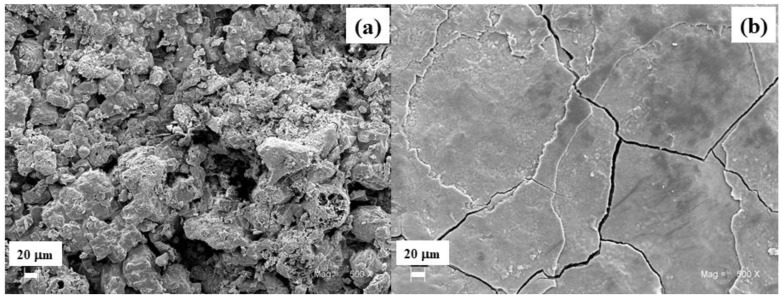
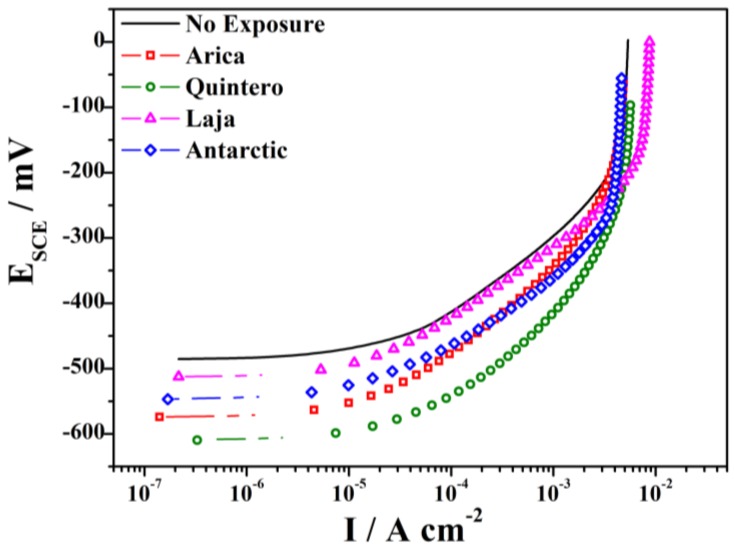
Resistance to atmospheric corrosion in different environments located in Chile and the corrosion's effect on the mechanical properties of SAE 1020 steel were studied. Atmospheric corrosivity categories at each station under study were determined. These categories were C2, for Laja; C3 and C4, for the Arica and Antarctic stations, respectively; and the most aggressive, C5 and higher at Quintero. These specific environments significantly influenced the mechanical responses of steel exposed for 36 months. Rupture elongation, the modulus of toughness, ultimate tensile strength, and hardness of the material all decreased as a function of environmental atmospheric aggressiveness. Lowered ductility is the result of the increased corrosion rate due to the high deposition of chlorides. This is due to the morphology of material degradation, which consequently occurs as pores, microstrains, and other defects that promote early rupture of the steel.
研究了位于智利不同环境中SAE 1020钢的耐大气腐蚀性能以及腐蚀对其力学性能的影响。确定了每个研究站点的大气腐蚀性类别。这些类别分别为:拉亚为C2;阿里卡和南极站点分别为C3和C4;而在金特罗最为恶劣,为C5及更高等级。这些特定环境对暴露36个月的钢材的力学响应有显著影响。材料的断裂伸长率、韧性模量、极限抗拉强度和硬度均随环境大气侵蚀性的增加而降低。由于氯化物的高沉积导致腐蚀速率增加,从而使延展性降低。这是由于材料降解的形态,其表现为孔隙、微应变和其他促进钢材早期断裂的缺陷。