CRUK Manchester Institute and The Christie NHS Foundation Trust, The University of Manchester, Manchester, M20 4GJ, UK.
Melanoma and Esophageal Cancer Unit, Istituto Oncologico Veneto-IRCCS, Via Gattamelata 64, 35128, Padua, Italy.
J Transl Med. 2018 Apr 11;16(1):94. doi: 10.1186/s12967-018-1467-x.
Ipilimumab is a licensed immunotherapy for metastatic melanoma patients and, in the US, as adjuvant treatment for high risk melanoma radically resected. The use of ipilimumab is associated with a typical but unpredictable pattern of side effects. The purpose of this study was to identify clinical features and blood biomarkers capable of predicting ipilimumab related toxicity.
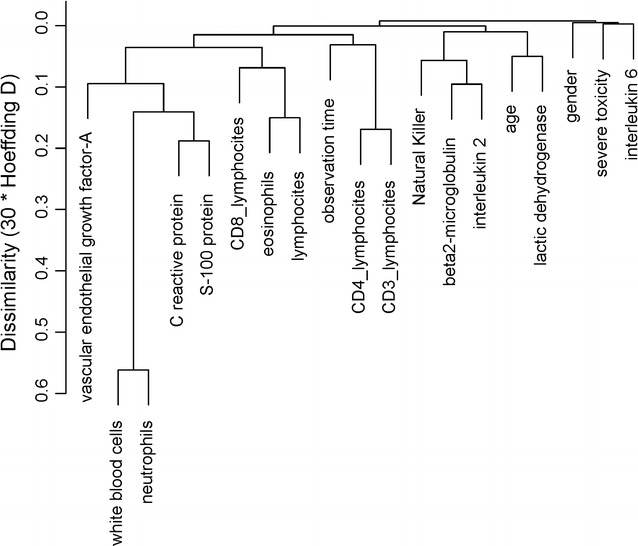
We performed a prospective study aimed at analyzing potential clinical and biological markers associated with immune-related toxicity in patients treated with ipilimumab (3 mg/kg, q3w). We enrolled 140 consecutive melanoma patients treated with ipilimumab for metastatic disease. The following prospectively collected data were utilized: patient characteristics, previous therapies, level of circulating biomarkers associated with tumour burden or immune-inflammation status (lactic dehydrogenase, C-reactive protein, β2-microglobulin, vascular endothelial growth factor, interleukin-2, interleukin-6, S-100, alkaline phosphatase, transaminases) and blood cells subsets (leukocyte and lymphocyte subpopulations). Logistic regression was used for multivariate analysis of data.
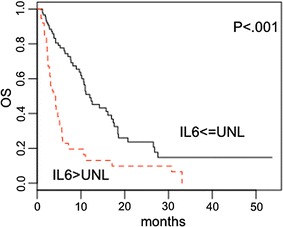
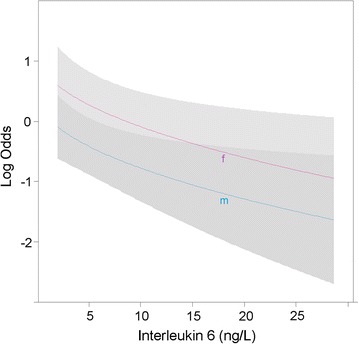
Out of 140 patients, 36 (26%) experienced a severe adverse event, 33 (24%) discontinued treatment for severe toxicity. Among the immune-profile biomarkers analyzed, only interleukin-6 was associated with the risk of toxicity. Female patients had a further increase of immune-related adverse events. Low baseline interleukin-6 serum levels (OR = 2.84, 95% CI 1.34-6.03, P = 0.007) and sex female (OR = 1.5, 95% CI 1.06-2.16 P = 0.022) and were significant and independent risk factors for immune related adverse events.
Baseline IL6 serum levels and female sex were significantly and independently associated with higher risk of severe toxicity and could be exploited in clinical practice to personalize toxicity surveillance in patients treated with ipilimumab.
依匹单抗(ipilimumab)是一种已获许可的免疫疗法,适用于转移性黑色素瘤患者,并在美国被用作高风险黑色素瘤根治性切除术后的辅助治疗。依匹单抗的使用与一种典型但不可预测的副作用模式有关。本研究的目的是确定能够预测依匹单抗相关毒性的临床特征和血液生物标志物。
我们进行了一项前瞻性研究,旨在分析与接受依匹单抗(ipilimumab,3mg/kg,q3w)治疗的患者免疫相关毒性相关的潜在临床和生物学标志物。我们纳入了 140 例连续接受依匹单抗治疗转移性疾病的黑色素瘤患者。利用了以下前瞻性收集的数据:患者特征、既往治疗、与肿瘤负荷或免疫炎症状态相关的循环生物标志物水平(乳酸脱氢酶、C 反应蛋白、β2-微球蛋白、血管内皮生长因子、白细胞介素-2、白细胞介素-6、S-100、碱性磷酸酶、转氨酶)和血液细胞亚群(白细胞和淋巴细胞亚群)。采用逻辑回归进行多变量数据分析。
在 140 例患者中,36 例(26%)出现严重不良事件,33 例(24%)因严重毒性而停止治疗。在分析的免疫特征生物标志物中,只有白细胞介素-6 与毒性风险相关。女性患者的免疫相关不良事件进一步增加。低基线白细胞介素-6 血清水平(OR=2.84,95%CI 1.34-6.03,P=0.007)和女性(OR=1.5,95%CI 1.06-2.16,P=0.022)是严重毒性的显著且独立的危险因素。
基线 IL6 血清水平和女性性别与更高的严重毒性风险显著相关,可在临床实践中用于个性化监测接受依匹单抗治疗的患者的毒性。