Lim Anastasia, Hoek Hans W, Ghane Samrad, Deen Mathijs, Blom Jan Dirk
i-psy Intercultural Psychiatry, Parnassia Psychiatric Institute, Utrecht, Netherlands.
Parnassia Academy, Parnassia Psychiatric Institute, The Hague, Netherlands.
Front Psychiatry. 2018 Mar 28;9:89. doi: 10.3389/fpsyt.2018.00089. eCollection 2018.
Among Muslim patients, a common cultural concept of distress is the notion that jinn may be the cause of mental health problems, especially in the presence of hallucinations.
This study examines the frequency with which this attribution style is manifest in a specific psychiatric outpatient population with a Muslim background.
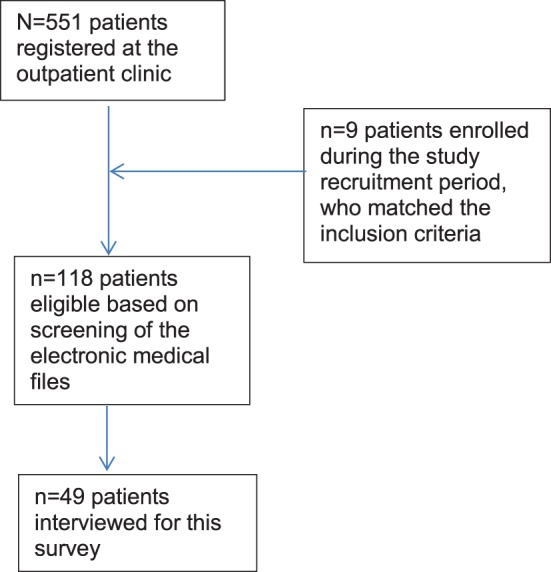
Of all patients registered at an outpatient clinic specialized in transcultural psychiatry, data were collected on folk belief, religion, hallucinations (if present), and medical diagnosis. Through a search in the electronic medical files, the notes made during the first contact and first psychiatric examination were screened for the keywords "evil eye," "magic," "voodoo," and "jinn." In addition, new eligible cases were accepted.
From all 551 patients thus screened, 118 were eligible for participation. Of these, 49 (41.5%) were interviewed using a semi-structured questionnaire. Among them, 21 (43%) were positive that their psychiatric symptoms were caused by jinn, whereas 13 (27%) thought not, and 15 (31%) were in doubt. No less than 87.2% had experienced hallucinations during their lives. Among the relatively large proportion of eligible patients who did not participate (58.5%), many expressed a fear for stigmatization or metaphysical repercussions if they spoke about jinn.
The phenomenon of attributing mental health symptoms to jinn was much more common in this population of Muslim patients than previously assumed. This underscores the need for proper knowledge of Muslim explanatory models of disease and for the use of culturally sensitive interviewing techniques in this population.
在穆斯林患者中,一种常见的痛苦文化观念是,精灵可能是心理健康问题的原因,尤其是在出现幻觉的情况下。
本研究调查了这种归因方式在具有穆斯林背景的特定精神科门诊患者中的表现频率。
在一家专门从事跨文化精神病学的门诊诊所登记的所有患者中,收集了关于民间信仰、宗教、幻觉(如果有)和医学诊断的数据。通过在电子病历中搜索,对首次接触和首次精神科检查期间所做的记录筛查“邪眼”“魔法”“伏都教”和“精灵”等关键词。此外,接受新的符合条件的病例。
在筛查的所有551名患者中,118名符合参与条件。其中,49名(41.5%)使用半结构化问卷进行了访谈。其中,21名(43%)肯定其精神症状是由精灵引起的,而13名(27%)认为不是,15名(31%)表示怀疑。不少于87.2%的人一生中经历过幻觉。在未参与的比例相对较大的符合条件患者中(58.5%),许多人表示如果谈论精灵会担心被污名化或受到超自然的影响。
将心理健康症状归因于精灵的现象在这群穆斯林患者中比以前认为的更为普遍。这凸显了了解穆斯林疾病解释模型以及在这群人中使用具有文化敏感性的访谈技巧的必要性。