Kochan Kamila, Peng Huadong, Wood Bayden R, Haritos Victoria S
1Centre for Biospectroscopy, School of Chemistry, Monash University, Clayton Campus, Clayton, VIC 3800 Australia.
2Department of Chemical Engineering, Monash University, Clayton Campus, Clayton, VIC 3800 Australia.
Biotechnol Biofuels. 2018 Apr 10;11:106. doi: 10.1186/s13068-018-1108-x. eCollection 2018.
Biodiesel is a valuable renewable fuel made from derivatized fatty acids produced in plants, animals, and oleaginous microbes. Of the latter, yeasts are of special interest due to their wide use in biotechnology, ability to synthesize fatty acids and store large amounts of triacylglycerols while utilizing non-food carbon sources. While yeast efficiently produce lipids, genetic modification and indeed, lipid pathway metabolic engineering, is usually required for cost-effective production. Traditionally, gas chromatography (GC) is used to measure fatty acid production and to track the success of a metabolic engineering strategy in a microbial culture; here we have employed vibrational spectroscopy approaches at population and single cell level of engineered yeast while simultaneously investigating metabolite levels in subcellular structures.
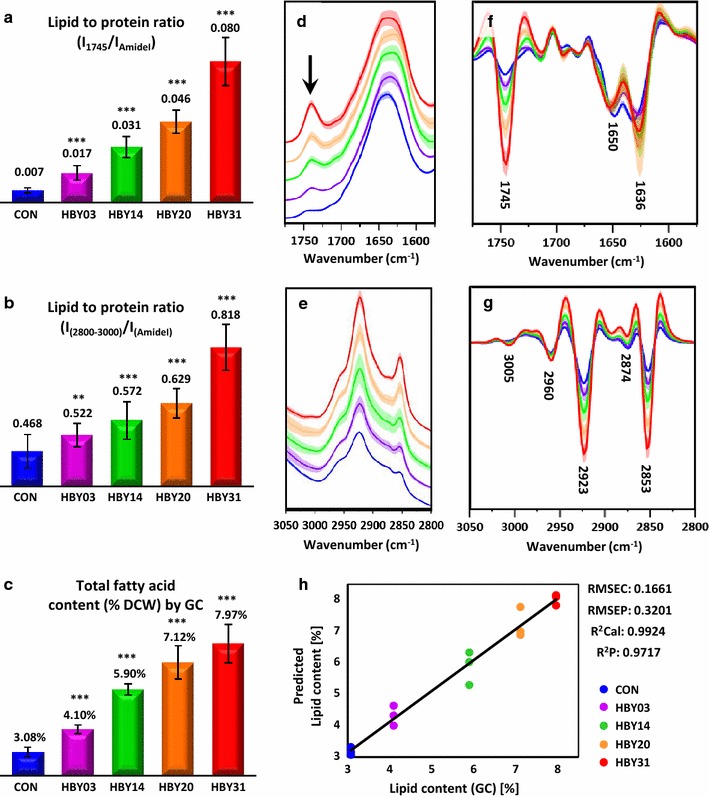
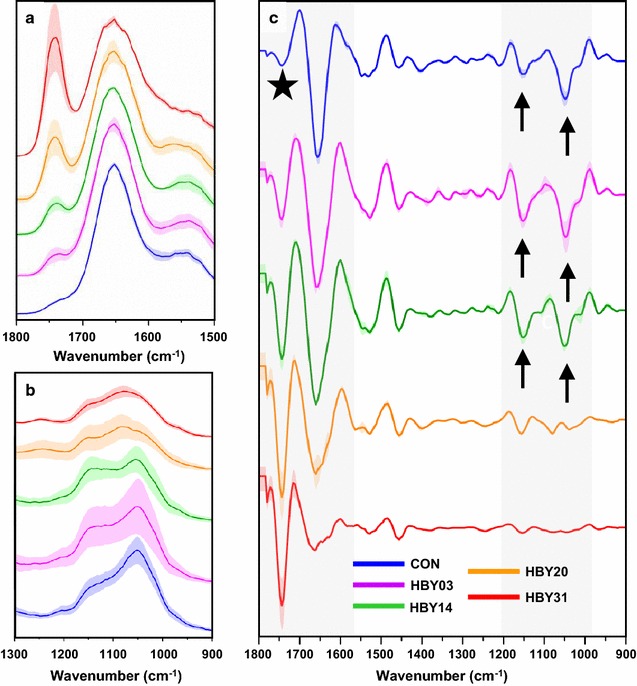
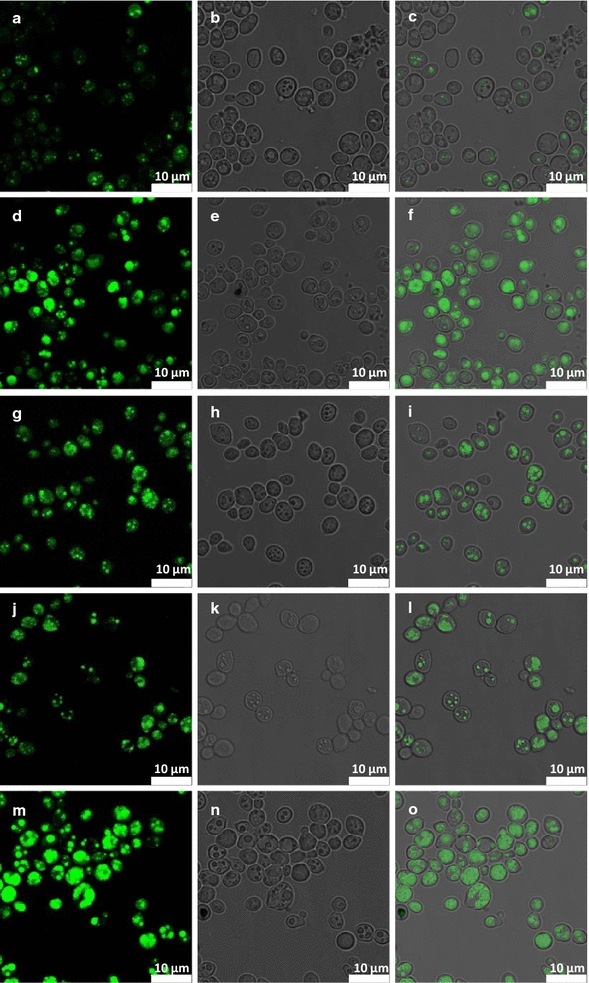
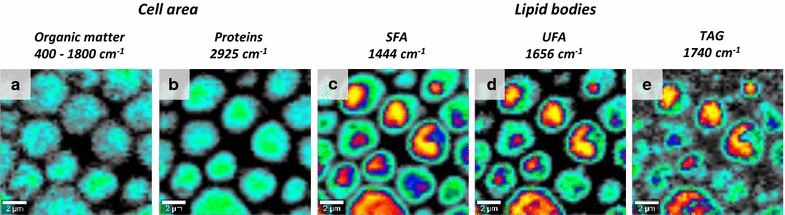
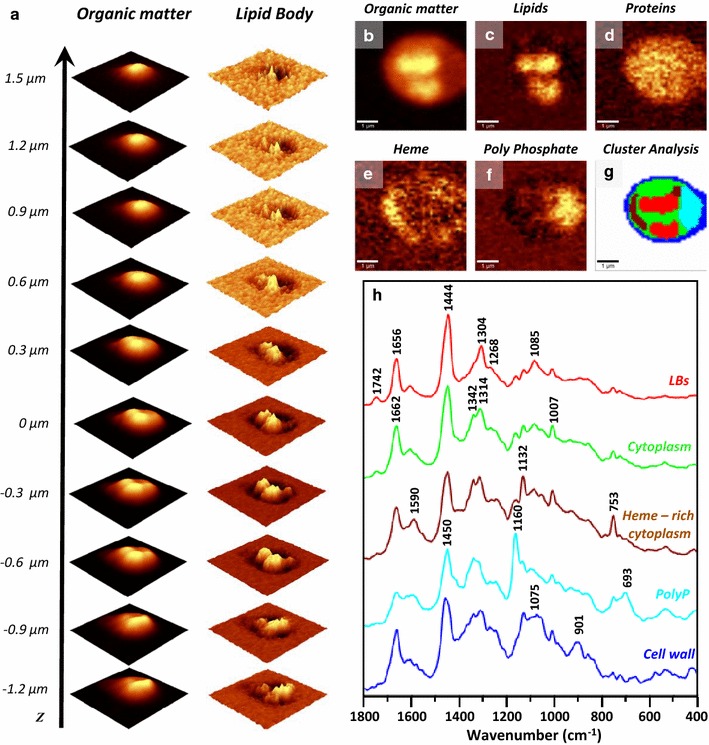
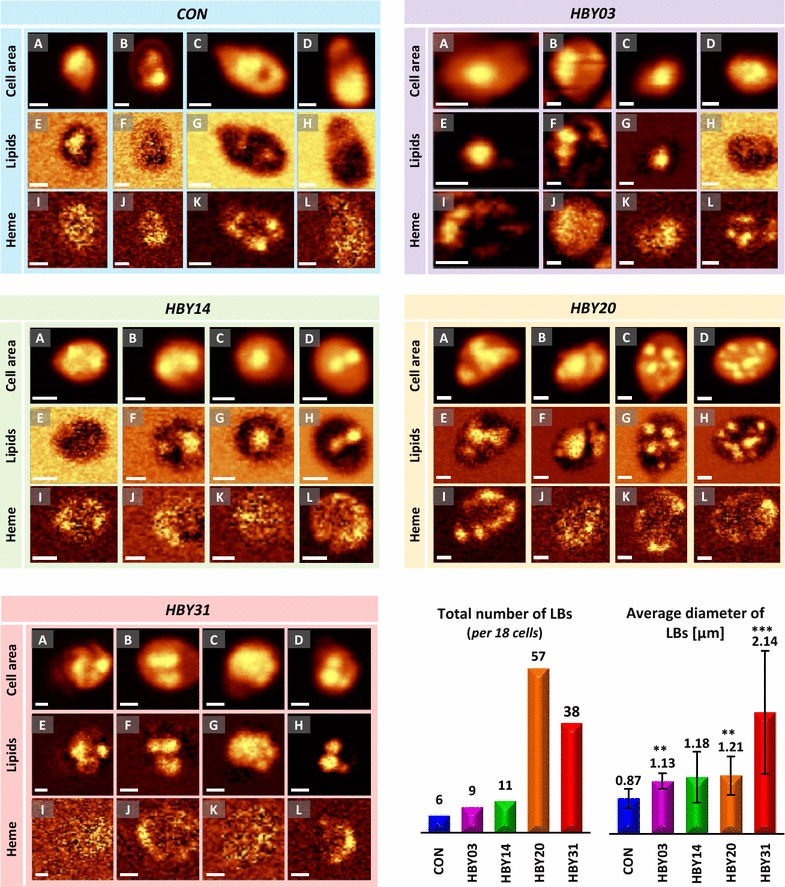
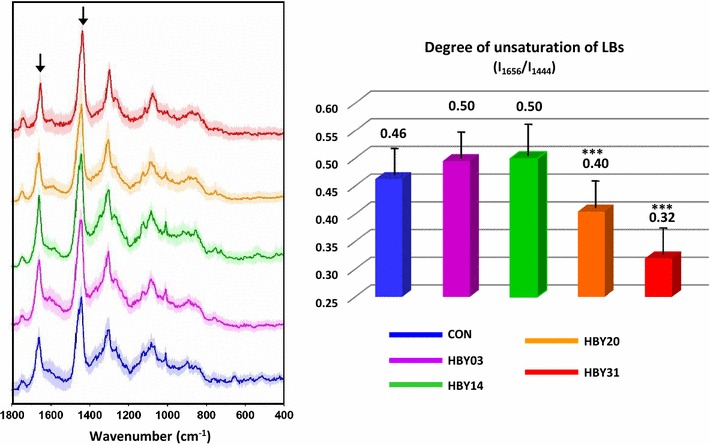
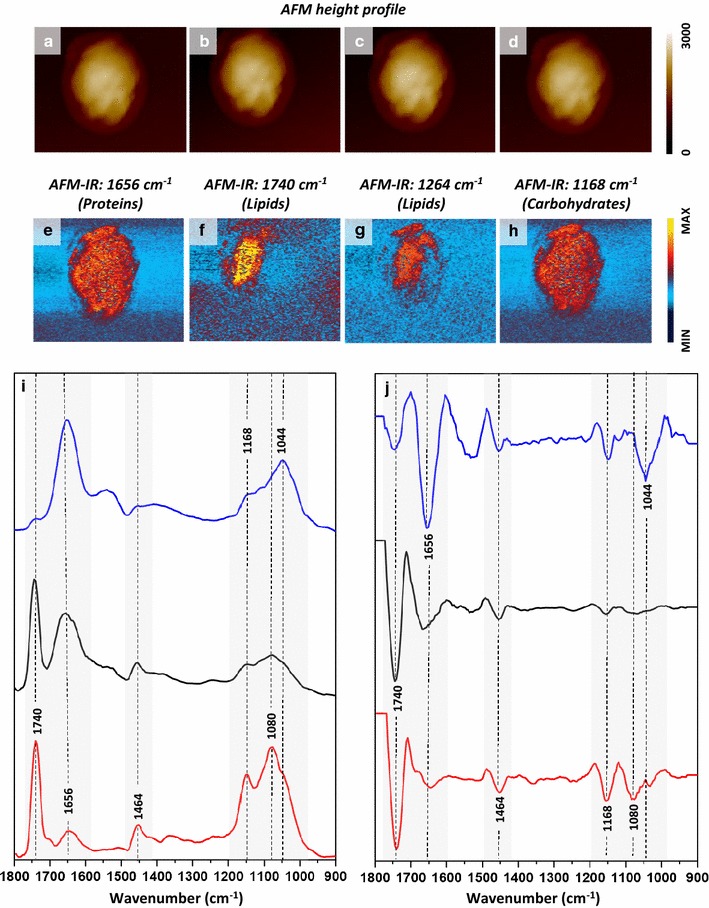
Firstly, a strong correlation ( > 0.99) was established between Fourier transform infrared (FTIR) lipid in intact cells and GC analysis of fatty acid methyl esters in the differently engineered strains. Confocal Raman spectroscopy of individual cells carrying genetic modifications to enhance fatty acid synthesis and lipid accumulation revealed changes to the lipid body (LB), the storage organelle for lipids in yeast, with their number increasing markedly (up to tenfold higher); LB size was almost double in the strain that also expressed a LB stabilizing gene but considerable variation was also noted between cells. Raman spectroscopy revealed a clear trend toward reduced unsaturated fatty acid content in lipids of cells carrying more complex metabolic engineering. Atomic force microscopy-infrared spectroscopy (AFM-IR) analysis of individual cells indicated large differences in subcellular constituents between strains: cells of the most highly engineered strain had elevated lipid and much reduced carbohydrate in their cytoplasm compared with unmodified cells.
Vibrational spectroscopy analysis allowed the simultaneous measurement of strain variability in metabolite production and impact on cellular structures as a result of different gene introductions or knockouts, within a lipid metabolic engineering strategy and these inform the next steps in comprehensive lipid engineering. Additionally, single cell spectroscopic analysis measures heterogeneity in metabolite production across microbial cultures under genetic modification, an emerging issue for efficient biotechnological production.
生物柴油是一种由植物、动物和产油微生物中衍生的脂肪酸制成的宝贵可再生燃料。在后者中,酵母因其在生物技术中的广泛应用、合成脂肪酸以及利用非食用碳源储存大量三酰甘油的能力而备受关注。虽然酵母能高效产生脂质,但通常需要进行基因改造以及脂质途径代谢工程才能实现具有成本效益的生产。传统上,气相色谱法(GC)用于测量脂肪酸产量并追踪微生物培养中代谢工程策略的成功与否;在此,我们在工程酵母的群体和单细胞水平上采用了振动光谱方法,同时研究亚细胞结构中的代谢物水平。
首先,在完整细胞中的傅里叶变换红外(FTIR)脂质与不同工程菌株中脂肪酸甲酯的气相色谱分析之间建立了强相关性(>0.99)。对携带增强脂肪酸合成和脂质积累的基因修饰的单个细胞进行共聚焦拉曼光谱分析,揭示了酵母中脂质储存细胞器——脂质体(LB)的变化,其数量显著增加(高达十倍);在同时表达脂质体稳定基因的菌株中,脂质体大小几乎翻倍,但细胞之间也存在相当大的差异。拉曼光谱显示,进行更复杂代谢工程的细胞脂质中不饱和脂肪酸含量有明显降低的趋势。对单个细胞的原子力显微镜 - 红外光谱(AFM - IR)分析表明,不同菌株的亚细胞成分存在很大差异:与未修饰的细胞相比,工程程度最高的菌株的细胞在细胞质中的脂质含量升高,碳水化合物含量大幅降低。
振动光谱分析能够在脂质代谢工程策略中,同时测量由于不同基因导入或敲除导致的代谢物产生的菌株变异性及其对细胞结构的影响,这些信息为全面脂质工程的下一步提供了参考。此外,单细胞光谱分析可测量基因改造下微生物培养物中代谢物产生的异质性,这是高效生物技术生产中一个新出现的问题。