Instituto de Parasitología y Biomedicina "López-Neyra", CSIC (IPBLN-CSIC), PTS Granada, Granada, Spain.
Centro Nacional de Medicina Tropical, Instituto de Salud Carlos III, Madrid, Spain; UMR INTERTRYP, Institut de Recherche pour le Développement, Montpellier, France.
Int J Parasitol Drugs Drug Resist. 2018 Aug;8(2):203-212. doi: 10.1016/j.ijpddr.2018.03.002. Epub 2018 Mar 12.
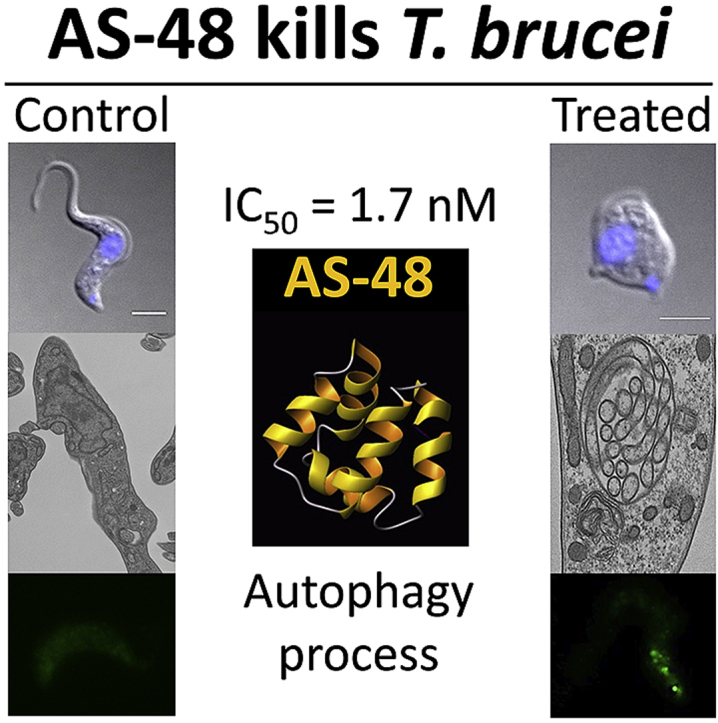
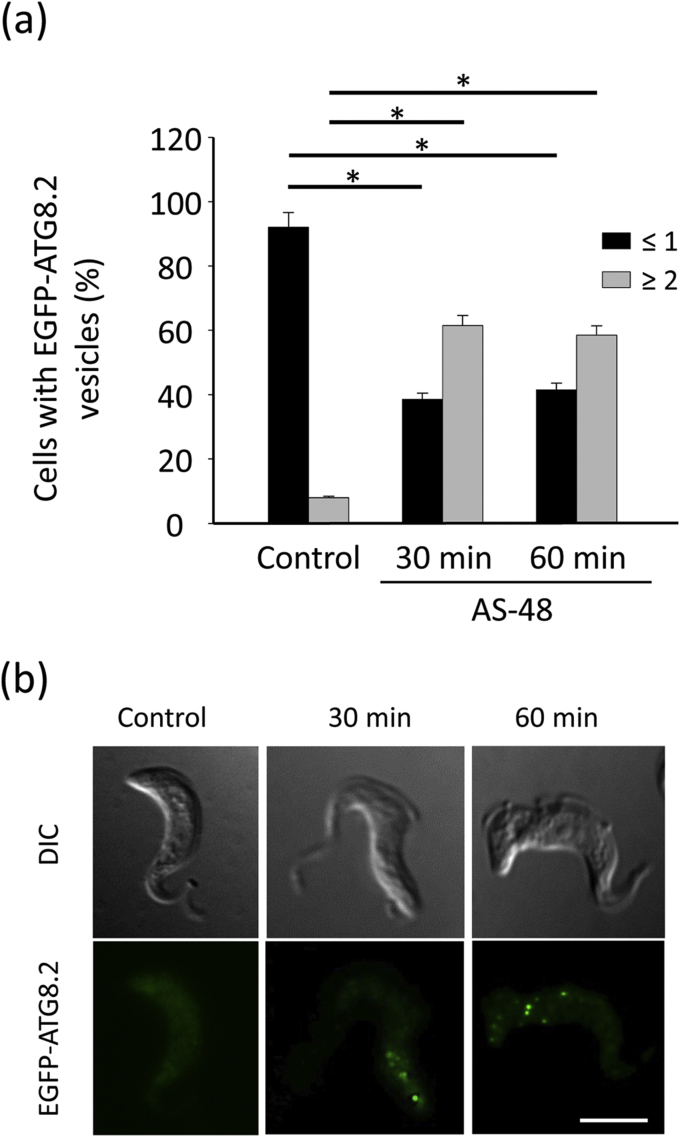
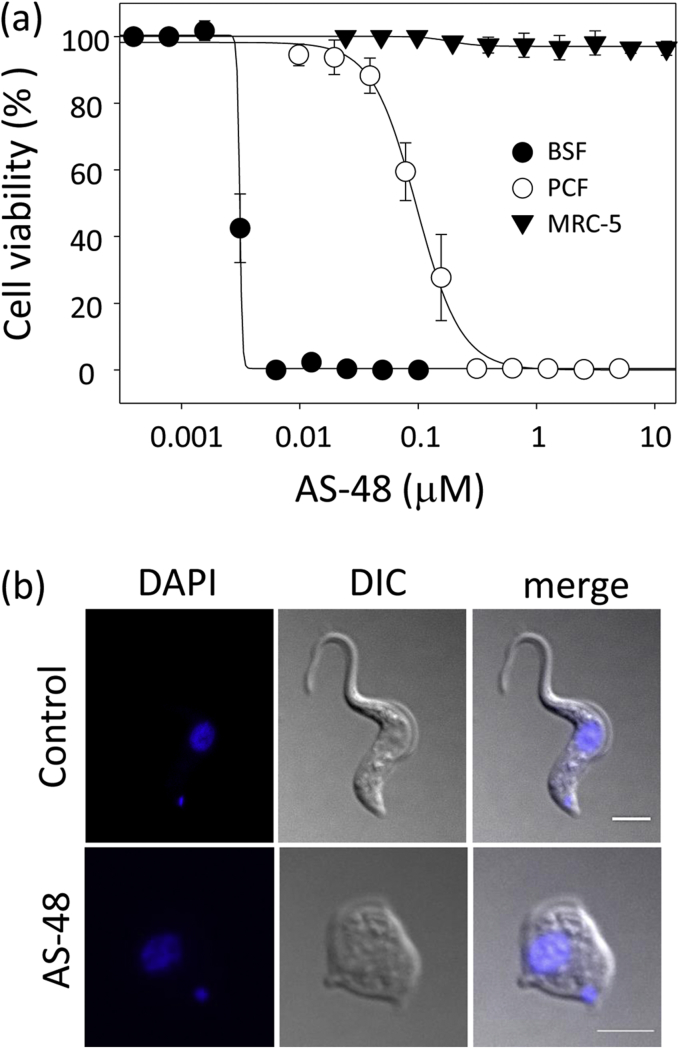
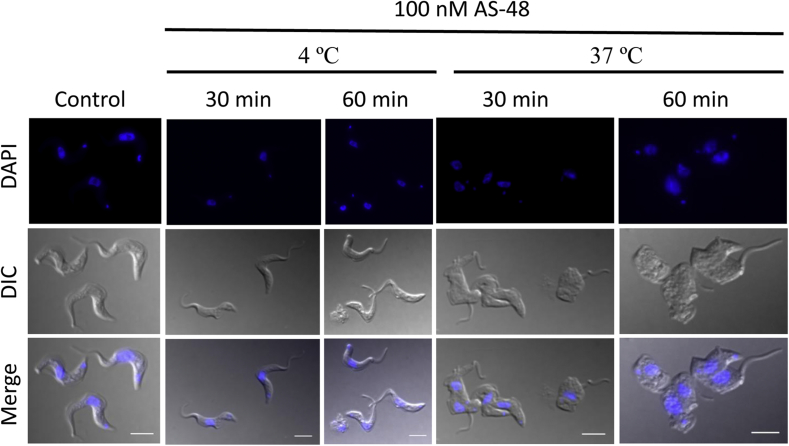
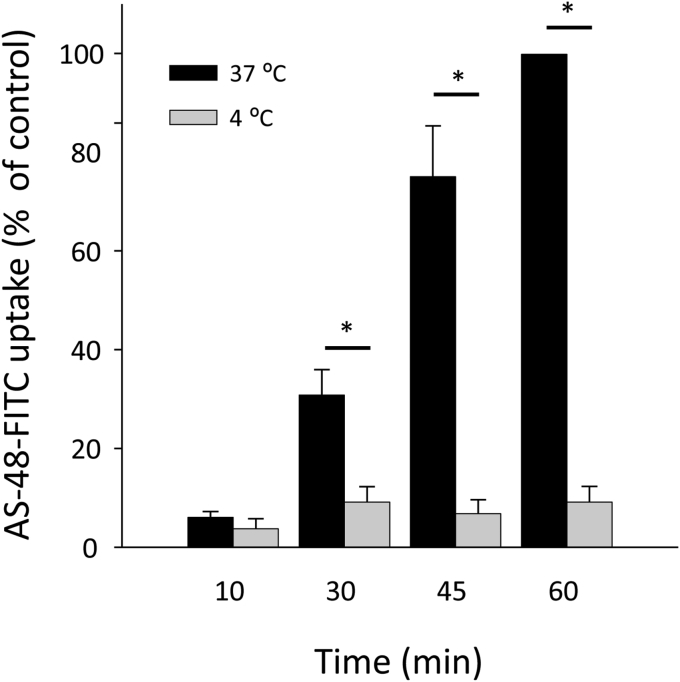
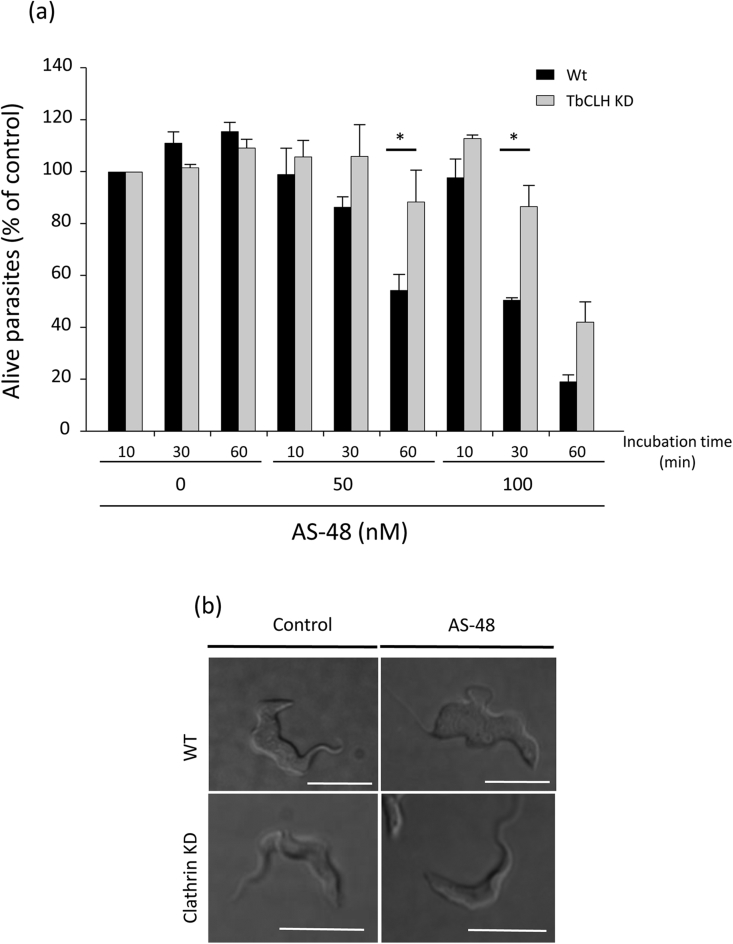
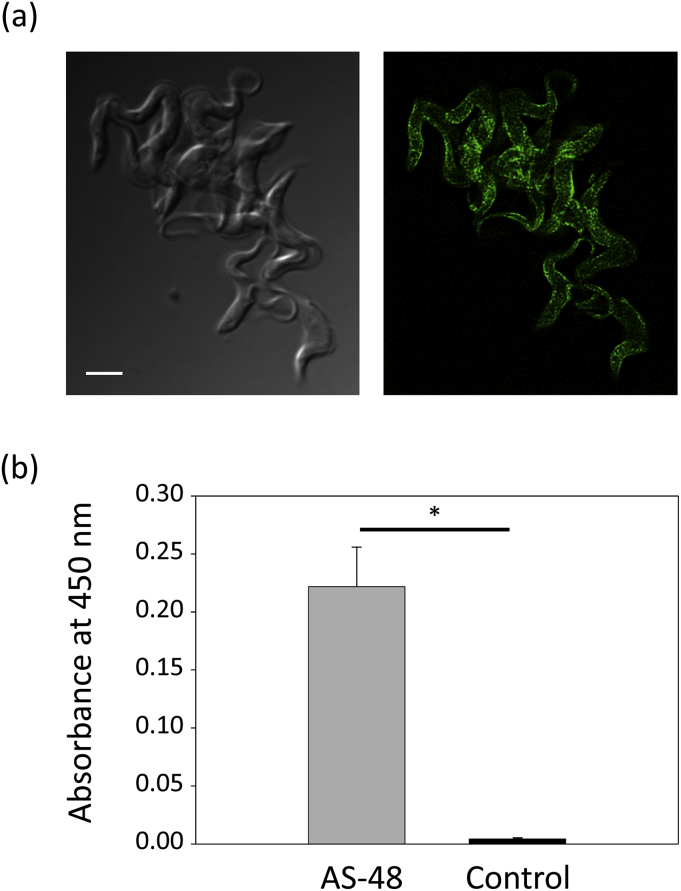
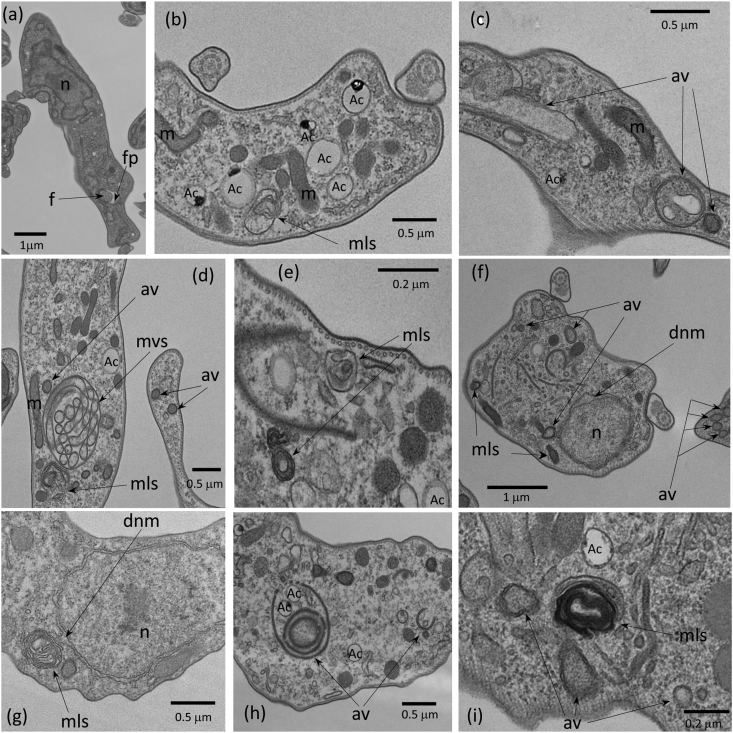
The parasitic protozoan Trypanosoma brucei is the causative agent of human African trypanosomiasis (sleeping sickness) and nagana. Current drug therapies have limited efficacy, high toxicity and/or are continually hampered by the appearance of resistance. Antimicrobial peptides have recently attracted attention as potential parasiticidal compounds. Here, we explore circular bacteriocin AS-48's ability to kill clinically relevant bloodstream forms of T. brucei gambiense, T. brucei rhodesiense and T. brucei brucei. AS-48 exhibited excellent anti-trypanosomal activity in vitro (EC = 1-3 nM) against the three T. brucei subspecies, but it was innocuous to human cells at 10-fold higher concentrations. In contrast to its antibacterial action, AS-48 does not kill the parasite through plasma membrane permeabilization but by targeting intracellular compartments. This was evidenced by the fact that vital dye internalization-prohibiting concentrations of AS-48 could kill the parasite at 37 °C but not at 4 °C. Furthermore, AS-48 interacted with the surface of the parasite, at least in part via VSG, its uptake was temperature-dependent and clathrin-depleted cells were less permissive to the action of AS-48. The bacteriocin also caused the appearance of myelin-like structures and double-membrane autophagic vacuoles. These changes in the parasite's ultrastructure were confirmed by fluorescence microscopy as AS-48 induced the production of EGFP-ATG8.2-labeled autophagosomes. Collectively, these results indicate AS-48 kills the parasite through a mechanism involving clathrin-mediated endocytosis of VSG-bound AS-48 and the induction of autophagic-like cell death. As AS-48 has greater in vitro activity than the drugs currently used to treat T. brucei infection and does not present any signs of toxicity in mammalian cells, it could be an attractive lead compound for the treatment of sleeping sickness and nagana.
寄生原生动物布氏锥虫是引起人类非洲锥虫病(昏睡病)和那加那病的病原体。目前的药物疗法疗效有限,毒性高,或者不断受到耐药性出现的阻碍。抗菌肽最近作为潜在的寄生虫杀伤化合物引起了人们的关注。在这里,我们探索了环形细菌素 AS-48 杀死临床上相关的布氏锥虫冈比亚亚种、布氏锥虫罗得西亚种和布氏锥虫布鲁斯株血流形式的能力。AS-48 在体外(EC=1-3 nM)对三种布氏锥虫亚种表现出优异的抗锥虫活性,但在高 10 倍的浓度下对人类细胞是无害的。与它的抗菌作用相反,AS-48 不是通过破坏质膜来杀死寄生虫,而是通过靶向细胞内隔室。事实上,AS-48 的染料内摄抑制浓度可以在 37°C 杀死寄生虫,但不能在 4°C 杀死寄生虫,这证明了这一点。此外,AS-48 与寄生虫的表面相互作用,至少部分通过 VSG,其摄取是温度依赖性的,并且网格蛋白耗尽的细胞对 AS-48 的作用不太允许。该细菌素还导致髓鞘样结构和双层自噬空泡的出现。通过荧光显微镜观察到寄生虫超微结构的这些变化,因为 AS-48 诱导了 EGFP-ATG8.2 标记的自噬体的产生。总的来说,这些结果表明,AS-48 通过一种涉及网格蛋白介导的 VSG 结合的 AS-48 内吞作用和诱导自噬样细胞死亡的机制杀死寄生虫。由于 AS-48 在体外比目前用于治疗布氏锥虫感染的药物具有更高的活性,并且在哺乳动物细胞中没有表现出任何毒性迹象,因此它可能是治疗昏睡病和那加那病的有吸引力的先导化合物。