Endendijk Joyce J, Spencer Hannah, van Baar Anneloes L, Bos Peter A
Child and Adolescent Studies, Utrecht University, Heidelberglaan1, P.O. Box 80140, 3508 TC, Utrecht, The Netherlands.
Department of Experimental Psychology, Utrecht University, Utrecht, The Netherlands.
Cogn Affect Behav Neurosci. 2018 Aug;18(4):609-621. doi: 10.3758/s13415-018-0592-6.
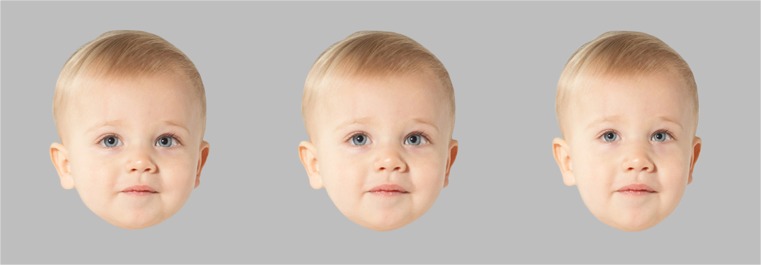
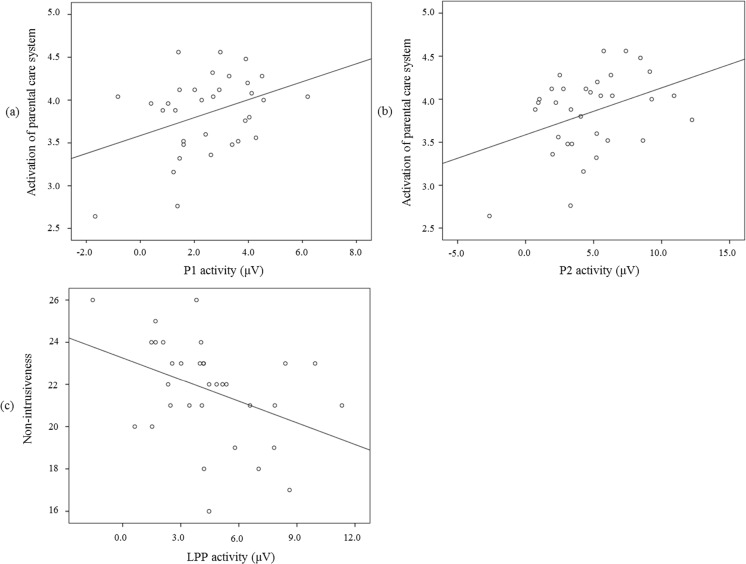
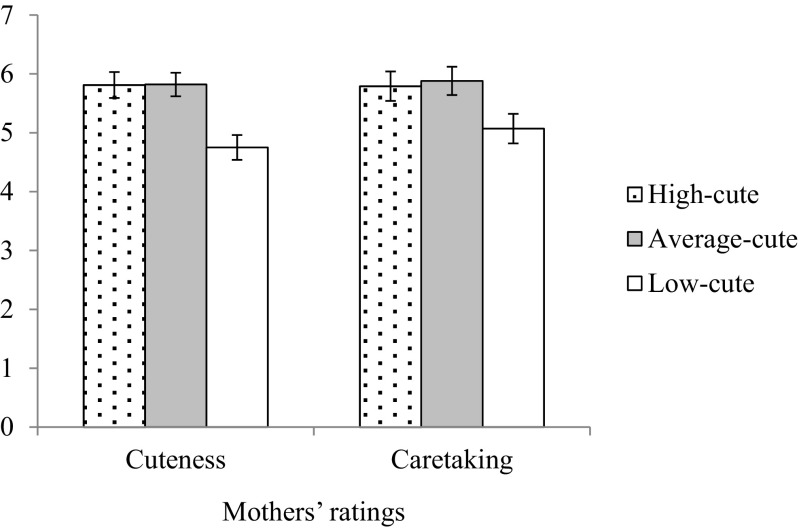
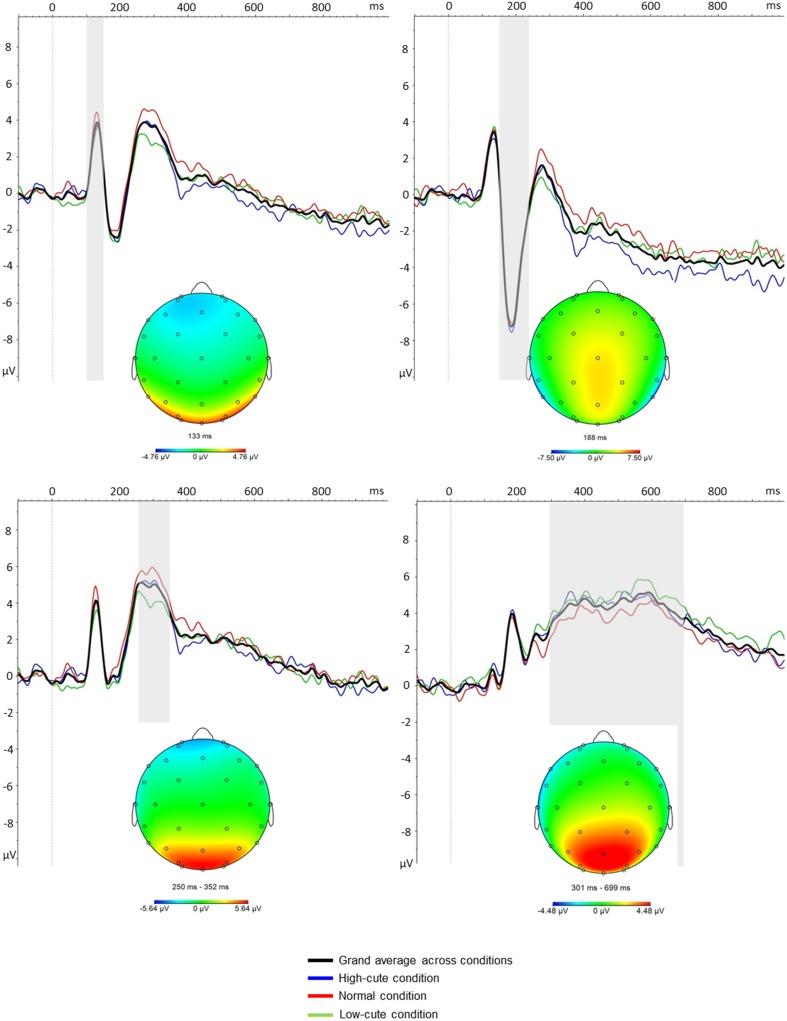
Certain infant facial characteristics, referred to as baby schema, are thought to automatically trigger parenting behavior and affective orientation toward infants. Electroencephalography (EEG) is well suited to assessing the intuitive nature and temporal dynamics of parenting responses, due to its millisecond temporal resolution. Little is known, however, about the relations between neural processing of infant cues and actual parenting behavior in a naturalistic setting. In the present study we examined the event-related potentials (ERPs) of mothers (N = 33) watching infant faces of varying attractiveness, in relation to activation of the maternal care system and the mothers' observed parenting behavior (sensitivity, nonintrusiveness) with their own child (2-6 years old). The results revealed that, irrespective of the cuteness of the infant face, mothers' neural processing of infant faces involved both early P1 and P2 components (related to orienting/detecting processes) and late positive potentials (LPPs; related to more controlled cognitive evaluation/attentional engagement). Increased early detection and processing of infant faces (reflected by P1 and P2 activity) was related to increased activation of the parental care system. In later stages of face processing, increased attentional engagement with infant faces (as reflected by LPP activity) was associated with more intrusiveness of a mother with her own child during interaction. These findings suggest that individual variations in responses to infant stimuli are associated with individual differences in parental care system activation and parenting quality. Furthermore, the parental care system might be activated relatively automatically, but actual parenting and caregiving behavior requires more conscious control.
某些婴儿面部特征,被称为婴儿图式,被认为会自动触发养育行为以及对婴儿的情感倾向。脑电图(EEG)由于其毫秒级的时间分辨率,非常适合评估养育反应的直观性质和时间动态。然而,在自然环境中,关于婴儿线索的神经处理与实际养育行为之间的关系却知之甚少。在本研究中,我们考察了33名母亲观看不同吸引力婴儿面孔时的事件相关电位(ERP),以及母亲的母性关怀系统激活情况和她们对自己孩子(2至6岁)的养育行为(敏感性、非侵入性)。结果显示,无论婴儿面孔的可爱程度如何,母亲对婴儿面孔的神经处理都涉及早期的P1和P2成分(与定向/检测过程有关)以及晚期正电位(LPPs;与更受控制的认知评估/注意力参与有关)。对婴儿面孔早期检测和处理的增加(由P1和P2活动反映)与母性关怀系统激活的增加有关。在面孔处理的后期阶段,对婴儿面孔注意力参与的增加(由LPP活动反映)与母亲在互动中对自己孩子更多的侵入性有关。这些发现表明,对婴儿刺激反应的个体差异与母性关怀系统激活和养育质量的个体差异相关。此外,母性关怀系统可能相对自动地被激活,但实际的养育和照顾行为需要更多有意识的控制。