Department of Surgery, University Hospital of Bonn, Bonn, Germany.
Dr. Margarete Fischer-Bosch-Institute for Clinical Pharmacology, Stuttgart, Germany.
PLoS One. 2018 Apr 13;13(4):e0195516. doi: 10.1371/journal.pone.0195516. eCollection 2018.
To explore the effects of abdominal surgery and interleukin-1 signaling on antimicrobial defense in a model of postoperative ileus.
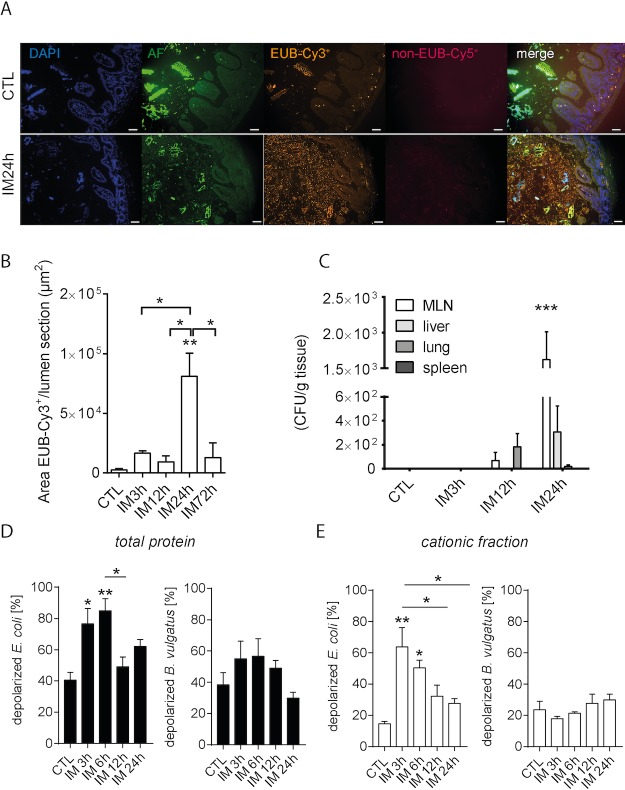
C57BL/6 and Interleukin-1 receptor type I (IL-1R1) deficient mice underwent intestinal manipulation to induce POI. Expression of mucosal IL-1α, IL-1β and IL-1R1 and several antimicrobial peptides and enzymes were measured by quantitative PCR or ELISA, western blotting or immunohistochemistry. Bacterial overgrowth was determined by fluorescent in-situ hybridization and counting of jejunal luminal bacteria. Translocation of aerobic and anaerobic bacteria into the intestinal wall, mesenteric lymph nodes, liver and spleen was determined by counting bacterial colonies on agar plates 48h after plating of tissue homogenates. Antimicrobial activity against E. coli and B. vulgatus was analyzed in total and cationic fractions of small bowel mucosal tissue homogenates by a flow cytometry-based bacterial depolarization assay.
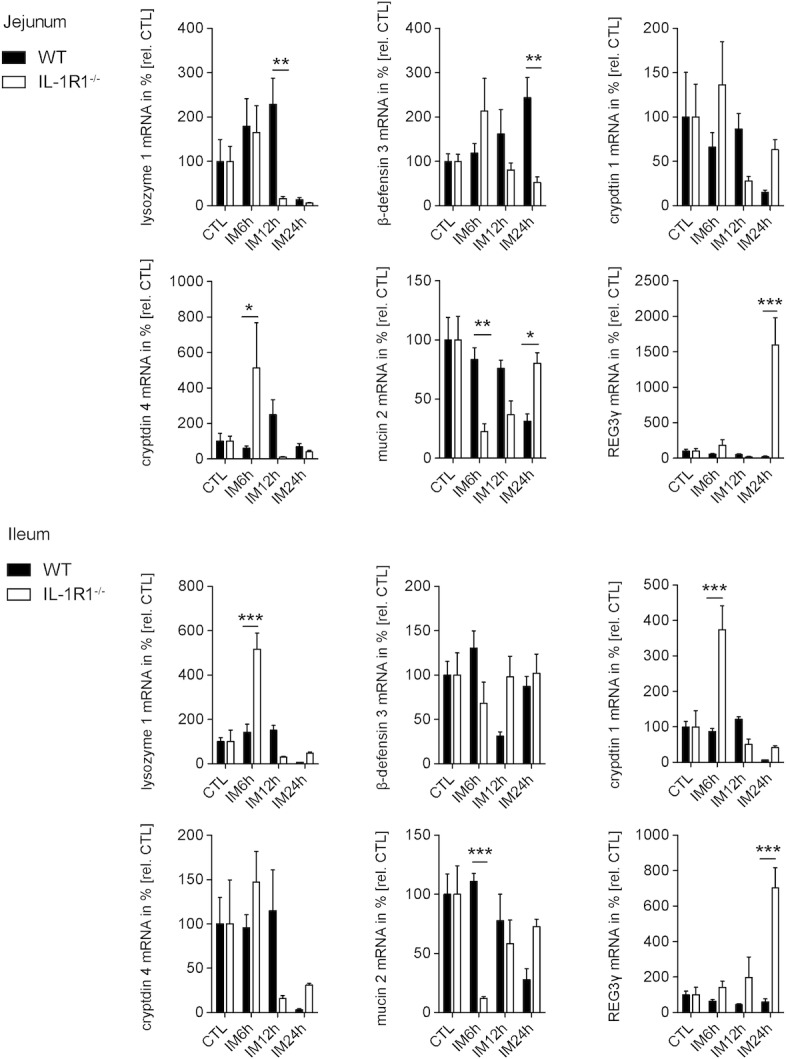
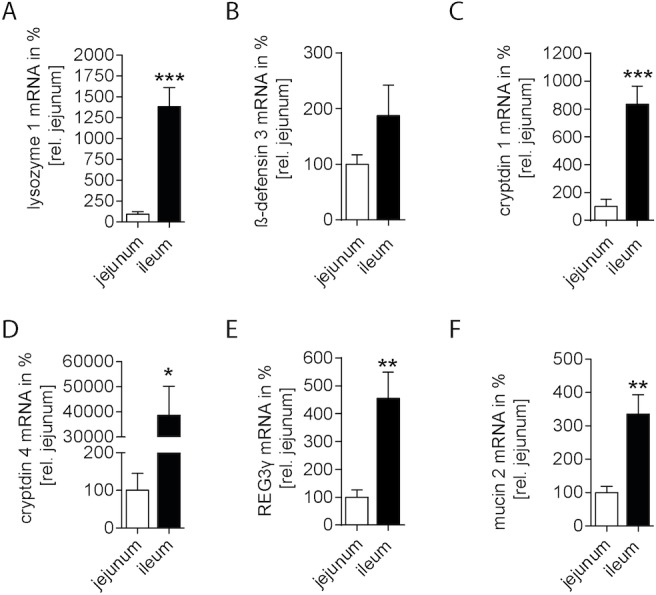
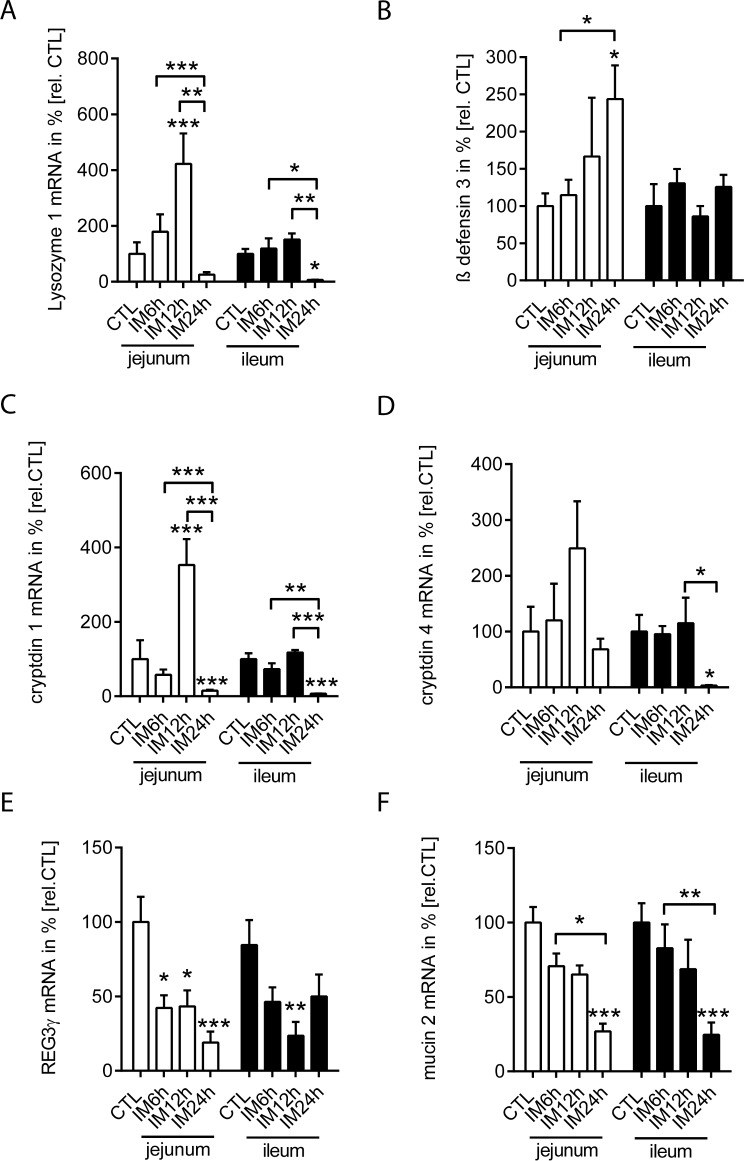
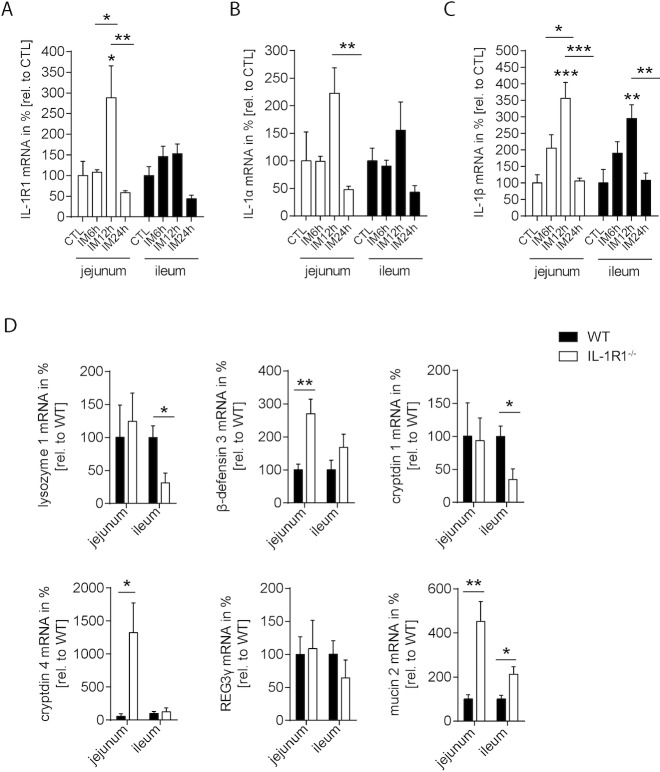
Jejunal bacterial overgrowth was detected 24h after surgery. At the same time point, but not in the early phase 3h after surgery, bacterial translocation into the liver and mesenteric lymph nodes was observed. Increased antimicrobial activity against E. coli was induced within early phase of POI. Basal antimicrobial peptide and enzyme gene expression was higher in the ileal compared to the jejunal mucosa. The expression of lysozyme 1, cryptdin 1, cryptdin 4 and mucin 2 were reduced 24h after surgery in the ileal mucosa and mucin 2 was also reduced in the jejunum. Postoperative IL-1α and IL-1β were increased in the postoperative mucosa. Deficiency of IL-1R1 affected the expression of antimicrobial peptides during homeostasis and POI.
Small bowel antimicrobial capacity is disturbed during POI which is accompanied by bacterial overgrowth and translocation. IL-1R1 is partially involved in the gene expression of mucosal antimicrobial peptides. Altered small bowel antimicrobial activity may contribute also to POI development and manifestation in patients undergoing abdominal surgery.
在术后肠梗阻模型中探讨腹部手术和白细胞介素-1 信号对抗菌防御的影响。
C57BL/6 和白细胞介素-1 受体 I 型(IL-1R1)缺陷小鼠接受肠道操作以诱导术后肠梗阻。通过定量 PCR 或 ELISA、Western blot 或免疫组织化学测量黏膜 IL-1α、IL-1β 和 IL-1R1 以及几种抗菌肽和酶的表达。通过荧光原位杂交和计数空肠腔内细菌来确定细菌过度生长。48 小时后通过在琼脂平板上计数组织匀浆中的细菌菌落来确定需氧和厌氧菌向肠壁、肠系膜淋巴结、肝脏和脾脏的易位。通过基于流式细胞术的细菌去极化测定分析小肠黏膜组织匀浆的总和阳离子部分对大肠杆菌和脆弱拟杆菌的抗菌活性。
术后 24 小时检测到空肠细菌过度生长。在同一时间点,但不在术后 3 小时的早期阶段,观察到细菌易位到肝脏和肠系膜淋巴结。在 POI 的早期阶段,诱导了对大肠杆菌的抗菌活性增加。与空肠相比,回肠黏膜的基础抗菌肽和酶基因表达更高。术后 24 小时,回肠黏膜中的溶菌酶 1、隐窝素 1、隐窝素 4 和粘蛋白 2 的表达减少,空肠中的粘蛋白 2也减少。术后白细胞介素-1α和白细胞介素-1β在术后黏膜中增加。IL-1R1 缺乏影响 POI 期间和 POI 期间黏膜抗菌肽的表达。
POI 期间小肠抗菌能力受到干扰,伴有细菌过度生长和易位。IL-1R1 部分参与黏膜抗菌肽的基因表达。改变的小肠抗菌活性也可能有助于腹部手术患者的 POI 发展和表现。