Vanoosthuyse Vincent
UMR5239 CNRS, Université de Lyon, ENS-Lyon, 46 allée d'Italie, 69007 Lyon, France.
Noncoding RNA. 2018 Mar 27;4(2):9. doi: 10.3390/ncrna4020009.
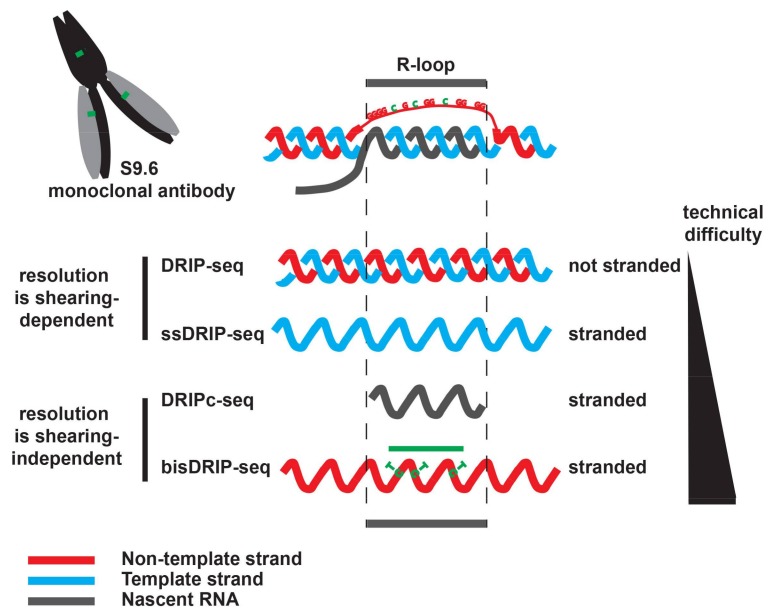
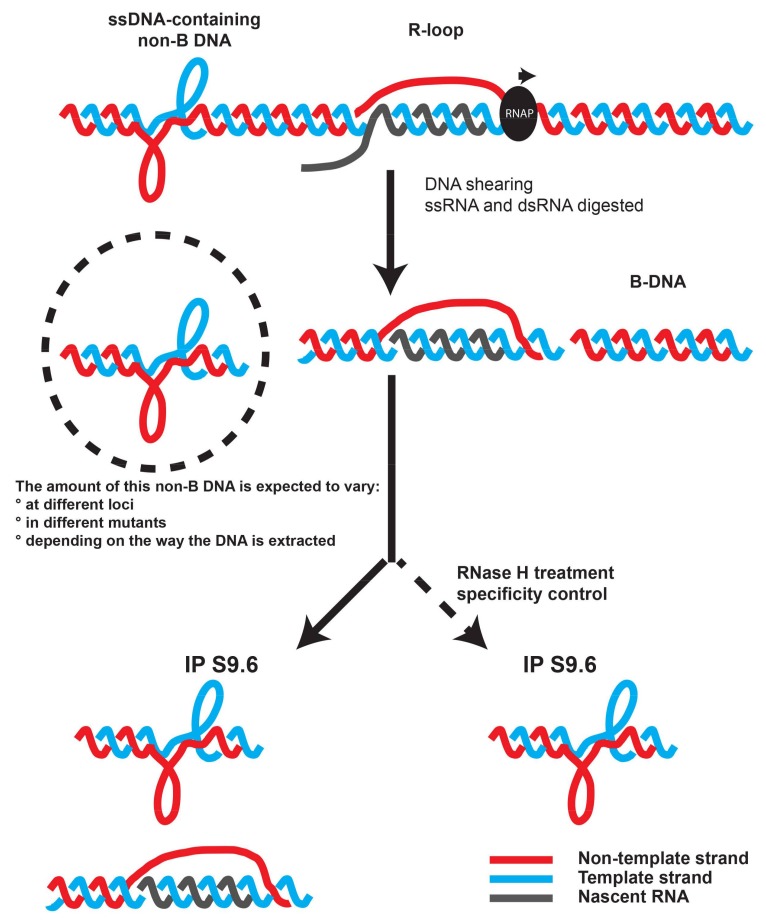
R-loops are evolutionarily conserved three-stranded structures that result from the formation of stable DNA:RNA hybrids in the genome. R-loops have attracted increasing interest in recent years as potent regulators of gene expression and genome stability. In particular, their strong association with severe replication stress makes them potential oncogenic structures. Despite their importance, the rules that govern their formation and their dynamics are still controversial and an in-depth description of their direct impact on chromatin organization and DNA transactions is still lacking. To better understand the diversity of R-loop functions, reliable, accurate, and quantitative mapping techniques, as well as functional assays are required. Here, I review the different approaches that are currently used to do so and to highlight their individual strengths and weaknesses. In particular, I review the advantages and disadvantages of using the S9.6 antibody to map R-loops in vivo in an attempt to propose guidelines for best practices.
R环是一种进化上保守的三链结构,由基因组中稳定的DNA:RNA杂交体形成。近年来,R环作为基因表达和基因组稳定性的有力调节因子,受到了越来越多的关注。特别是,它们与严重的复制应激密切相关,使其成为潜在的致癌结构。尽管它们很重要,但控制其形成和动态的规则仍存在争议,并且仍缺乏对其对染色质组织和DNA交易的直接影响的深入描述。为了更好地理解R环功能的多样性,需要可靠、准确和定量的定位技术以及功能测定方法。在这里,我回顾了目前用于此目的的不同方法,并强调它们各自的优缺点。特别是,我回顾了使用S9.6抗体在体内定位R环的优缺点,试图提出最佳实践指南。