Emergency Department, The First Affiliated Hospital of Sun Yat‑sen University, Guangzhou, Guangdong 510080, P.R. China.
Organ Transplant Center, The First Affiliated Hospital of Sun Yat‑sen University, Guangzhou, Guangdong 510080, P.R. China.
Mol Med Rep. 2018 Jun;17(6):8212-8220. doi: 10.3892/mmr.2018.8864. Epub 2018 Apr 11.
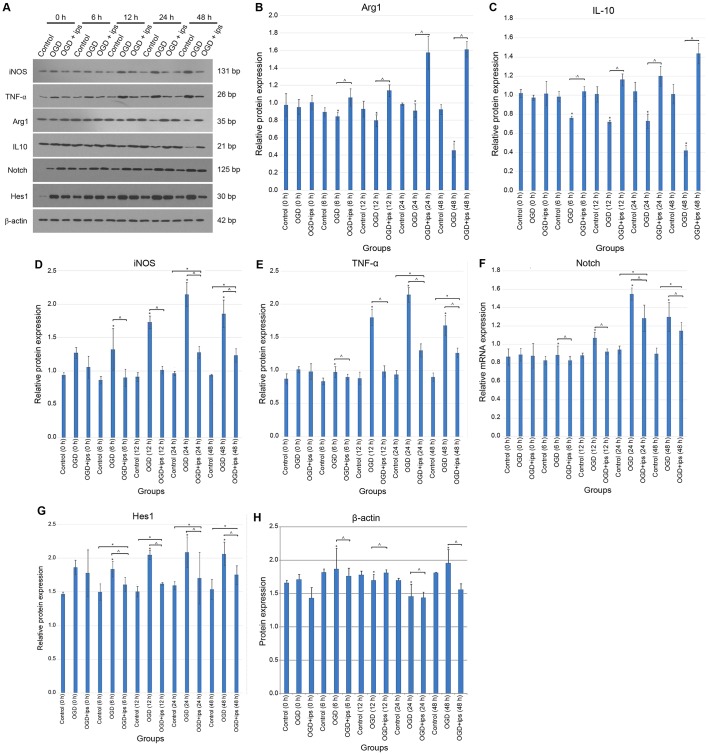
Hypoxia is a serious stress state. The nervous system is less tolerant to hypoxia, and cell death due to hypoxia is irreversible. With the incidence of cardiovascular disease gradually increasing, the sudden cardiac death rate is additionally increasing. Although cardiopulmonary resuscitation (CPR) is an important development, recovery is frequently poor. In a successful recovery population, ~40% of the population was in a vegetative state or subsequently succumbed to their condition, and ~20% had brain damage. Therefore, the recovery of the brain is of particular importance in CPR. Immune disorders are one of the major mechanisms of cerebral resuscitation following CPR. Studies have demonstrated that induced pluripotent stem cell‑derived mesenchymal stem cells (IPSC‑MSCs) have a strong immune regulatory effect during tissue repair and anti‑inflammatory effects. IPSC‑MSCs may inhibit the inflammatory response by means of the inflammatory reaction network to improve brain function following CPR, although the cellular and molecular mechanisms remain unclear. Macrophages are a bridge between innate immune and specific immune responses in the body; therefore, it was hypothesized that macrophages may be the important effector cell of the role of IPSC‑MSCs in improving brain function following recovery of spontaneous respiration and circulation subsequent to cardiopulmonary resuscitation. In the present study, IPSC‑MSCs were applied to the oxygen and glucose deprivation (OGD) model. It was observed that intervention with IPSC‑MSCs was able to alter the polarization direction of macrophages. The difference in the proportions of M1 and M2 macrophages was statistically significant at 6, 12, 24 and 48 h (P=0.037, P<0.05) in the OGD + IPSC‑MSCs group (M1, 33.48±5.6%; M2, 50.84±6.9%) and in the OGD group (M1, 83.55±7.3%; M2, 11.41±3.2%), and over time this trend was more obvious. The polarization direction of macrophages is associated with the neurogenic locus notch homolog protein 1 (Notch‑1) signaling pathway. In conclusion, it was observed that IPSC‑MSCs may be associated with altered macrophage polarization, which may be accomplished by inhibiting the Notch‑1 signaling pathway.
缺氧是一种严重的应激状态。神经系统对缺氧的耐受性较低,缺氧导致的细胞死亡是不可逆的。随着心血管疾病发病率的逐渐增加,心源性猝死的发生率也在增加。尽管心肺复苏术(CPR)是一项重要的发展,但恢复通常不佳。在成功恢复的人群中,约 40%的人群处于植物人状态或随后死于病情,约 20%的人群有脑损伤。因此,大脑的恢复在 CPR 中尤为重要。免疫紊乱是 CPR 后脑复苏的主要机制之一。研究表明,诱导多能干细胞衍生的间充质干细胞(iPSC-MSCs)在组织修复和抗炎作用中具有很强的免疫调节作用。iPSC-MSCs 可能通过炎症反应网络抑制炎症反应,改善 CPR 后大脑功能,但细胞和分子机制尚不清楚。巨噬细胞是机体固有免疫和特异性免疫反应之间的桥梁;因此,研究人员假设,巨噬细胞可能是 iPSC-MSCs 改善 CPR 后自主呼吸和循环恢复后大脑功能的重要效应细胞。在本研究中,将 iPSC-MSCs 应用于氧葡萄糖剥夺(OGD)模型。观察到 iPSC-MSCs 的干预能够改变巨噬细胞的极化方向。OGD+ iPSC-MSCs 组(M1,33.48±5.6%;M2,50.84±6.9%)和 OGD 组(M1,83.55±7.3%;M2,11.41±3.2%)中 M1 和 M2 巨噬细胞的比例差异在 6、12、24 和 48 h 时具有统计学意义(P=0.037,P<0.05),且随着时间的推移,这种趋势更加明显。巨噬细胞的极化方向与神经源性基因座 Notch 同源蛋白 1(Notch-1)信号通路有关。综上所述,研究结果表明,iPSC-MSCs 可能与改变巨噬细胞极化有关,这可能是通过抑制 Notch-1 信号通路来实现的。