School of Biomedical Sciences, LKS Faculty of Medicine, the University of Hong Kong, Pokfulam, Hong Kong.
Department of Stem Cell Biology and Regenerative Medicine, Eli and Edythe Broad-CIRM Center for Regenerative Medicine and Stem Cell Research, W.M. Keck School of Medicine of the University of Southern California, Los Angeles, California, United States of America.
PLoS Genet. 2018 Apr 16;14(4):e1007346. doi: 10.1371/journal.pgen.1007346. eCollection 2018 Apr.
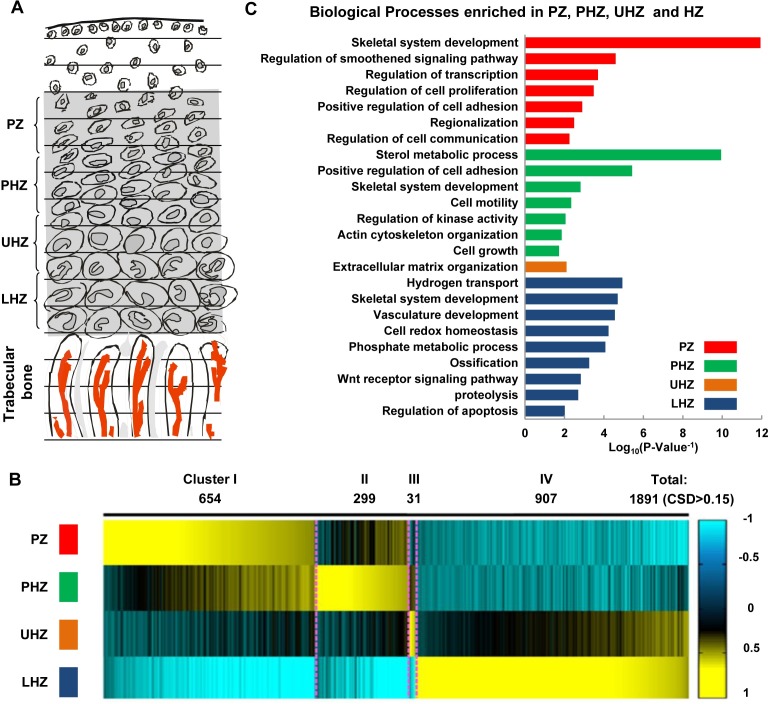
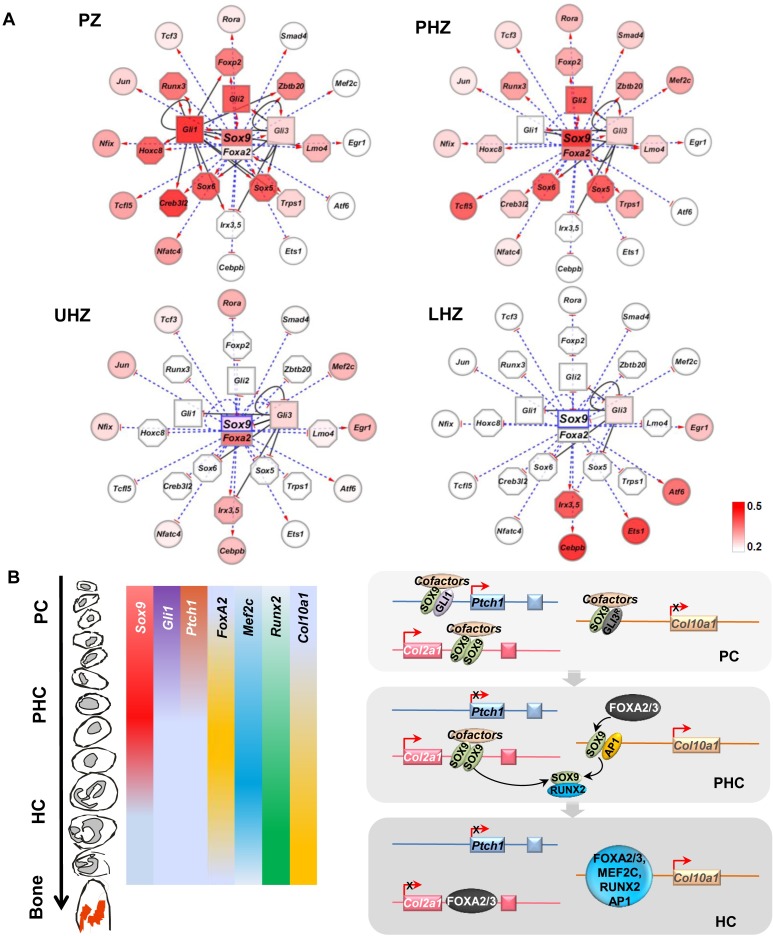
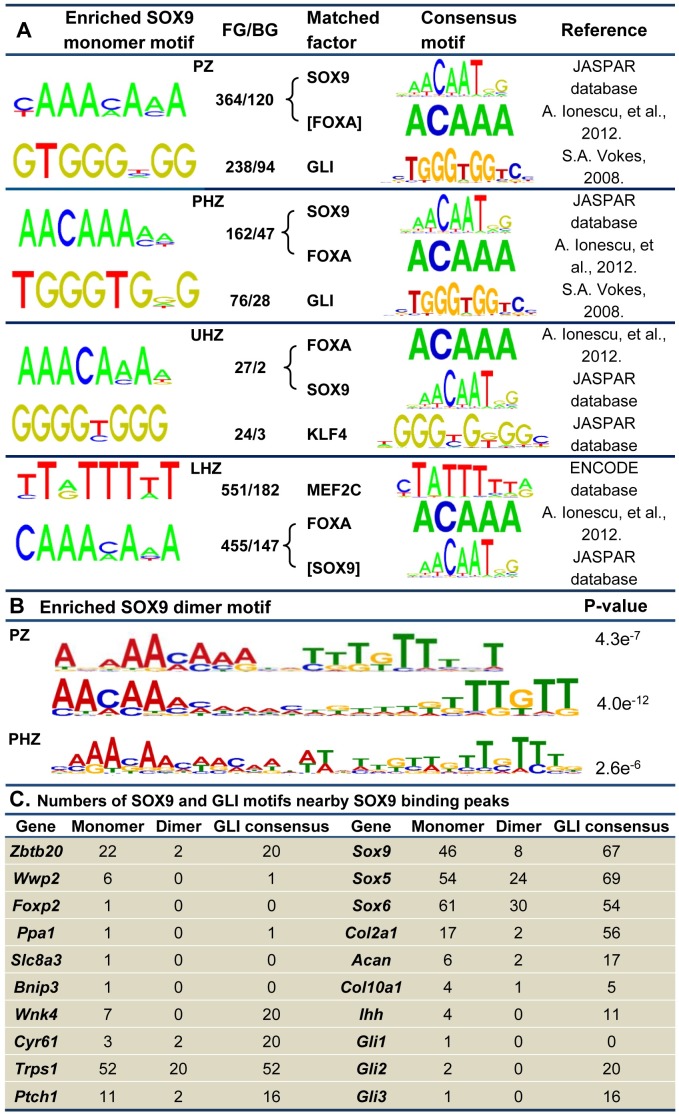
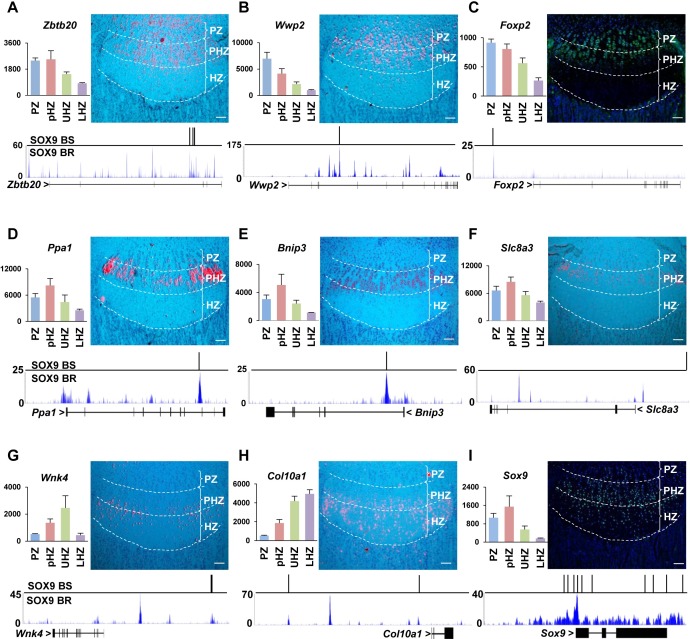
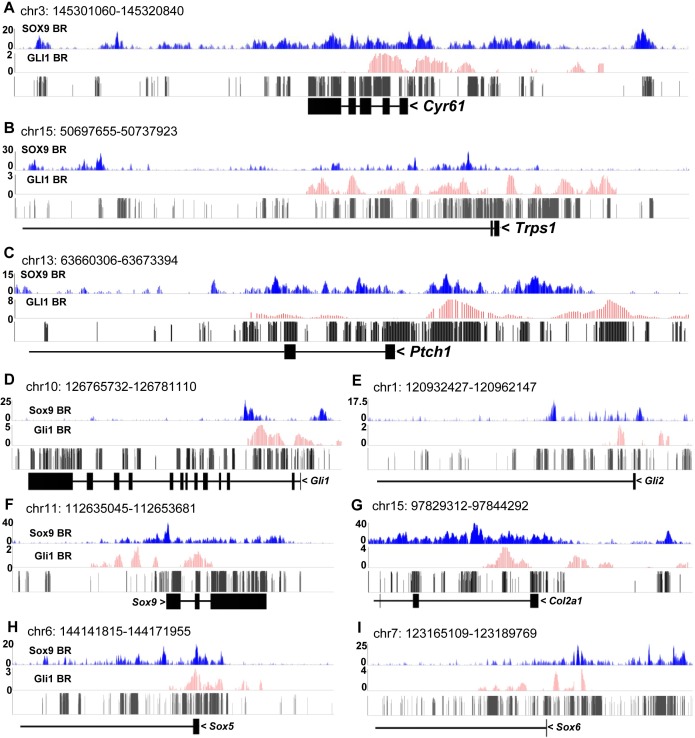
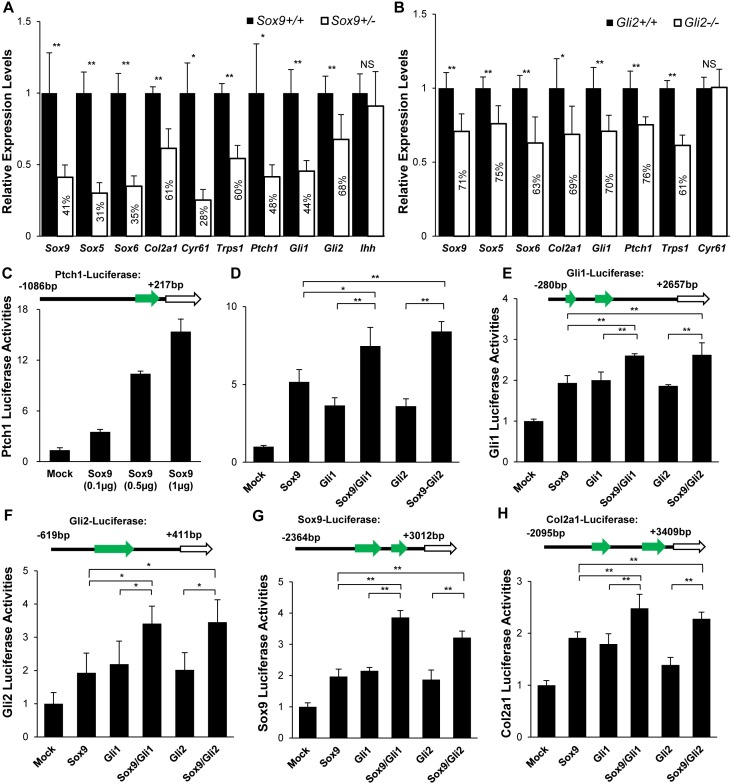
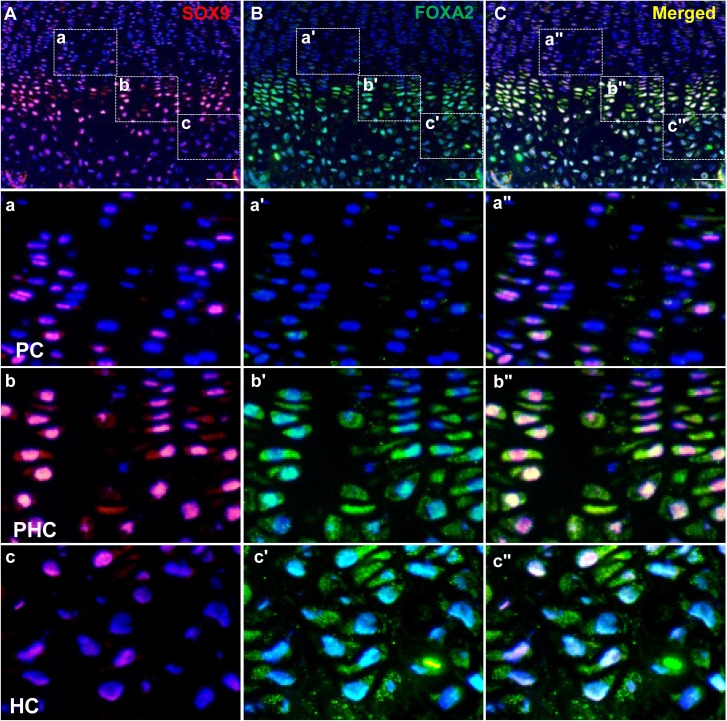
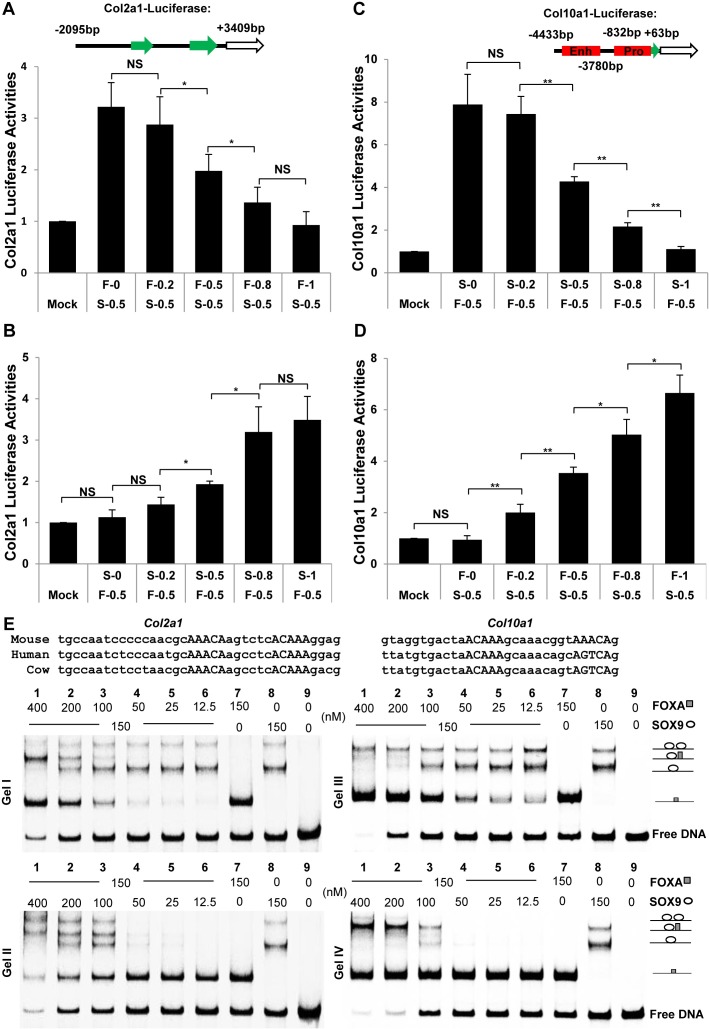
The growth plate mediates bone growth where SOX9 and GLI factors control chondrocyte proliferation, differentiation and entry into hypertrophy. FOXA factors regulate hypertrophic chondrocyte maturation. How these factors integrate into a Gene Regulatory Network (GRN) controlling these differentiation transitions is incompletely understood. We adopted a genome-wide whole tissue approach to establish a Growth Plate Differential Gene Expression Library (GP-DGEL) for fractionated proliferating, pre-hypertrophic, early and late hypertrophic chondrocytes, as an overarching resource for discovery of pathways and disease candidates. De novo motif discovery revealed the enrichment of SOX9 and GLI binding sites in the genes preferentially expressed in proliferating and prehypertrophic chondrocytes, suggesting the potential cooperation between SOX9 and GLI proteins. We integrated the analyses of the transcriptome, SOX9, GLI1 and GLI3 ChIP-seq datasets, with functional validation by transactivation assays and mouse mutants. We identified new SOX9 targets and showed SOX9-GLI directly and cooperatively regulate many genes such as Trps1, Sox9, Sox5, Sox6, Col2a1, Ptch1, Gli1 and Gli2. Further, FOXA2 competes with SOX9 for the transactivation of target genes. The data support a model of SOX9-GLI-FOXA phasic GRN in chondrocyte development. Together, SOX9-GLI auto-regulate and cooperate to activate and repress genes in proliferating chondrocytes. Upon hypertrophy, FOXA competes with SOX9, and control toward terminal differentiation passes to FOXA, RUNX, AP1 and MEF2 factors.
生长板介导骨骼生长,其中 SOX9 和 GLI 因子控制软骨细胞的增殖、分化和进入肥大。FOXA 因子调节肥大软骨细胞的成熟。这些因子如何整合到一个基因调控网络(GRN)中控制这些分化转变尚不完全清楚。我们采用全基因组全组织方法,为增殖、前肥大、早期和晚期肥大软骨细胞建立了生长板差异基因表达文库(GP-DGEL),作为发现途径和疾病候选物的综合资源。从头 motif 发现揭示了 SOX9 和 GLI 结合位点在增殖和前肥大软骨细胞中优先表达的基因中的富集,表明 SOX9 和 GLI 蛋白之间存在潜在的合作。我们整合了转录组、SOX9、GLI1 和 GLI3 ChIP-seq 数据集的分析,并通过转激活测定和小鼠突变体进行了功能验证。我们确定了新的 SOX9 靶标,并表明 SOX9-GLI 直接和合作调节许多基因,如 Trps1、Sox9、Sox5、Sox6、Col2a1、Ptch1、Gli1 和 Gli2。此外,FOXA2 与 SOX9 竞争靶基因的转录激活。这些数据支持了软骨细胞发育中 SOX9-GLI-FOXA 时相 GRN 的模型。总之,SOX9-GLI 自动调节并合作激活和抑制增殖软骨细胞中的基因。肥大时,FOXA 与 SOX9 竞争,而向终末分化的控制传递给 FOXA、RUNX、AP1 和 MEF2 因子。