• 文献检索
  • 文档翻译
  • 深度研究
  • 学术资讯
  • Suppr Zotero 插件Zotero 插件
  • 邀请有礼
  • 套餐&价格
  • 历史记录
应用&插件
Suppr Zotero 插件Zotero 插件浏览器插件Mac 客户端Windows 客户端微信小程序
定价
高级版会员购买积分包购买API积分包
服务
文献检索文档翻译深度研究API 文档MCP 服务
关于我们
关于 Suppr公司介绍联系我们用户协议隐私条款
关注我们

Suppr 超能文献

核心技术专利:CN118964589B侵权必究
粤ICP备2023148730 号-1Suppr @ 2026

文献检索

告别复杂PubMed语法,用中文像聊天一样搜索,搜遍4000万医学文献。AI智能推荐,让科研检索更轻松。

立即免费搜索

文件翻译

保留排版,准确专业,支持PDF/Word/PPT等文件格式,支持 12+语言互译。

免费翻译文档

深度研究

AI帮你快速写综述,25分钟生成高质量综述,智能提取关键信息,辅助科研写作。

立即免费体验

荚膜唾液酸转移酶特异性介导A群和B群链球菌的不同表型

Capsular Sialyltransferase Specificity Mediates Different Phenotypes in and Group B .

作者信息

Roy David, Takamatsu Daisuke, Okura Masatoshi, Goyette-Desjardins Guillaume, Van Calsteren Marie-Rose, Dumesnil Audrey, Gottschalk Marcelo, Segura Mariela

机构信息

Faculty of Veterinary Medicine, Swine and Poultry Infectious Disease Research Centre, University of Montreal, Saint-Hyacinthe, QC, Canada.

Division of Bacterial and Parasitic Diseases, National Institute of Animal Health, National Agriculture and Food Research Organization, Tsukuba, Japan.

出版信息

Front Microbiol. 2018 Apr 3;9:545. doi: 10.3389/fmicb.2018.00545. eCollection 2018.

DOI:10.3389/fmicb.2018.00545
PMID:29666608
原文链接:https://pmc.ncbi.nlm.nih.gov/articles/PMC5891629/
Abstract

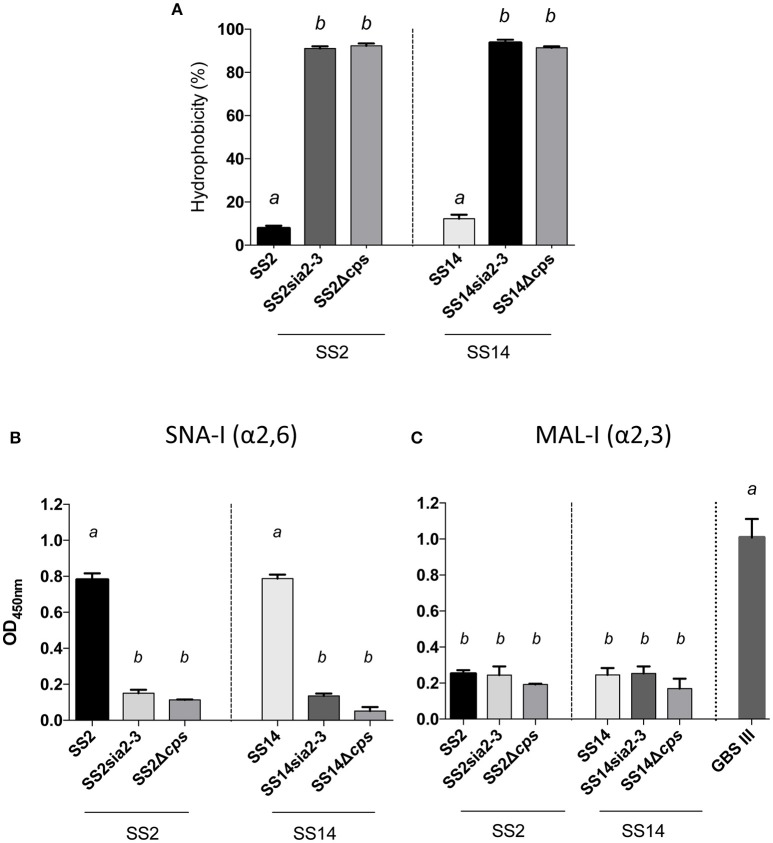
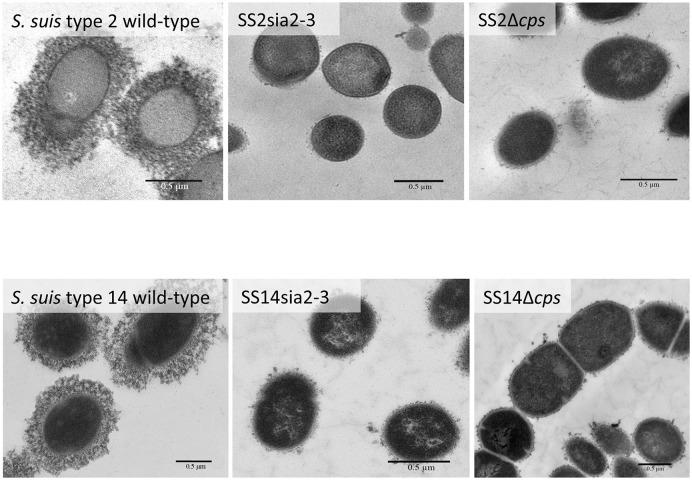
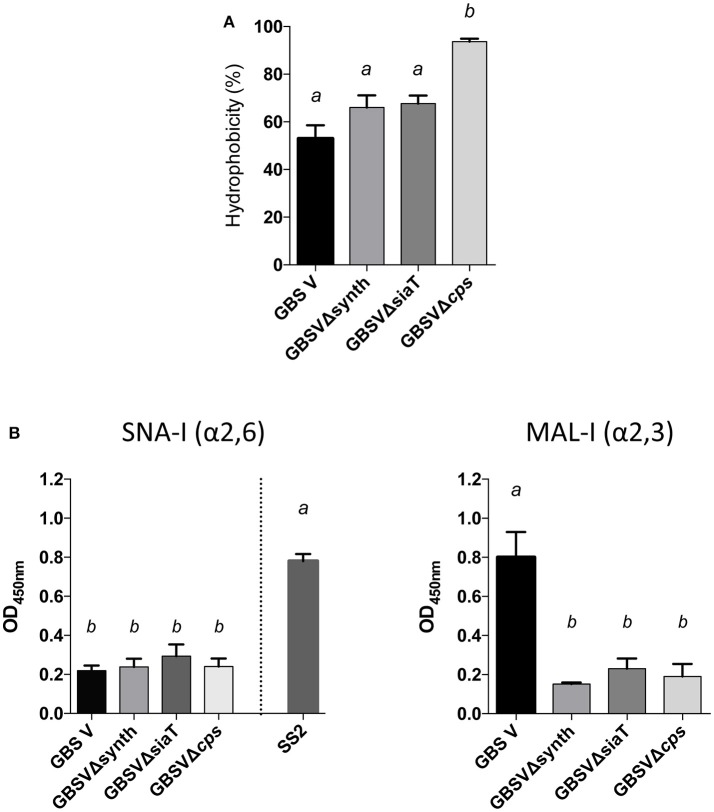
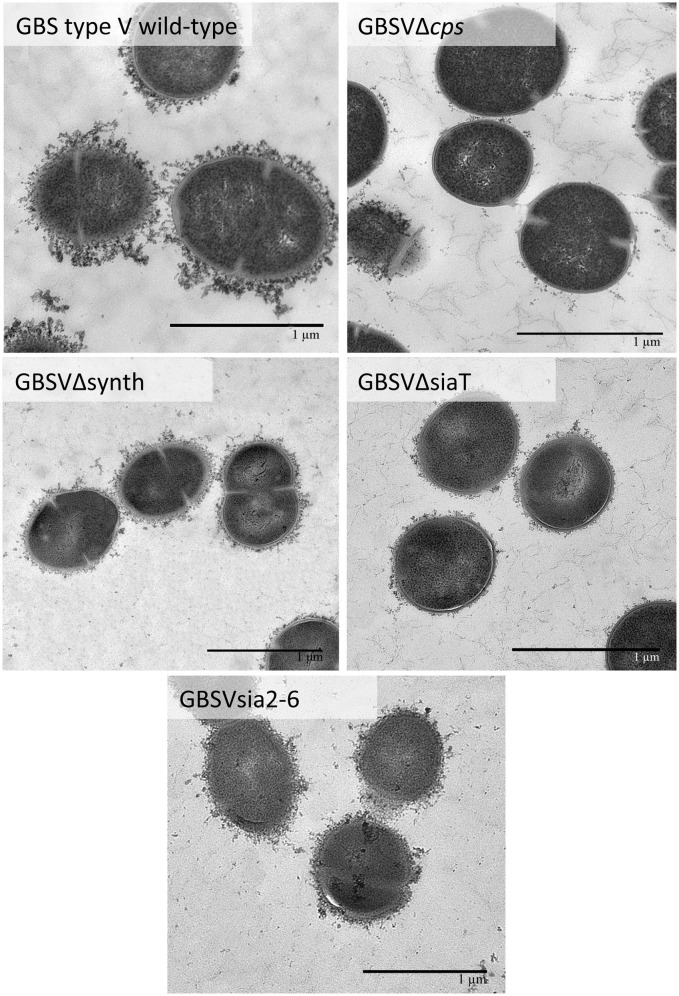
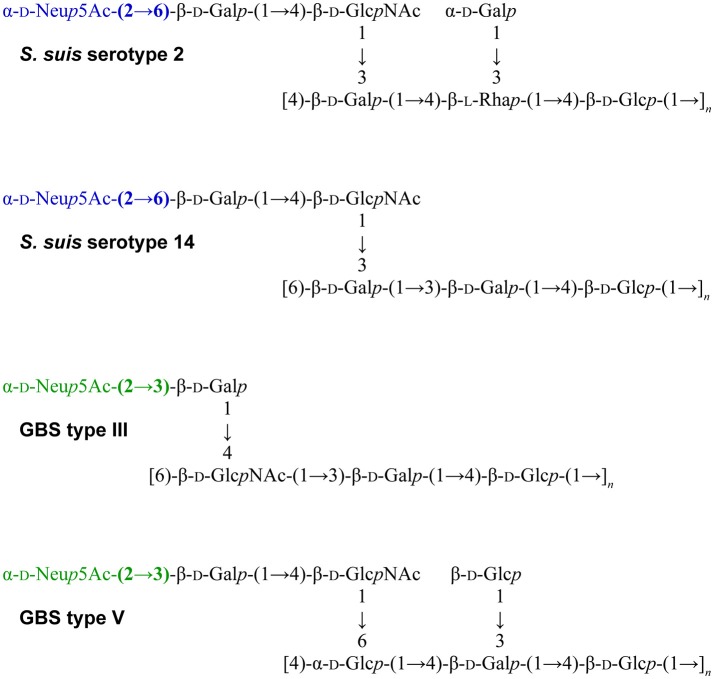
The capsular polysaccharide (CPS) represents a key virulence factor for most encapsulated streptococci. and Group B (GBS) are both well-encapsulated pathogens of clinical importance in veterinary and/or human medicine and responsible for invasive systemic diseases. and GBS are the only Gram-positive bacteria which express a sialylated CPS at their surface. An important difference between these two sialylated CPSs is the linkage between the side-chain terminal galactose and sialic acid, being α-2,6 for but α-2,3 for GBS. It is still unclear how sialic acid may affect CPS production and, consequently, the pathogenesis of the disease caused by these two bacterial pathogens. Here, we investigated the role of sialic acid and the putative effect of sialic acid linkage modification in CPS synthesis using inter-species allelic exchange mutagenesis. To this aim, a new molecular biogenetic approach to express CPS with modified sialic acid linkage was developed. We showed that sialic acid (and its α-2,6 linkage) is crucial for CPS synthesis, whereas for GBS, CPS synthesis may occur in presence of an α-2,6 sialyltransferase or in absence of sialic acid moiety. To evaluate the effect of the CPS composition/structure on sialyltransferase activity, two distinct capsular serotypes within each bacterial species were compared ( serotypes 2 and 14 and GBS serotypes III and V). It was demonstrated that the observed differences in sialyltransferase activity and specificity between and GBS were serotype unrestricted. This is the first time that a study investigates the interspecies exchange of capsular sialyltransferase genes in Gram-positive bacteria. The obtained mutants represent novel tools that could be used to further investigate the immunomodulatory properties of sialylated CPSs. Finally, in spite of common CPS structural characteristics and similarities in the loci, sialic acid exerts differential control of CPS expression by and GBS.

摘要

荚膜多糖(CPS)是大多数有荚膜链球菌的关键毒力因子。A群链球菌(GAS)和B群链球菌(GBS)都是在兽医和/或人类医学中具有临床重要性的高度有荚膜的病原体,可引起侵袭性全身性疾病。GAS和GBS是仅有的在其表面表达唾液酸化CPS的革兰氏阳性细菌。这两种唾液酸化CPS之间的一个重要区别是侧链末端半乳糖与唾液酸之间的连接,GAS为α-2,6连接,而GBS为α-2,3连接。目前仍不清楚唾液酸如何影响CPS的产生,进而影响这两种细菌病原体所引起疾病的发病机制。在此,我们利用种间等位基因交换诱变研究了唾液酸的作用以及唾液酸连接修饰在CPS合成中的假定效应。为此,开发了一种新的分子生物发生方法来表达具有修饰唾液酸连接的CPS。我们发现唾液酸(及其α-2,6连接)对GAS的CPS合成至关重要,而对于GBS,在存在α-2,6唾液酸转移酶或不存在唾液酸部分的情况下都可能发生CPS合成。为了评估CPS组成/结构对唾液酸转移酶活性的影响,比较了每个细菌物种内的两种不同荚膜血清型(GAS血清型2和14以及GBS血清型III和V)。结果表明,观察到的GAS和GBS之间唾液酸转移酶活性和特异性的差异不受血清型限制。这是首次在革兰氏阳性细菌中研究荚膜唾液酸转移酶基因的种间交换。获得的突变体代表了可用于进一步研究唾液酸化CPS免疫调节特性的新工具。最后,尽管CPS具有共同的结构特征且GAS和GBS的相关基因座存在相似性,但唾液酸对GAS和GBS的CPS表达发挥着不同的调控作用。
https://cdn.ncbi.nlm.nih.gov/pmc/blobs/5f71/5891629/89057b898a9b/fmicb-09-00545-g0015.jpg
https://cdn.ncbi.nlm.nih.gov/pmc/blobs/5f71/5891629/e92a11904638/fmicb-09-00545-g0001.jpg
https://cdn.ncbi.nlm.nih.gov/pmc/blobs/5f71/5891629/f74f7f9ef372/fmicb-09-00545-g0002.jpg
https://cdn.ncbi.nlm.nih.gov/pmc/blobs/5f71/5891629/28fb9a3cccb8/fmicb-09-00545-g0003.jpg
https://cdn.ncbi.nlm.nih.gov/pmc/blobs/5f71/5891629/22eb5d35fea6/fmicb-09-00545-g0004.jpg
https://cdn.ncbi.nlm.nih.gov/pmc/blobs/5f71/5891629/318ab6963899/fmicb-09-00545-g0005.jpg
https://cdn.ncbi.nlm.nih.gov/pmc/blobs/5f71/5891629/bd483e3650b3/fmicb-09-00545-g0006.jpg
https://cdn.ncbi.nlm.nih.gov/pmc/blobs/5f71/5891629/13b97e2c6b74/fmicb-09-00545-g0007.jpg
https://cdn.ncbi.nlm.nih.gov/pmc/blobs/5f71/5891629/304d94bb8304/fmicb-09-00545-g0008.jpg
https://cdn.ncbi.nlm.nih.gov/pmc/blobs/5f71/5891629/2f941bbea1c3/fmicb-09-00545-g0009.jpg
https://cdn.ncbi.nlm.nih.gov/pmc/blobs/5f71/5891629/42016c41ae2c/fmicb-09-00545-g0010.jpg
https://cdn.ncbi.nlm.nih.gov/pmc/blobs/5f71/5891629/f95b39960a01/fmicb-09-00545-g0011.jpg
https://cdn.ncbi.nlm.nih.gov/pmc/blobs/5f71/5891629/99937b4f191f/fmicb-09-00545-g0012.jpg
https://cdn.ncbi.nlm.nih.gov/pmc/blobs/5f71/5891629/23be820a0131/fmicb-09-00545-g0014.jpg
https://cdn.ncbi.nlm.nih.gov/pmc/blobs/5f71/5891629/f1c5d96f9f19/fmicb-09-00545-g0013.jpg
https://cdn.ncbi.nlm.nih.gov/pmc/blobs/5f71/5891629/89057b898a9b/fmicb-09-00545-g0015.jpg
https://cdn.ncbi.nlm.nih.gov/pmc/blobs/5f71/5891629/e92a11904638/fmicb-09-00545-g0001.jpg
https://cdn.ncbi.nlm.nih.gov/pmc/blobs/5f71/5891629/f74f7f9ef372/fmicb-09-00545-g0002.jpg
https://cdn.ncbi.nlm.nih.gov/pmc/blobs/5f71/5891629/28fb9a3cccb8/fmicb-09-00545-g0003.jpg
https://cdn.ncbi.nlm.nih.gov/pmc/blobs/5f71/5891629/22eb5d35fea6/fmicb-09-00545-g0004.jpg
https://cdn.ncbi.nlm.nih.gov/pmc/blobs/5f71/5891629/318ab6963899/fmicb-09-00545-g0005.jpg
https://cdn.ncbi.nlm.nih.gov/pmc/blobs/5f71/5891629/bd483e3650b3/fmicb-09-00545-g0006.jpg
https://cdn.ncbi.nlm.nih.gov/pmc/blobs/5f71/5891629/13b97e2c6b74/fmicb-09-00545-g0007.jpg
https://cdn.ncbi.nlm.nih.gov/pmc/blobs/5f71/5891629/304d94bb8304/fmicb-09-00545-g0008.jpg
https://cdn.ncbi.nlm.nih.gov/pmc/blobs/5f71/5891629/2f941bbea1c3/fmicb-09-00545-g0009.jpg
https://cdn.ncbi.nlm.nih.gov/pmc/blobs/5f71/5891629/42016c41ae2c/fmicb-09-00545-g0010.jpg
https://cdn.ncbi.nlm.nih.gov/pmc/blobs/5f71/5891629/f95b39960a01/fmicb-09-00545-g0011.jpg
https://cdn.ncbi.nlm.nih.gov/pmc/blobs/5f71/5891629/99937b4f191f/fmicb-09-00545-g0012.jpg
https://cdn.ncbi.nlm.nih.gov/pmc/blobs/5f71/5891629/23be820a0131/fmicb-09-00545-g0014.jpg
https://cdn.ncbi.nlm.nih.gov/pmc/blobs/5f71/5891629/f1c5d96f9f19/fmicb-09-00545-g0013.jpg
https://cdn.ncbi.nlm.nih.gov/pmc/blobs/5f71/5891629/89057b898a9b/fmicb-09-00545-g0015.jpg

相似文献

1
Capsular Sialyltransferase Specificity Mediates Different Phenotypes in and Group B .荚膜唾液酸转移酶特异性介导A群和B群链球菌的不同表型
Front Microbiol. 2018 Apr 3;9:545. doi: 10.3389/fmicb.2018.00545. eCollection 2018.
2
Evaluation of the Immunomodulatory Properties of Streptococcus suis and Group B Streptococcus Capsular Polysaccharides on the Humoral Response.猪链球菌和B族链球菌荚膜多糖对体液免疫反应的免疫调节特性评估
Pathogens. 2017 Apr 20;6(2):16. doi: 10.3390/pathogens6020016.
3
Fisher scientific award lecture - the capsular polysaccharides of Group B Streptococcus and Streptococcus suis differently modulate bacterial interactions with dendritic cells.费希尔科学奖演讲——B 群链球菌和猪链球菌荚膜多糖不同调节细菌与树突状细胞的相互作用。
Can J Microbiol. 2012 Mar;58(3):249-60. doi: 10.1139/w2012-003. Epub 2012 Feb 22.
4
Group B Streptococcus and Streptococcus suis capsular polysaccharides induce chemokine production by dendritic cells via Toll-like receptor 2- and MyD88-dependent and -independent pathways.B 群链球菌和猪链球菌荚膜多糖通过 Toll 样受体 2 及 MyD88 依赖和非依赖途径诱导树突状细胞产生趋化因子。
Infect Immun. 2013 Sep;81(9):3106-18. doi: 10.1128/IAI.00113-13. Epub 2013 Jun 17.
5
Explaining the Serological Characteristics of Streptococcus suis Serotypes 1 and 1/2 from Their Capsular Polysaccharide Structure and Biosynthesis.从猪链球菌1型和1/2型的荚膜多糖结构与生物合成解释其血清学特征
J Biol Chem. 2016 Apr 15;291(16):8387-98. doi: 10.1074/jbc.M115.700716. Epub 2016 Feb 24.
6
Structure determination of Streptococcus suis serotype 9 capsular polysaccharide and assignment of functions of the cps locus genes involved in its biosynthesis.猪链球菌9型荚膜多糖的结构测定及其生物合成相关cps基因座基因功能的确定。
Carbohydr Res. 2016 Oct 4;433:25-30. doi: 10.1016/j.carres.2016.07.005. Epub 2016 Jul 5.
7
Structure determination of Streptococcus suis serotypes 7 and 8 capsular polysaccharides and assignment of functions of the cps locus genes involved in their biosynthesis.猪链球菌7型和8型荚膜多糖的结构测定以及参与其生物合成的cps基因座基因功能的确定。
Carbohydr Res. 2019 Feb 1;473:36-45. doi: 10.1016/j.carres.2018.12.009. Epub 2018 Dec 18.
8
Structure determination of Streptococcus suis serotype 2 capsular polysaccharide.猪链球菌 2 型荚膜多糖结构的测定。
Biochem Cell Biol. 2010 Jun;88(3):513-25. doi: 10.1139/o09-170.
9
Comparative Study of Immunogenic Properties of Purified Capsular Polysaccharides from Serotypes 3, 7, 8, and 9: the Serotype 3 Polysaccharide Induces an Opsonizing IgG Response.3、7、8、9 型荚膜多糖的免疫原性比较研究:3 型多糖诱导调理 IgG 反应。
Infect Immun. 2020 Sep 18;88(10). doi: 10.1128/IAI.00377-20.
10
Structure determination of Streptococcus suis serotype 14 capsular polysaccharide.猪链球菌 14 型荚膜多糖结构的测定。
Biochem Cell Biol. 2013 Apr;91(2):49-58. doi: 10.1139/bcb-2012-0036. Epub 2012 Dec 3.

引用本文的文献

1
Identification and characterization of ugpE associated with the full virulence of Streptococcus suis.与猪链球菌完全毒力相关的ugpE的鉴定与特性分析
Vet Res. 2025 Apr 16;56(1):82. doi: 10.1186/s13567-025-01513-z.
2
How bacteria utilize sialic acid during interactions with the host: snip, snatch, dispatch, match and attach.细菌在与宿主相互作用过程中如何利用唾液酸:剪断、抢夺、派遣、匹配和附着。
Microbiology (Reading). 2022 Mar;168(3). doi: 10.1099/mic.0.001157.
3
Group B Streptococcus Capsular Serotype Alters Vaginal Colonization Fitness.

本文引用的文献

1
Streptococcal Adhesin P (SadP) contributes to Streptococcus suis adhesion to the human intestinal epithelium.链球菌粘附素P(SadP)有助于猪链球菌粘附于人肠上皮细胞。
PLoS One. 2017 Apr 13;12(4):e0175639. doi: 10.1371/journal.pone.0175639. eCollection 2017.
2
Streptococcus suis small RNA rss04 contributes to the induction of meningitis by regulating capsule synthesis and by inducing biofilm formation in a mouse infection model.猪链球菌小RNA rss04通过调节荚膜合成以及在小鼠感染模型中诱导生物膜形成,促进脑膜炎的发生。
Vet Microbiol. 2017 Feb;199:111-119. doi: 10.1016/j.vetmic.2016.12.034. Epub 2016 Dec 31.
3
B 群链球菌荚膜血清型改变阴道定植适应性。
J Infect Dis. 2022 Jun 1;225(11):1896-1904. doi: 10.1093/infdis/jiab559.
4
Interactions of Streptococcus suis serotype 9 with host cells and role of the capsular polysaccharide: Comparison with serotypes 2 and 14.猪链球菌 9 型与宿主细胞的相互作用及其荚膜多糖的作用:与 2 型和 14 型的比较。
PLoS One. 2019 Oct 10;14(10):e0223864. doi: 10.1371/journal.pone.0223864. eCollection 2019.
Recruitment of Factor H to the Streptococcus suis Cell Surface is Multifactorial.
猪链球菌细胞表面补体因子H的募集是多因素的。
Pathogens. 2016 Jul 7;5(3):47. doi: 10.3390/pathogens5030047.
4
Explaining the Serological Characteristics of Streptococcus suis Serotypes 1 and 1/2 from Their Capsular Polysaccharide Structure and Biosynthesis.从猪链球菌1型和1/2型的荚膜多糖结构与生物合成解释其血清学特征
J Biol Chem. 2016 Apr 15;291(16):8387-98. doi: 10.1074/jbc.M115.700716. Epub 2016 Feb 24.
5
The CodY regulator is essential for virulence in Streptococcus suis serotype 2.CodY调节因子对于猪链球菌2型的毒力至关重要。
Sci Rep. 2016 Feb 17;6:21241. doi: 10.1038/srep21241.
6
Streptococcus suis, an important pig pathogen and emerging zoonotic agent-an update on the worldwide distribution based on serotyping and sequence typing.猪链球菌,一种重要的猪病原体和新出现的人畜共患病原体——基于血清型和序列分型的全球分布最新情况
Emerg Microbes Infect. 2014 Jun;3(6):e45. doi: 10.1038/emi.2014.45. Epub 2014 Jun 18.
7
Role of the capsular polysaccharide as a virulence factor for Streptococcus suis serotype 14.荚膜多糖作为猪链球菌14型毒力因子的作用。
Can J Vet Res. 2015 Apr;79(2):141-6.
8
Implication of TLR- but not of NOD2-signaling pathways in dendritic cell activation by group B Streptococcus serotypes III and V.B族链球菌血清型III和V激活树突状细胞过程中TLR信号通路而非NOD2信号通路的作用
PLoS One. 2014 Dec 1;9(12):e113940. doi: 10.1371/journal.pone.0113940. eCollection 2014.
9
Functional analysis of c-di-AMP phosphodiesterase, GdpP, in Streptococcus suis serotype 2.猪链球菌2型中环状二磷酸腺苷磷酸二酯酶GdpP的功能分析
Microbiol Res. 2014 Sep-Oct;169(9-10):749-58. doi: 10.1016/j.micres.2014.01.002. Epub 2014 Jan 26.
10
Capsule loss or death: the position of mutations among capsule genes sways the destiny of Streptococcus suis.荚膜缺失或死亡:荚膜基因中突变的位置决定了猪链球菌的命运。
FEMS Microbiol Lett. 2014 May;354(1):46-54. doi: 10.1111/1574-6968.12428. Epub 2014 Apr 3.