Department of Psychology, University of Maryland, College Park, USA.
Sci Rep. 2018 Apr 18;8(1):6212. doi: 10.1038/s41598-018-24307-0.
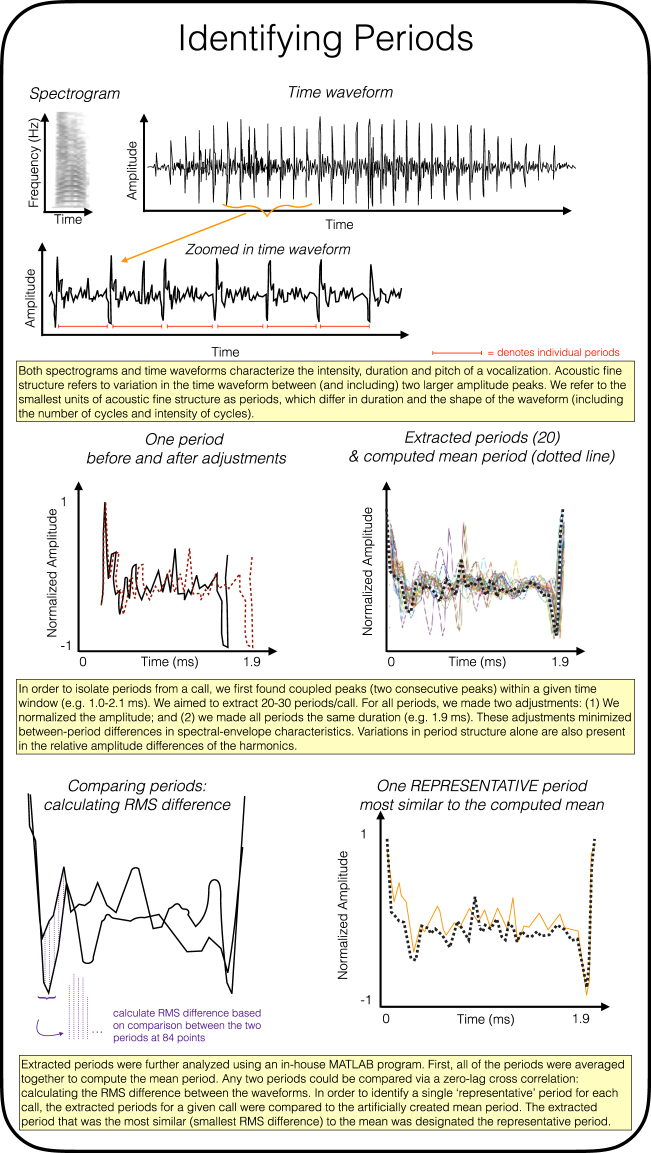
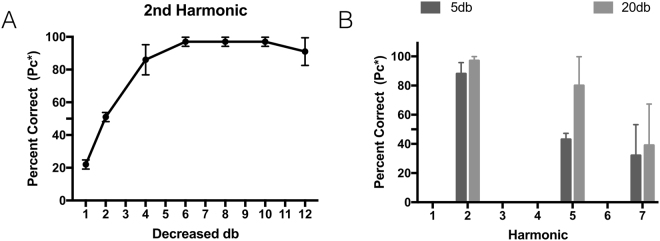
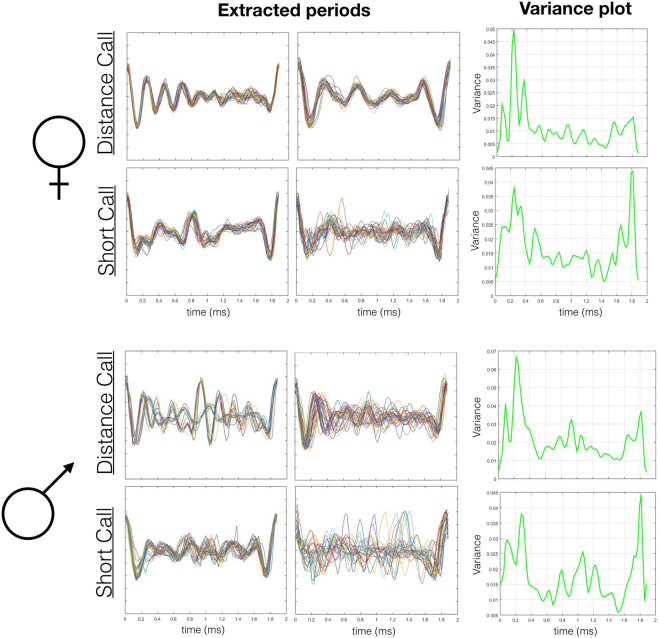
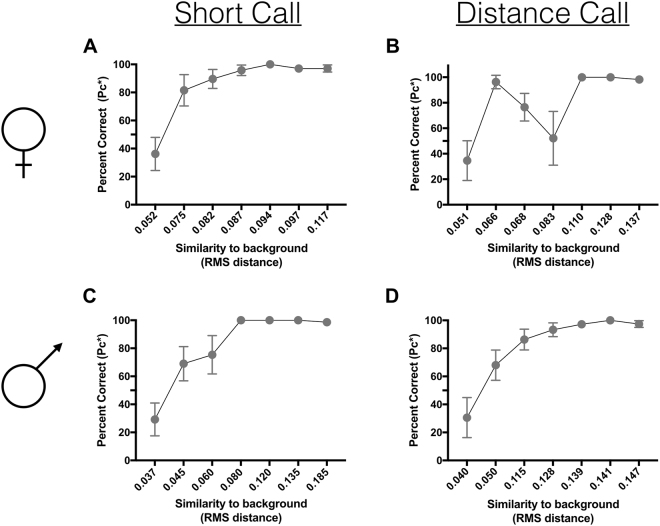
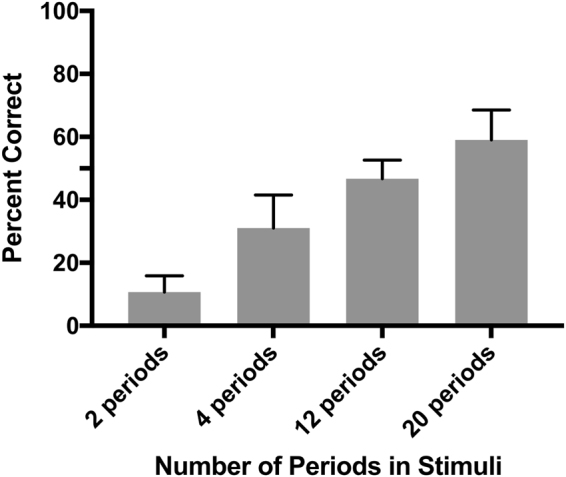
The ability to discriminate changes in the fine structure of complex sounds is well developed in birds. However, the precise limit of this discrimination ability and how it is used in the context of natural communication remains unclear. Here we describe natural variability in acoustic fine structure of male and female zebra finch calls. Results from psychoacoustic experiments demonstrate that zebra finches are able to discriminate extremely small differences in fine structure, which are on the order of the variation in acoustic fine structure that is present in their vocal signals. Results from signal analysis methods also suggest that acoustic fine structure may carry information that distinguishes between biologically relevant categories including sex, call type and individual identity. Combined, our results are consistent with the hypothesis that zebra finches can encode biologically relevant information within the fine structure of their calls. This study provides a foundation for our understanding of how acoustic fine structure may be involved in animal communication.
鸟类对复杂声音的精细结构变化具有很强的辨别能力。然而,这种辨别能力的精确界限以及它在自然通讯中的具体应用仍不清楚。本文描述了雄性和雌性斑胸草雀叫声中精细结构的自然可变性。心理声学实验的结果表明,斑胸草雀能够辨别精细结构中极其微小的差异,这些差异与它们叫声中的精细结构变化相当。信号分析方法的结果也表明,精细结构可能携带能够区分包括性别、叫声类型和个体身份在内的生物相关类别的信息。综合来看,我们的结果支持了这样一种假设,即斑胸草雀可以在其叫声的精细结构中编码与生物相关的信息。这项研究为我们理解精细结构如何参与动物通讯提供了基础。