Department of Electrical Engineering and Bioscience, Graduate School of Advanced Science and Engineering, Waseda University, Wakamatsu-cho 2-2, Shinjuku-ku, Tokyo, 162-8480, Japan.
Department of Chemistry, Biology, and Marine Science, Faculty of Science, University of the Ryukyus, 1 Senbaru, Nishihara-cho, Nakagami-gun, Okinawa, 903-0213, Japan.
Sci Rep. 2018 Apr 18;8(1):6208. doi: 10.1038/s41598-018-24538-1.
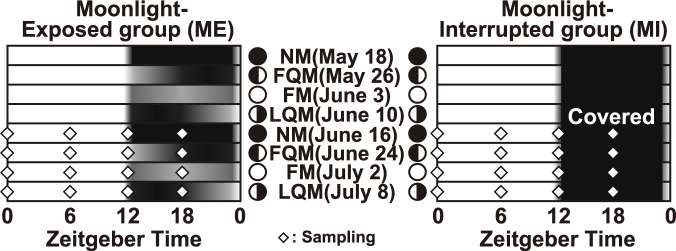
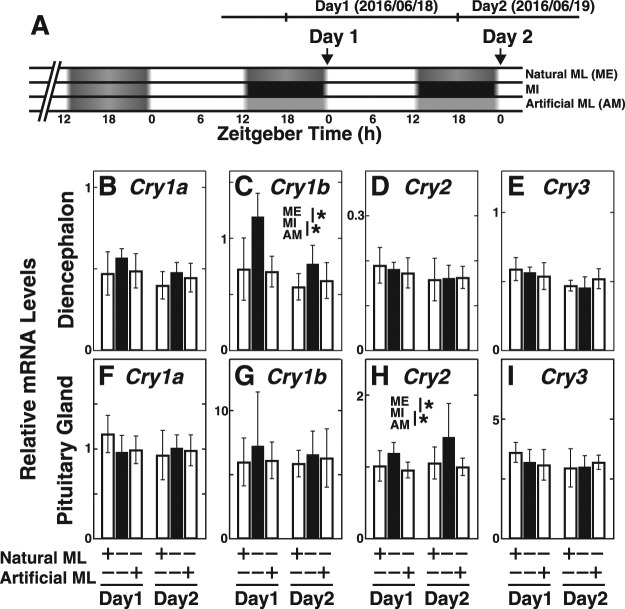
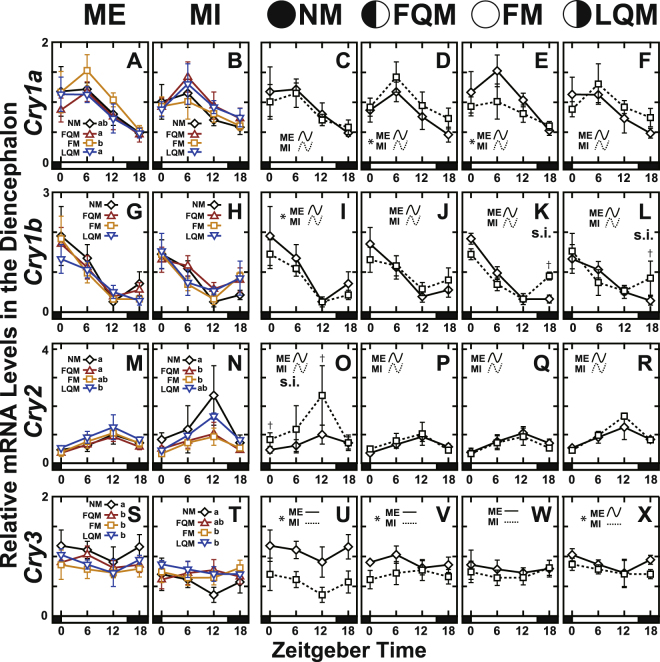
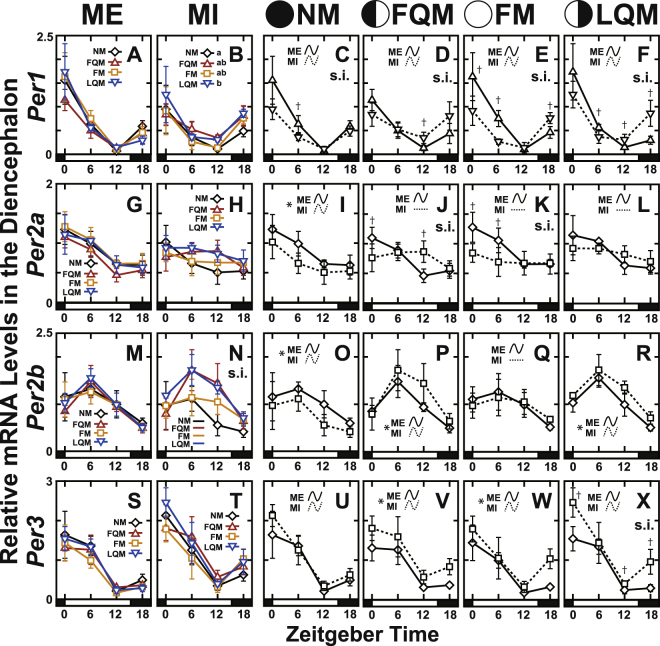
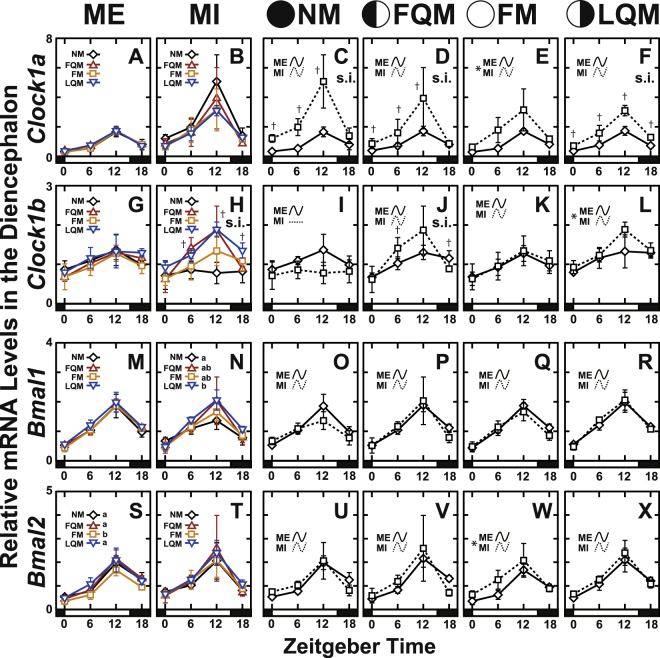
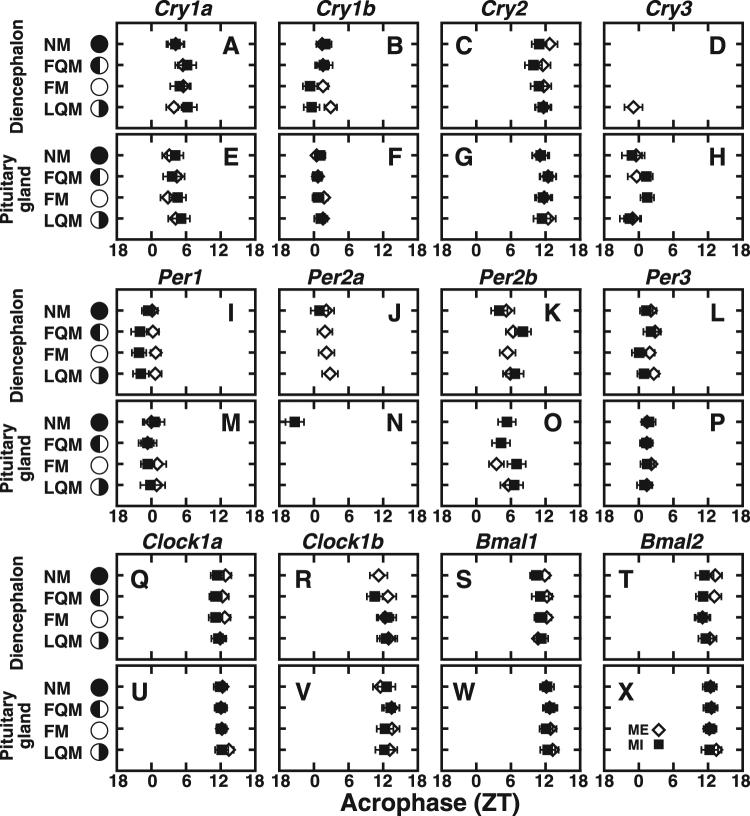
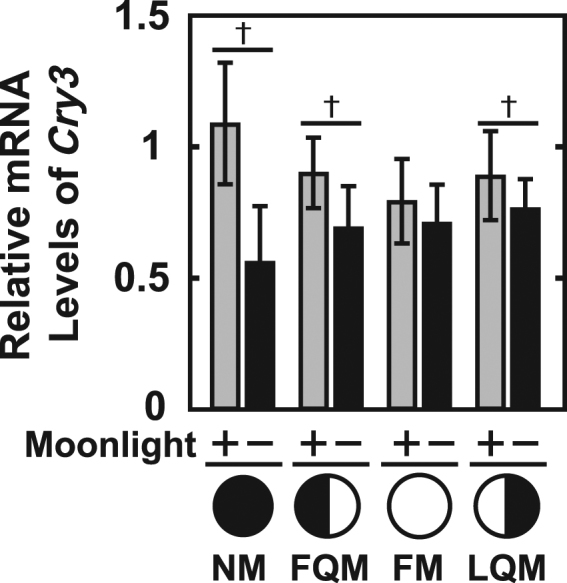
Goldlined spinefoot, Siganus guttatus, inhabits tropical and subtropical waters and synchronizes its spawning around the first quarter moon likely using an hourglass-like lunar timer. In previous studies, we have found that clock genes (Cryptochrome3 and Period1) could play the role of state variable in the diencephalon when determining the lunar phase for spawning. Here, we identified three Cry, two Per, two Clock, and two Bmal genes in S. guttatus and investigated their expression patterns in the diencephalon and pituitary gland. We further evaluated the effect on their expression patterns by daily interruptions of moonlight stimuli for 1 lunar cycle beginning at the new moon. It significantly modified the expression patterns in many of the examined clock(-related) genes including Cry3 in the diencephalon and/or pituitary gland. Acute interruptions of moonlight around the waxing gibbous moon upregulated nocturnal expressions of Cry1b and Cry2 in the diencephalon and pituitary gland, respectively, but did not affect expression levels of the other clock genes. These results highlighted the importance of repetitive moonlight illumination for stable or lunar-phase-specific daily expression of clock genes in the next lunar cycle that may be important for the lunar-phase-synchronized spawning on the next first quarter moon.
金黄牙鲷,栖息于热带和亚热带水域,可能利用沙漏状的月相计时机制,在新月前后进行同步产卵。在之前的研究中,我们发现生物钟基因(CRY3 和 PER1)在确定产卵的月相时,可作为间脑的状态变量发挥作用。本研究在金黄牙鲷中鉴定出三个 Cry、两个 Per、两个 Clock 和两个 Bmal 基因,并研究了它们在间脑和垂体中的表达模式。进一步通过在新月开始的 1 个月球周期内,每天中断月光刺激,评估了它们的表达模式。结果表明,许多被检测的生物钟(相关)基因的表达模式发生了显著改变,包括间脑和/或垂体中的 Cry3。在渐盈凸月时,急性中断月光刺激分别上调了间脑和垂体中 Cry1b 和 Cry2 的夜间表达,但不影响其他生物钟基因的表达水平。这些结果强调了重复的月光照射对于下一个月球周期中生物钟基因稳定或特定于月相的表达的重要性,这可能对在下一个新月前后的同步产卵中发挥重要作用。