Arauz Antonio, Marquez-Romero Juan Manuel, Barboza Miguel A, Serrano Fabiola, Artigas Carol, Murillo-Bonilla Luis Manuel, Cantú-Brito Carlos, Ruiz-Sandoval José Luis, Barinagarrementeria Fernando
Stroke Clinic, Instituto Nacional de Neurología y Neurocirugía, Mexico City, Mexico.
Instituto Mexicano del Seguro Social (IMSS) HGZ 2, Aguascalientes, Mexico.
Front Neurol. 2018 Apr 4;9:207. doi: 10.3389/fneur.2018.00207. eCollection 2018.
Stroke has been scarcely studied in Latin America (LA). The Mexican Institute of Neurology Stroke Registry was established in 1990 as a prospective computer-based database to register data obtained from patients admitted with stroke. Using this data, we attempted to define the profile of risk factors and outcomes.
The demographic data, stroke description, ancillary tests, vascular risk factors, and modified Rankin scale (mRs) were registered. Ischemic stroke subtyping was based on the Trial of Org 10,172 of the Acute Stroke Treatment classification. We followed-up patients using multiple overlapping methods. Primary outcomes included mRs, recurrence, and death at 30 days and at the end of follow-up.
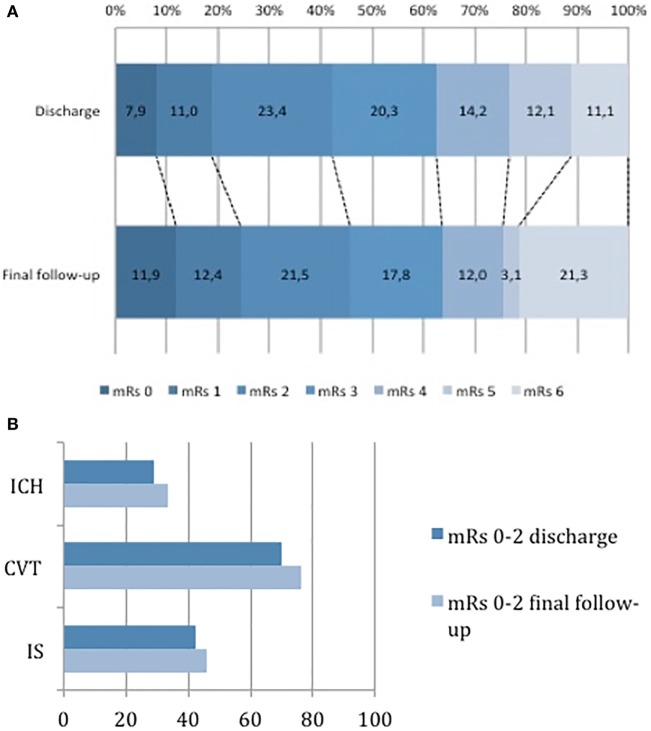
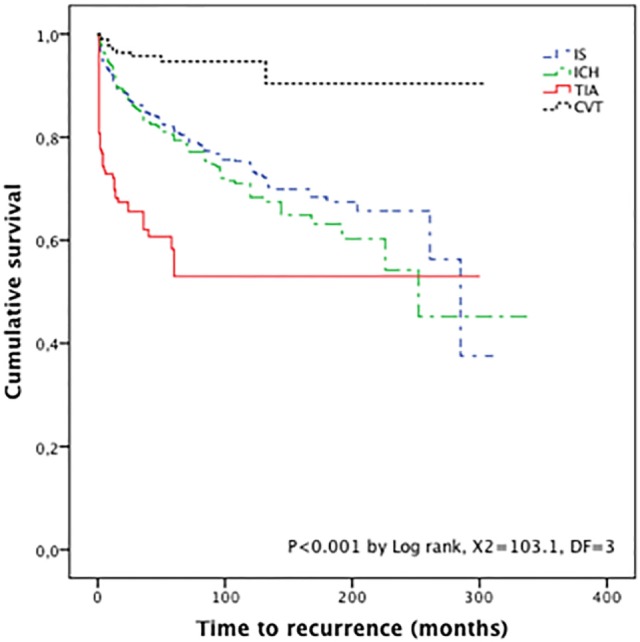
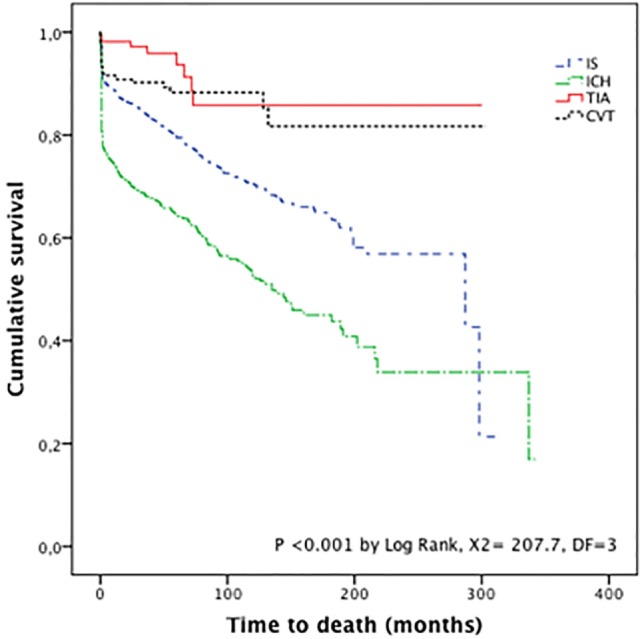
We included 4,481 patients with a median follow-up of 27 months, (17,281 person-years follow-up). The mean age was 52.8 ± 18 years. There were 2,229 males (50%) included in the study. CI was present in 64.9%, intracerebral hemorrhage (ICH) in 25.6%, and cerebral venous thrombosis (CVT) in 6.3%. Hypertension was the major risk factor (46.5%). The most common cause of CI was atherosclerosis (27%). ICH was mainly hypertensive (58%), and 60% of CVT were puerperal. Overall, the mortality rate was 24.5%. The recurrence rate was 16.9%. Poor outcome (mRs ≥ 3) was found in 56.2% of patients. The best outcomes were observed in CVT patients (74.5% mRs ≤ 2), whereas 72.1% ICH patients had mRs ≥3.
This is one of the largest hospital-based registries in LA and shows significant differences with other previously published registries, including a younger age, relatively less hypertension, and larger proportion of CVT. Poor functional outcome was common. This study adds to the understanding of geographic differences in stroke characteristics and outcomes.
在拉丁美洲(LA),卒中方面的研究极少。墨西哥神经病学研究所卒中登记处始建于1990年,是一个基于计算机的前瞻性数据库,用于记录因卒中入院患者的数据。利用这些数据,我们试图明确危险因素和预后情况。
记录人口统计学数据、卒中描述、辅助检查、血管危险因素及改良Rankin量表(mRs)。缺血性卒中亚型分类基于急性卒中治疗分类的Org 10,172试验。我们采用多种重叠方法对患者进行随访。主要结局包括30天时及随访结束时的mRs、复发情况及死亡情况。
我们纳入了4481例患者,中位随访时间为27个月(随访人年数为17281)。平均年龄为52.8±18岁。研究纳入了2229名男性(50%)。脑梗死(CI)占64.9%,脑出血(ICH)占25.6%,脑静脉血栓形成(CVT)占6.3%。高血压是主要危险因素(46.5%)。CI最常见的病因是动脉粥样硬化(27%)。ICH主要由高血压引起(58%),60%的CVT为产褥期所致。总体而言,死亡率为24.5%。复发率为16.9%。56.2%的患者预后不良(mRs≥3)。CVT患者的预后最佳(74.5%的患者mRs≤2);而72.1%的ICH患者mRs≥3。
这是拉丁美洲最大的基于医院的登记处之一,显示出与其他先前发表的登记处存在显著差异,包括年龄较轻、高血压相对较少以及CVT比例较高。功能预后不良较为常见。本研究有助于加深对卒中特征和预后的地域差异的理解。