Sarwar Muhammad Waseem, Riaz Adeel, Dilshad Syed Muhammad Raihan, Al-Qahtani Ahmed, Nawaz-Ul-Rehman Muhammad Shah, Mubin Muhammad
Virology Lab, Centre of Agricultural Biochemistry and Biotechnology, University of Agriculture, Jail road, Faisalabad, 38000, Pakistan.
Department of Theriogenology, Faculty of Veterinary and Animal Sciences, Gomal University, Dera Ismail Khan, Pakistan.
BMC Struct Biol. 2018 Apr 19;18(1):6. doi: 10.1186/s12900-018-0084-5.
Due to dengue virus disease, half of the world population is at severe health risk. Viral encoded NS2B-NS3 protease complex causes cleavage in the nonstructural region of the viral polyprotein. The cleavage is essentially required for fully functional viral protein. It has already been reported that if function of NS2B-NS3 complex is disrupted, viral replication is inhibited. Therefore, the NS2B-NS3 is a well-characterized target for designing antiviral drug.
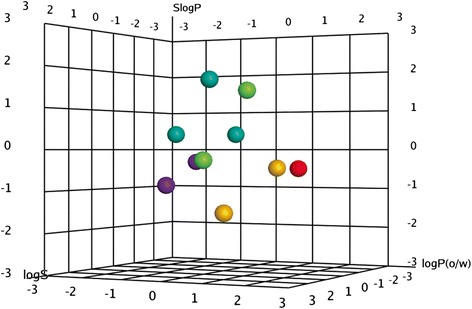
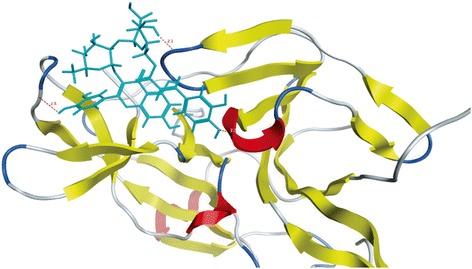
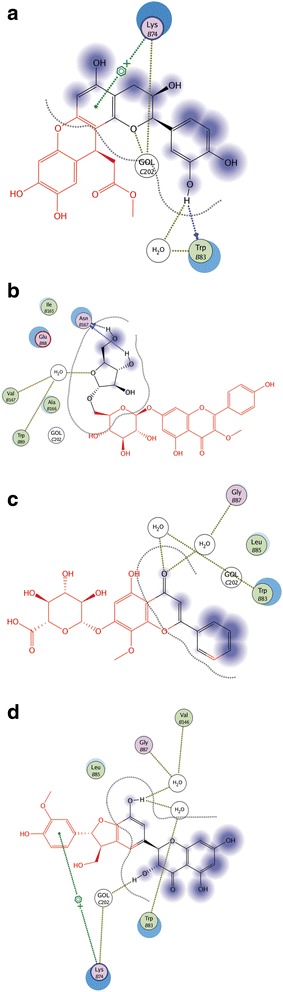
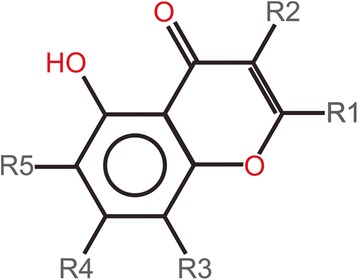
In this study docking analysis was performed with active site of dengue NS2B-NS3 protein with selected plant flavonoids. More than 100 flavonoids were used for docking analysis. On the basis of docking results 10 flavonoids might be considered as the best inhibitors of NS2B-NS3 protein. The interaction studies showed resilient interactions between ligand and receptor atoms. Furthermore, QSAR and SAR studies were conducted on the basis of NS2B-NS3 protease complex docking results. The value of correlation coefficient (r) 0.95 shows that there was a good correlation between flavonoid structures and selected properties.
We hereby suggest that plant flavonoids could be used as potent inhibitors of dengue NS2B-NS3 protein and can be used as antiviral agents against dengue virus. Out of more than hundred plant flavonoids, ten flavonoid structures are presented in this study. On the basis of best docking results, QSAR and SAR studies were performed. These flavonoids can directly work as anti-dengue drug or with little modifications in their structures.
由于登革热病毒病,世界上一半的人口面临严重的健康风险。病毒编码的NS2B-NS3蛋白酶复合体在病毒多聚蛋白的非结构区域进行切割。这种切割对于具有完整功能的病毒蛋白来说是必不可少的。已有报道称,如果NS2B-NS3复合体的功能被破坏,病毒复制就会受到抑制。因此,NS2B-NS3是设计抗病毒药物的一个特征明确的靶点。
在本研究中,对登革热NS2B-NS3蛋白的活性位点与选定的植物黄酮类化合物进行了对接分析。超过100种黄酮类化合物被用于对接分析。根据对接结果,10种黄酮类化合物可能被视为NS2B-NS3蛋白的最佳抑制剂。相互作用研究表明配体和受体原子之间存在稳定的相互作用。此外,基于NS2B-NS3蛋白酶复合体的对接结果进行了定量构效关系(QSAR)和构效关系(SAR)研究。相关系数(r)值为0.95,表明黄酮类化合物结构与选定性质之间存在良好的相关性。
我们在此建议,植物黄酮类化合物可作为登革热NS2B-NS3蛋白的有效抑制剂,并可作为抗登革热病毒的抗病毒药物。在一百多种植物黄酮类化合物中,本研究给出了十种黄酮类化合物结构。基于最佳对接结果,进行了QSAR和SAR研究。这些黄酮类化合物可直接作为抗登革热药物,或只需对其结构进行少许修饰。