Yin Xiaoping, Huang Xu, Li Qiao, Li Li, Niu Pei, Cao Minglu, Guo Fei, Li Xuechao, Tan Wenchang, Huo Yunlong
Department of Radiology, Affiliated Hospital of Hebei University, Hebei University, Baoding, China.
Department of Mechanics and Engineering Science, College of Engineering, Peking University, Beijing, China.
Front Physiol. 2018 Apr 5;9:334. doi: 10.3389/fphys.2018.00334. eCollection 2018.
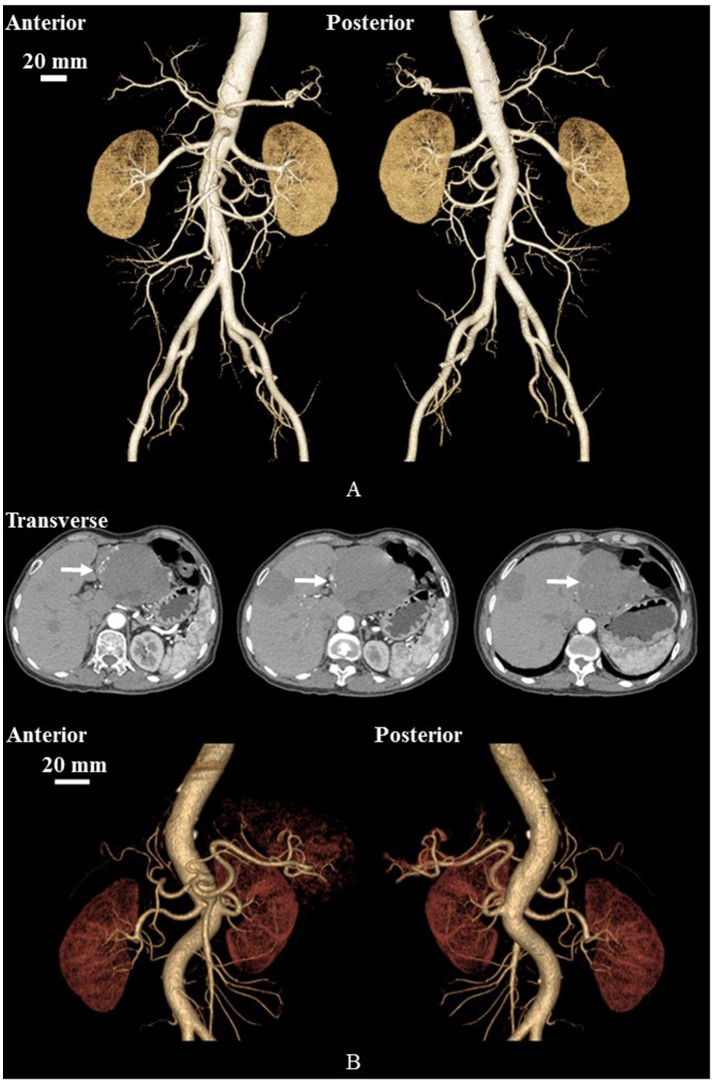
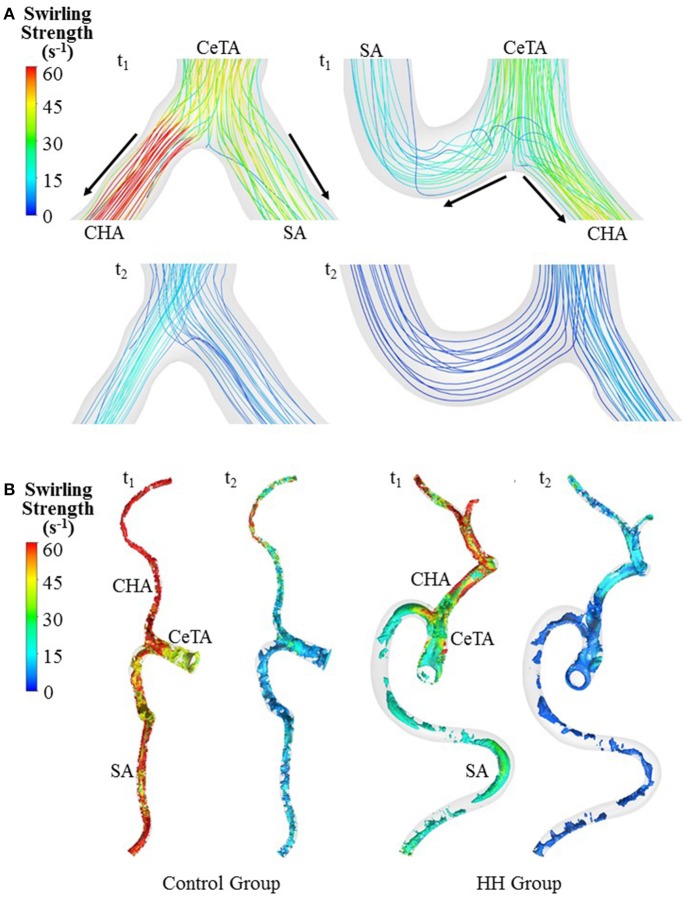
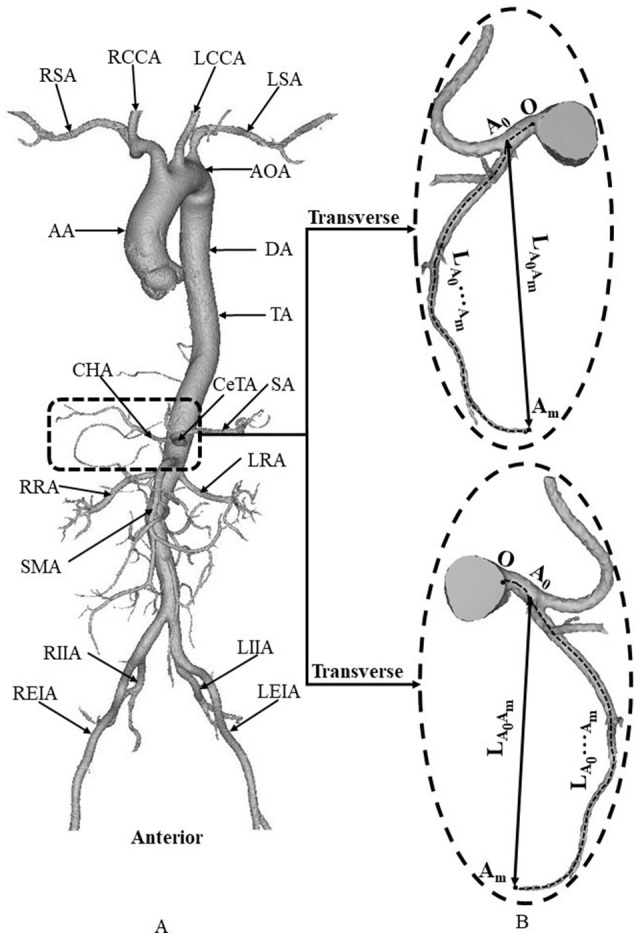
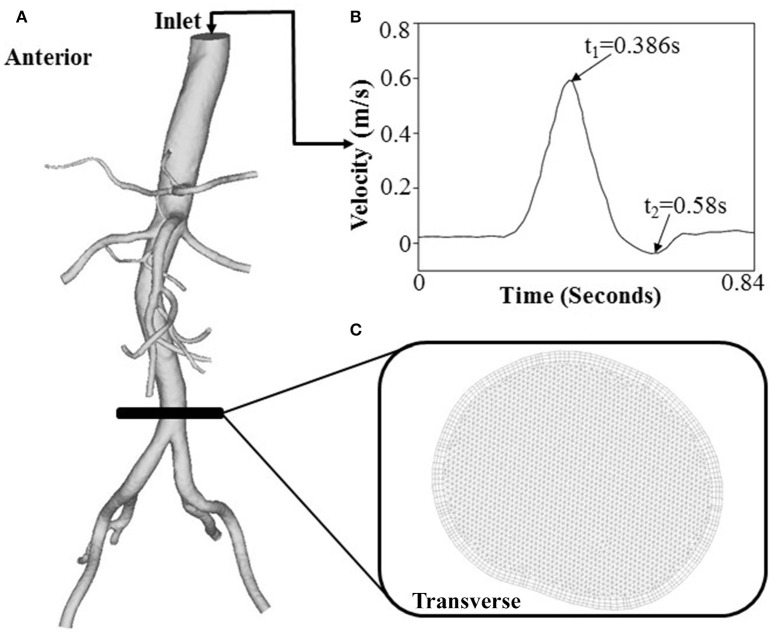
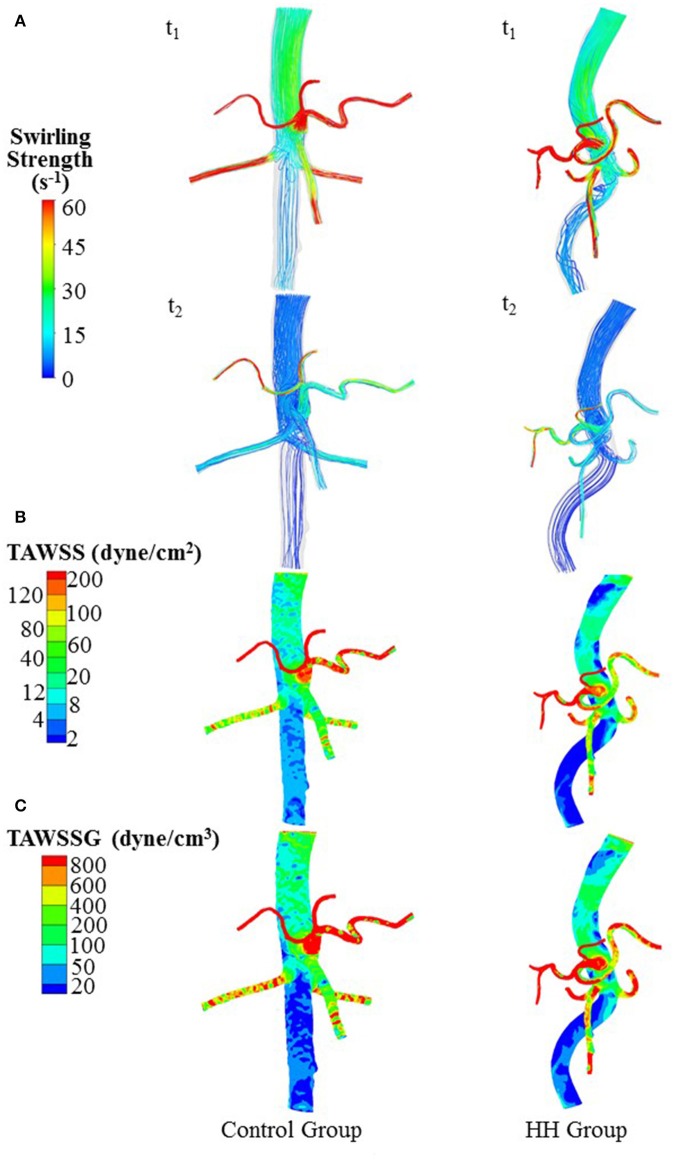
The formation of hepatic hemangiomas (HH) is associated with VEGF and IL-7 that alter conduit arteries and small arterioles. To our knowledge, there are no studies to investigate the effects of HH on the hemodynamics in conduit arteries. The aim of the study is to perform morphometric and hemodynamic analysis in abdominal conduit arteries and bifurcations of HH patients and controls. Based on morphometry reconstructed from CT images, geometrical models were meshed with prismatic elements for the near wall region and tetrahedral and hexahedral elements for the core region. Simulations were performed for computation of the non-Newtonian blood flow using the Carreau-Yasuda model, based on which multiple hemodynamic parameters were determined. There was an increase of the lumen size, diameter ratio, and curvature in the abdominal arterial tree of HH patients as compared with controls. This significantly increased the surface area ratio of low time-averaged wall shear stress (i.e., SAR-TAWSS [Formula: see text] 100%) (24.1 ± 7.9 vs. 5 ± 6%, 11.6 ± 12.8 vs. < 0.1%, and 44.5 ± 9.2 vs. 21 ± 24% at hepatic bifurcations, common hepatic arteries, and abdominal aortas, respectively, between HH and control patients). Morphometric changes caused by HH significantly deteriorated the hemodynamic environment in abdominal conduit arteries and bifurcations, which could be an important risk factor for the incidence and progression of vascular diseases.
肝血管瘤(HH)的形成与改变肝内管道动脉和小动脉的血管内皮生长因子(VEGF)及白细胞介素-7(IL-7)有关。据我们所知,尚无研究探讨HH对管道动脉血流动力学的影响。本研究旨在对HH患者及对照组的腹部管道动脉及其分支进行形态学和血流动力学分析。基于CT图像重建的形态学数据,对近壁区域采用棱柱单元、核心区域采用四面体和六面体单元对几何模型进行网格划分。采用Carreau-Yasuda模型对非牛顿血流进行模拟计算,并据此确定多个血流动力学参数。与对照组相比,HH患者腹部动脉树的管腔大小、直径比和曲率增加。这显著增加了低时间平均壁面切应力的表面积比(即SAR-TAWSS [公式:见正文] 100%)(HH患者与对照患者相比,在肝门分叉处、肝总动脉和腹主动脉处,分别为24.1±7.9 vs. 5±6%、11.6±12.8 vs. <0.1%、44.5±9.2 vs. 21±24%)。HH引起的形态学改变显著恶化了腹部管道动脉及其分支的血流动力学环境,这可能是血管疾病发生和进展的重要危险因素。