Mohebbi Alireza, Lorestani Nazanin, Tahamtan Alireza, Kargar Niki L, Tabarraei Alijan
Student Research Committee, School of Medicine, Golestan University of Medical Sciences, Gorgan, Iran.
Department of Microbiology, School of Medicine, Golestan University of Medical Sciences, Gorgan, Iran.
Front Microbiol. 2018 Apr 5;9:662. doi: 10.3389/fmicb.2018.00662. eCollection 2018.
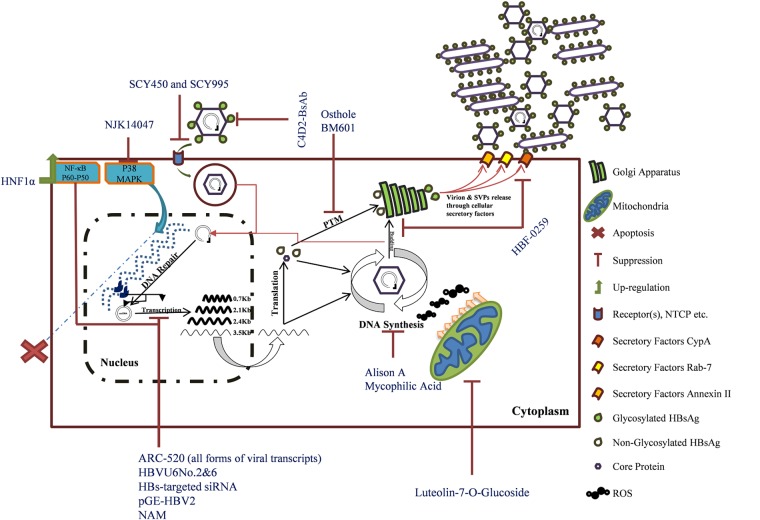
Current anti-hepatitis B virus (HBV) regimen do not meet ideal result due to emerging resistance strains, cytotoxicity, and unfavorable adverse effects. In chronic HBV infection, high rates of sub-viral particles (SVPs) bearing HBV surface antigen (HBsAg) is a major obstacle regarding to raise effective immune responses and subsequently virus clearance. Development of potent HBsAg secretion inhibitors would provide a better insight into HBV immunopathogenesis and therapy. Investigating new non-toxic HBsAg secretion inhibitors targeting either viral or cellular factors could restore the immune response to remove virally infected hepatocytes after inhibiting SVPs. In this study, we overview several classes of HBV inhibitors with focus on their limitations and advantages over anti-HBsAg secretion potential.
由于出现耐药毒株、细胞毒性以及不良副作用,目前的抗乙型肝炎病毒(HBV)治疗方案未达到理想效果。在慢性HBV感染中,携带HBV表面抗原(HBsAg)的亚病毒颗粒(SVP)的高发生率是提高有效免疫反应及随后病毒清除的主要障碍。开发有效的HBsAg分泌抑制剂将为HBV免疫发病机制和治疗提供更好的见解。研究针对病毒或细胞因子的新型无毒HBsAg分泌抑制剂,在抑制SVP后可恢复免疫反应以清除病毒感染的肝细胞。在本研究中,我们概述了几类HBV抑制剂,重点关注它们在抗HBsAg分泌潜力方面的局限性和优势。