Institute of Biomaterials and Biomedical Engineering, University of Toronto, Toronto, Ontario, Canada.
Centre for Commercialization of Regenerative Medicine, Toronto, Ontario, Canada.
Biotechnol Bioeng. 2018 Aug;115(8):2061-2066. doi: 10.1002/bit.26719. Epub 2018 May 1.
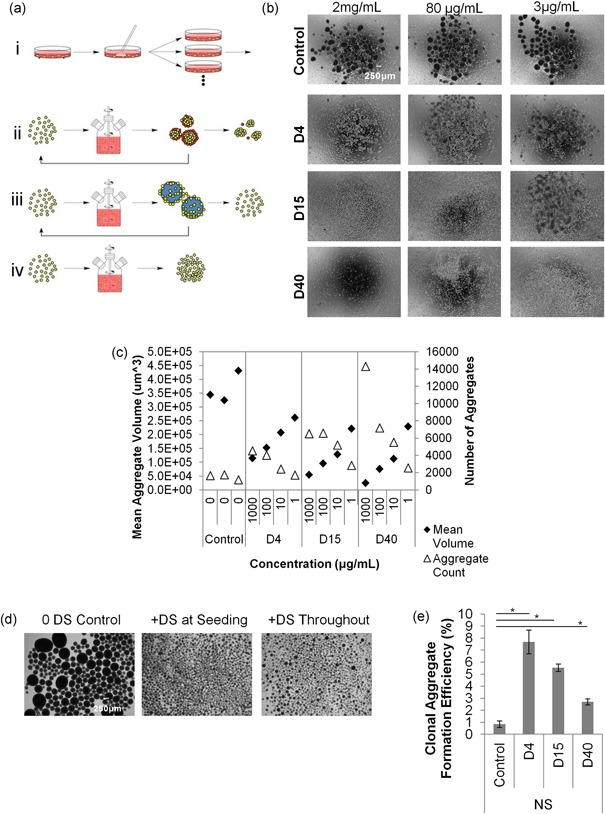
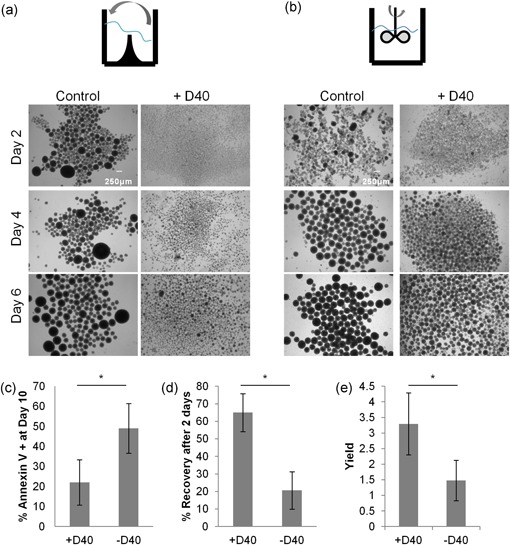
Heterogeneity in pluripotent stem cell (PSC) aggregation leads to variability in mass transfer and signaling gradients between aggregates, which results in heterogeneous differentiation and therefore variability in product quality and yield. We have characterized a chemical-based method to control aggregate size within a specific, tunable range with low heterogeneity, thereby reducing process variability in PSC expansion. This method enables controlled, scalable, stirred suspension-based manufacturing of PSC cultures that are critical for the translation of regenerative medicine strategies to clinical products.
多能干细胞(PSC)聚集的异质性导致聚集体之间的传质和信号梯度存在差异,从而导致分化不均匀,因此产品质量和产量存在差异。我们已经描述了一种基于化学的方法,可以在特定的、可调节的范围内控制聚集体的大小,同时保持低异质性,从而降低 PSC 扩增过程中的变异性。这种方法可以实现基于搅拌悬浮的 PSC 培养物的可控、可扩展的规模化生产,这对于将再生医学策略转化为临床产品至关重要。