Department of Epidemiology & Biostatistics, University of Zambia School of Public Health, Lusaka, Zambia.
Department of Epidemiology & Biostatistics, University of Zambia School of Public Health, Lusaka, Zambia; University of Zambia, Strategic Centre for Health Systems Metrics & Evaluations (SCHEME), School of Public Health, Lusaka, Zambia.
Int J Infect Dis. 2018 Jun;71:73-81. doi: 10.1016/j.ijid.2018.03.020. Epub 2018 Apr 20.
Environmental enteropathy is prevalent in low-income countries, although its aetiology is unknown. We investigated if Mycobacterium avium antigens, which are commonly found in the environment, could contribute to its pathogenesis in a population known to have widespread environmental enteropathy.
Routine endoscopy patients at the University Teaching Hospital, Lusaka whose endoscopy results were normal submitted duodenal biopsies and whole blood samples. Samples were stimulated with M. avium lysate over 24h while unstimulated samples served as negative controls. Matrix metalloproteinase (MMP) and cytokine response in supernatants were quantified using ELISA and cytometric bead array.
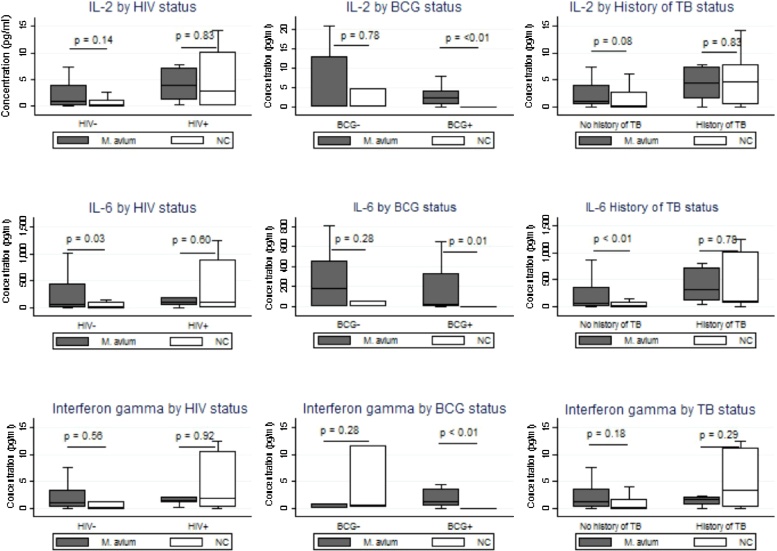
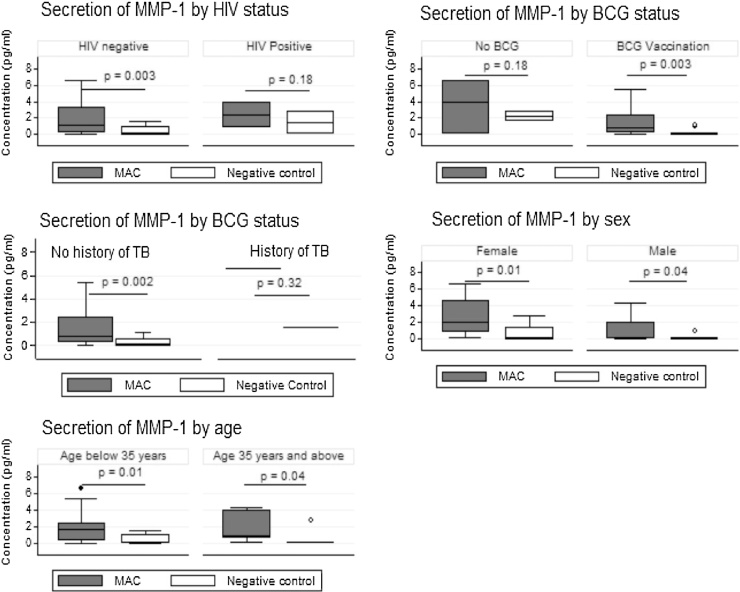
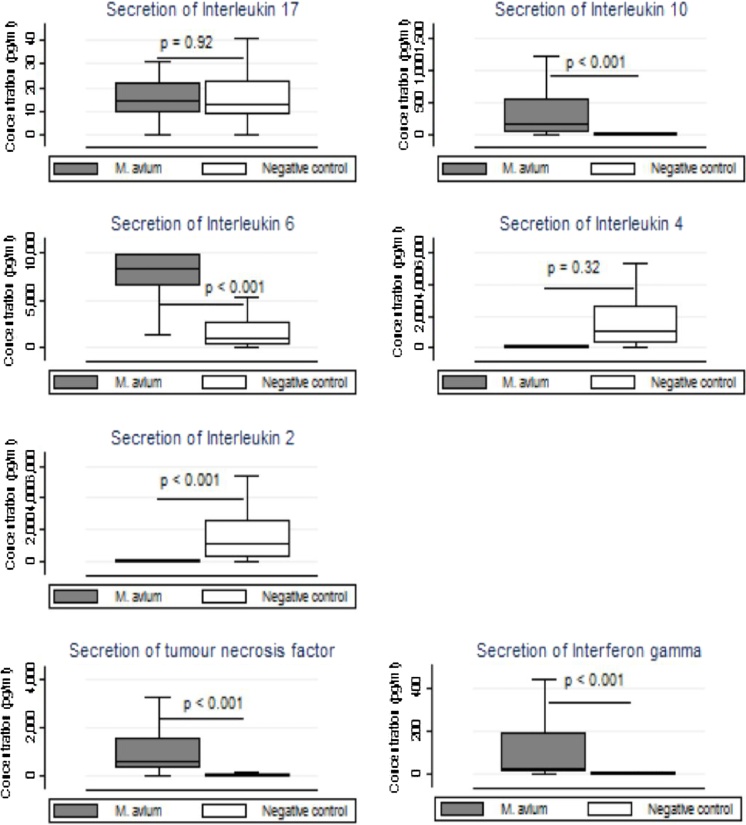
Samples from 48 patients (56% women) were analysed, with a median age of 35 years (IQR 27.5, 50.5). M. avium induced the secretion of a wide-range of Th1, Th2 and Th17 cytokines in blood but only IL-1β and IL-6 in duodenal tissue. However it differentially induced the secretion of MMP-1 in duodenal tissue compared to negative controls (p=0.004). A similar MMP-1 response but with lower concentrations was observed in blood.
The induction of MMP-1 and cytokines by M. avium in duodenal tissue suggests that environmental mycobacteria could contribute to the epithelial disruption seen in environmental enteropathy, and a need to further explore possible biomarkers that may predict this exposure in at-risk populations.
环境肠病在低收入国家很普遍,但其病因尚不清楚。我们研究了环境中常见的鸟分枝杆菌抗原是否会导致已知广泛存在环境肠病的人群发病。
卢萨卡教学医院接受常规内镜检查的患者,其内镜检查结果正常,提交十二指肠活检和全血样本。样本在 24 小时内用鸟分枝杆菌裂解物刺激,未刺激的样本作为阴性对照。使用 ELISA 和流式细胞术检测上清液中基质金属蛋白酶(MMP)和细胞因子的反应。
分析了 48 名患者(56%为女性)的样本,中位年龄为 35 岁(IQR 27.5,50.5)。鸟分枝杆菌在血液中诱导产生广泛的 Th1、Th2 和 Th17 细胞因子,但在十二指肠组织中仅诱导产生 IL-1β 和 IL-6。然而,与阴性对照相比,它在十二指肠组织中诱导 MMP-1 的分泌存在差异(p=0.004)。在血液中观察到类似的 MMP-1 反应,但浓度较低。
鸟分枝杆菌在十二指肠组织中诱导 MMP-1 和细胞因子的产生表明,环境分枝杆菌可能导致环境肠病中观察到的上皮破坏,需要进一步探索可能预测这种高危人群暴露的生物标志物。