Du Xiaocui, Huang Qin, Guan Yun, Lv Ming, He Xiaofang, Fang Chongye, Wang Xuanjun, Sheng Jun
Key Laboratory of Pu-erh Tea Science, Ministry of Education, Yunnan Agricultural University, Kunming, China.
Tea Research Center of Yunnan, Kunming, China.
Front Pharmacol. 2018 Apr 6;9:321. doi: 10.3389/fphar.2018.00321. eCollection 2018.
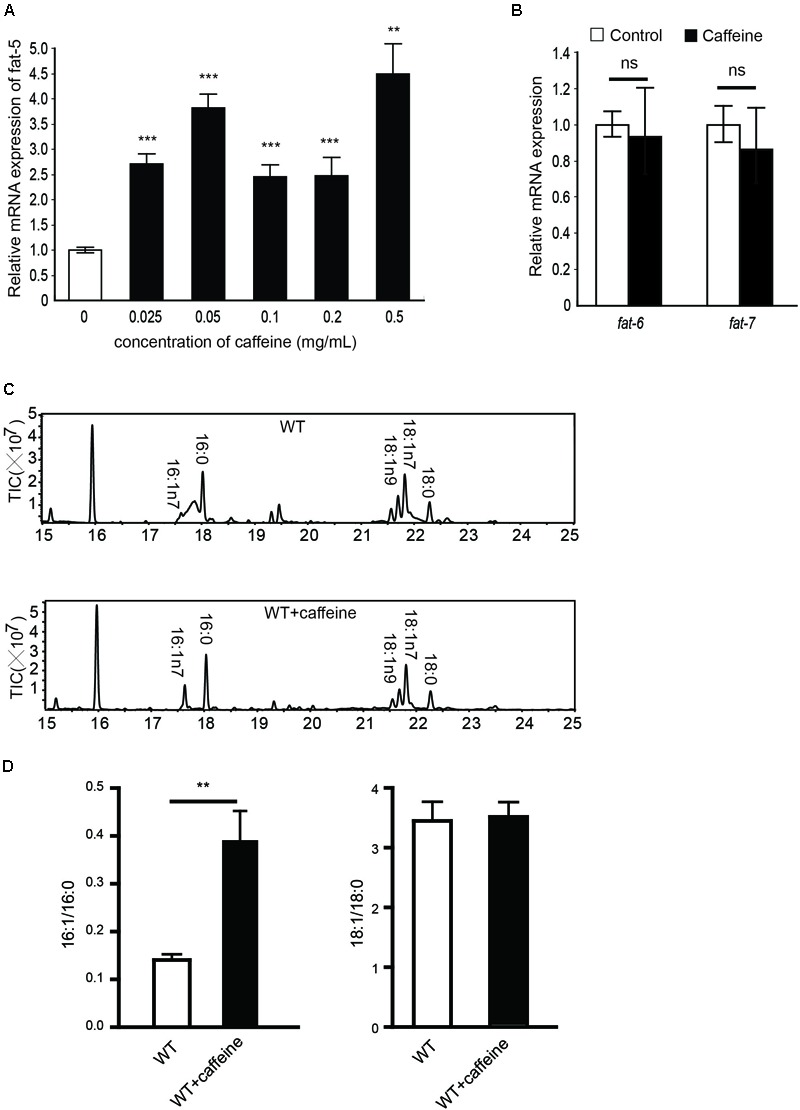
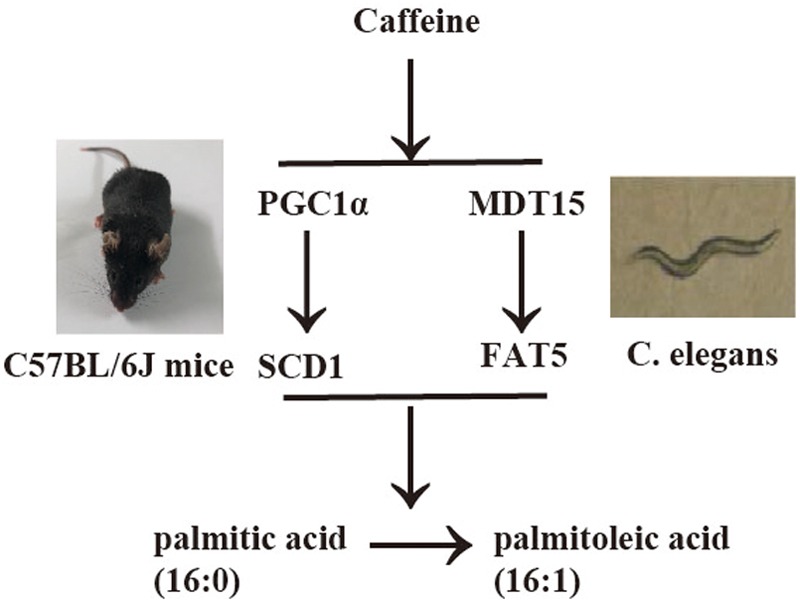
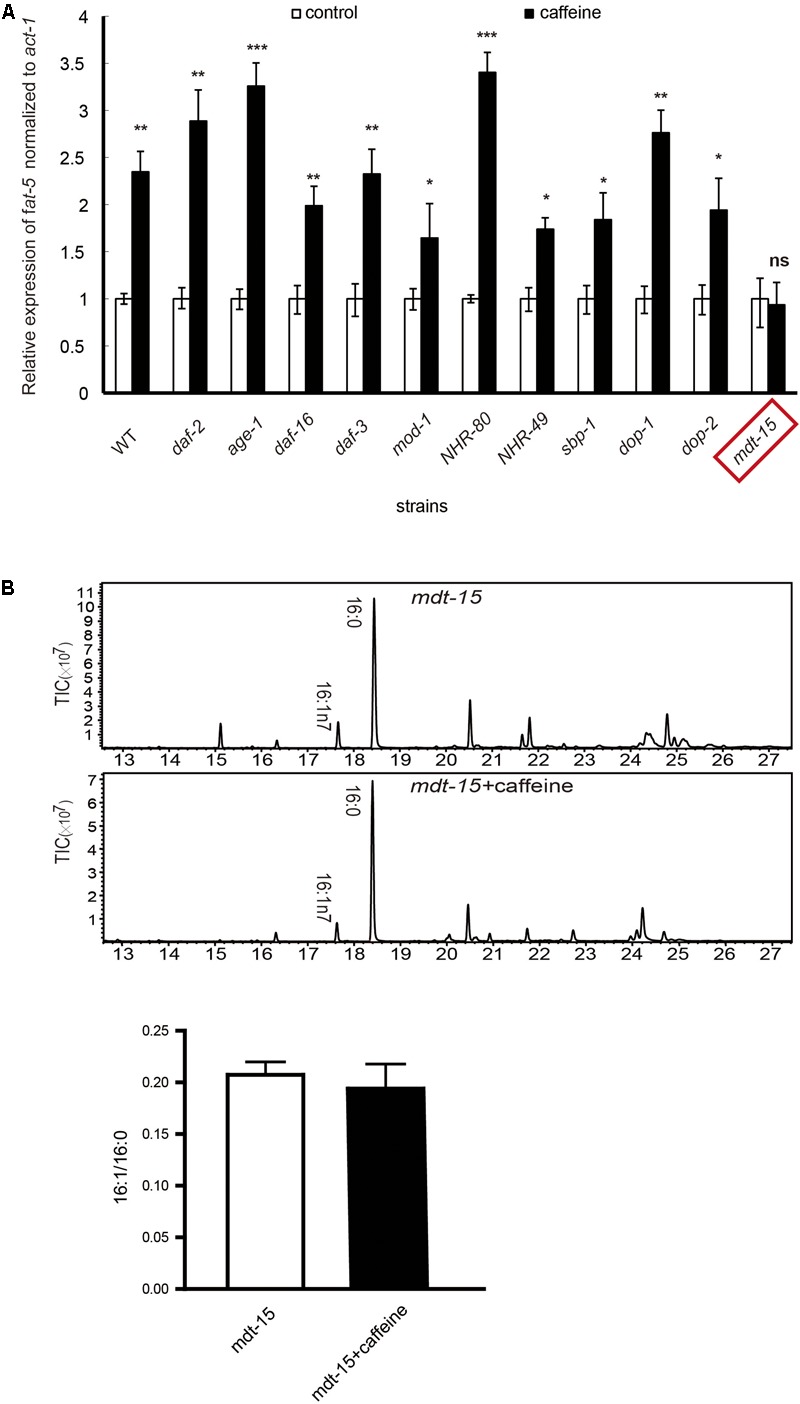
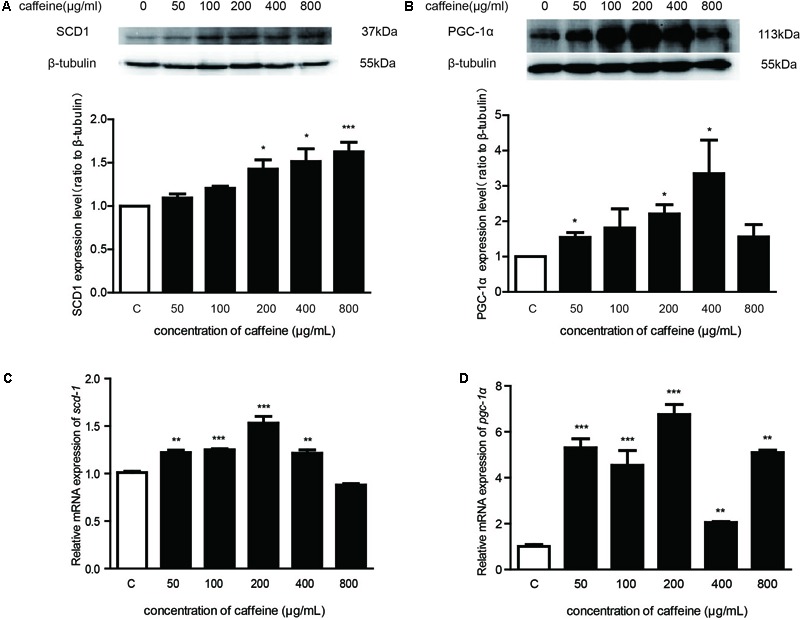
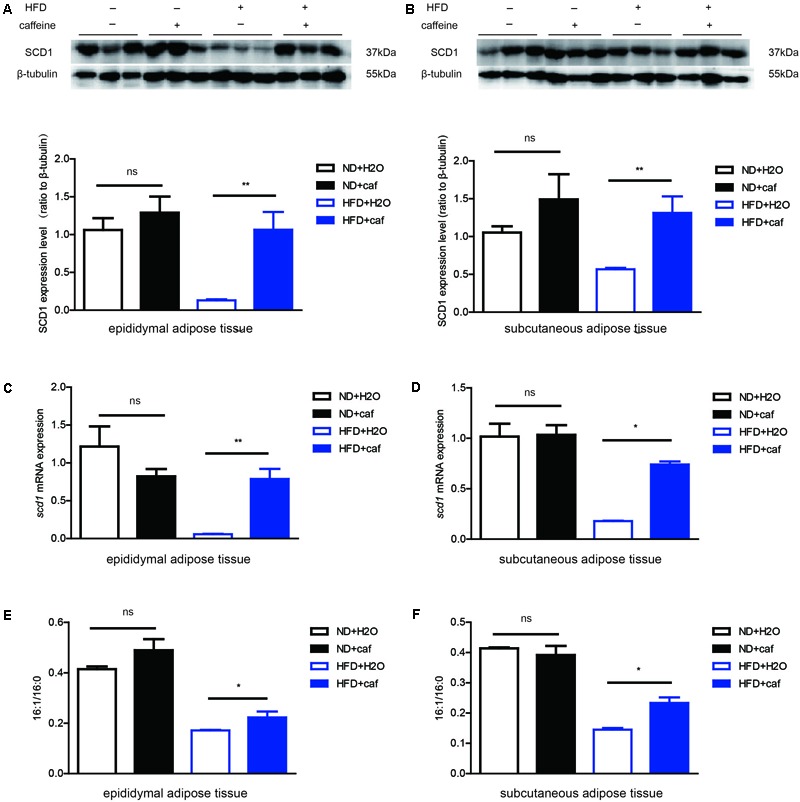
The synthesis and metabolism of fatty acids in an organism is related to many biological processes and is involved in several diseases. The effects of caffeine on fatty acid synthesis and fat storage in and mice were studied. After 6 h of food deprivation, adult were treated with 0.1 mg/mL caffeine for 24 h. Quantitative reverse-transcription polymerase chain reaction showed that, among all the genes involved in fat accumulation, the mRNA expression of in caffeine-treated was significantly higher than that of controls, whereas and displayed no significant difference. Gas chromatography-mass spectrometry was used to verify the fatty acid composition of . Results showed that the ratio of palmitoleic acid (16:1) to that of palmitic acid (16:0) was higher in the caffeine-treated group. Several mutant strains, including those involved in the insulin-like growth factor-1, dopamine, and serotonin pathways, and nuclear hormone receptors (), were used to assess their necessity to the effects of caffeine. We found that was essential for the effects of caffeine, which was independent of and -80. Caffeine may increase expression by acting on . In high fat diet (HFD), but not in normal diet (ND) mice, caffeine induced expression of in both subcutaneous and epididymal white adipose tissue, which was consistent with the palmitoleic/palmitic ratio results by gas chromatograph analysis. In mature adipocytes, caffeine treatment induced both mRNA and protein expression of and α. Overall, our results provided a possible mechanism on how caffeine modulates metabolism homeostasis .
生物体中脂肪酸的合成与代谢与许多生物过程相关,并涉及多种疾病。研究了咖啡因对大鼠和小鼠脂肪酸合成及脂肪储存的影响。成年大鼠在禁食6小时后,用0.1mg/mL咖啡因处理24小时。定量逆转录聚合酶链反应显示,在所有参与脂肪积累的基因中,咖啡因处理组大鼠中某基因的mRNA表达显著高于对照组,而另外两个基因则无显著差异。采用气相色谱-质谱联用技术验证大鼠的脂肪酸组成。结果表明,咖啡因处理组中棕榈油酸(16:1)与棕榈酸(16:0)的比例更高。使用了几种突变株,包括那些参与胰岛素样生长因子-1、多巴胺和血清素途径以及核激素受体的突变株,来评估它们对咖啡因作用的必要性。我们发现某基因对于咖啡因的作用至关重要,且该作用独立于另外两个基因及-80。咖啡因可能通过作用于某基因来增加另一基因的表达。在高脂饮食(HFD)小鼠而非正常饮食(ND)小鼠中,咖啡因诱导皮下和附睾白色脂肪组织中某基因的表达,这与气相色谱分析得出的棕榈油酸/棕榈酸比例结果一致。在成熟脂肪细胞中,咖啡因处理诱导了某基因和α蛋白的mRNA及蛋白表达。总体而言,我们的结果为咖啡因如何调节代谢稳态提供了一种可能的机制。