Department of Biochemistry, School of Biomedical Sciences, University of Otago, Dunedin, New Zealand.
Nucleic Acids Res. 2018 May 18;46(9):4575-4591. doi: 10.1093/nar/gky282.
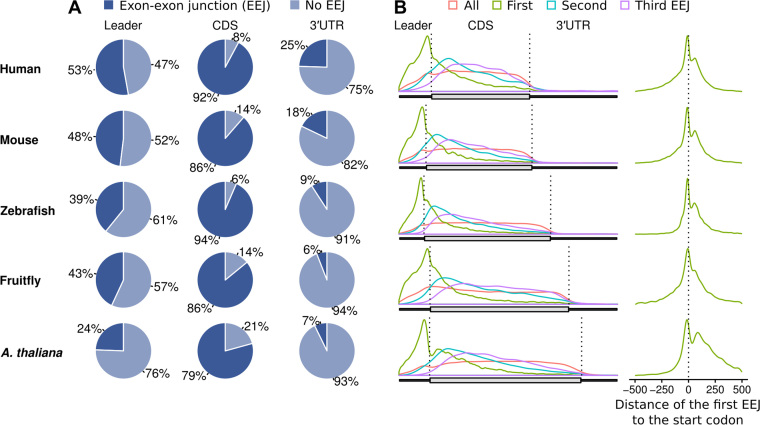
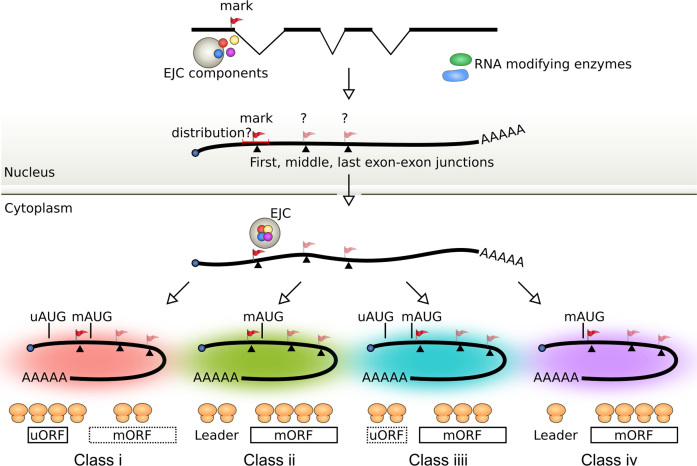
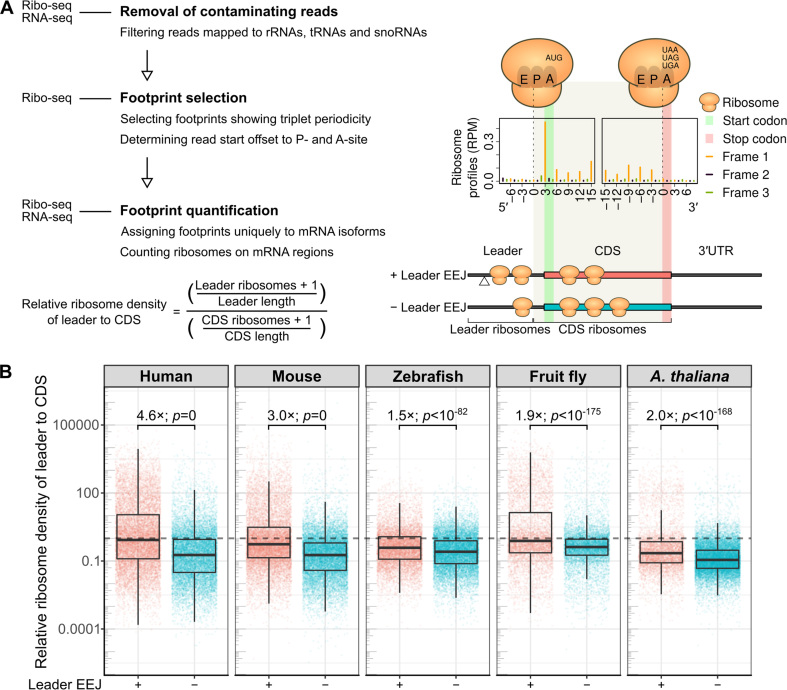
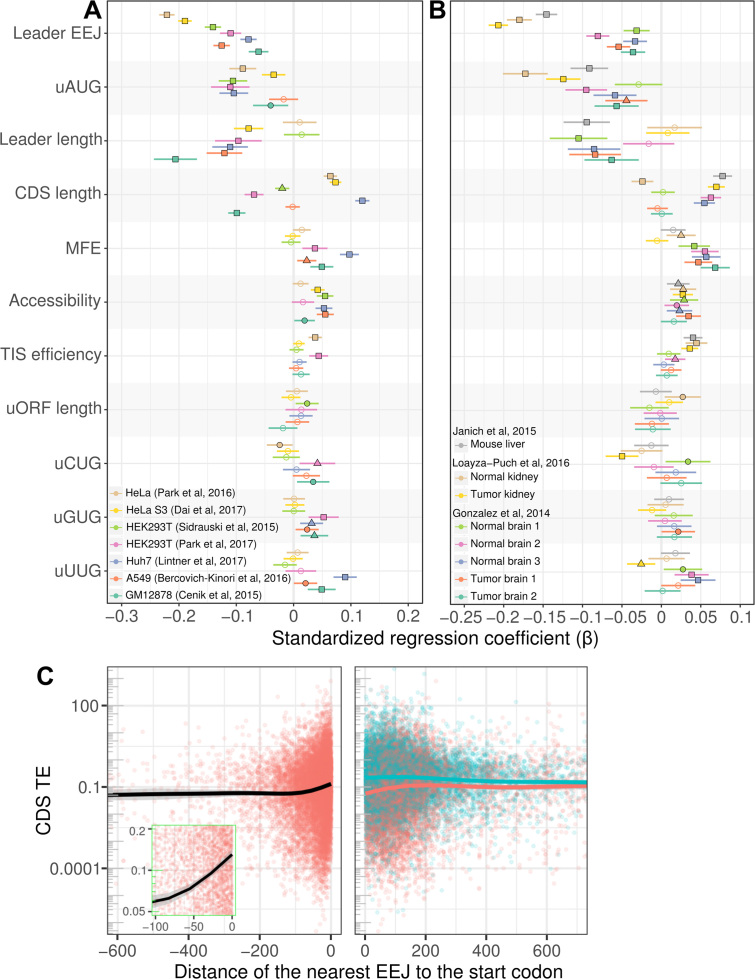
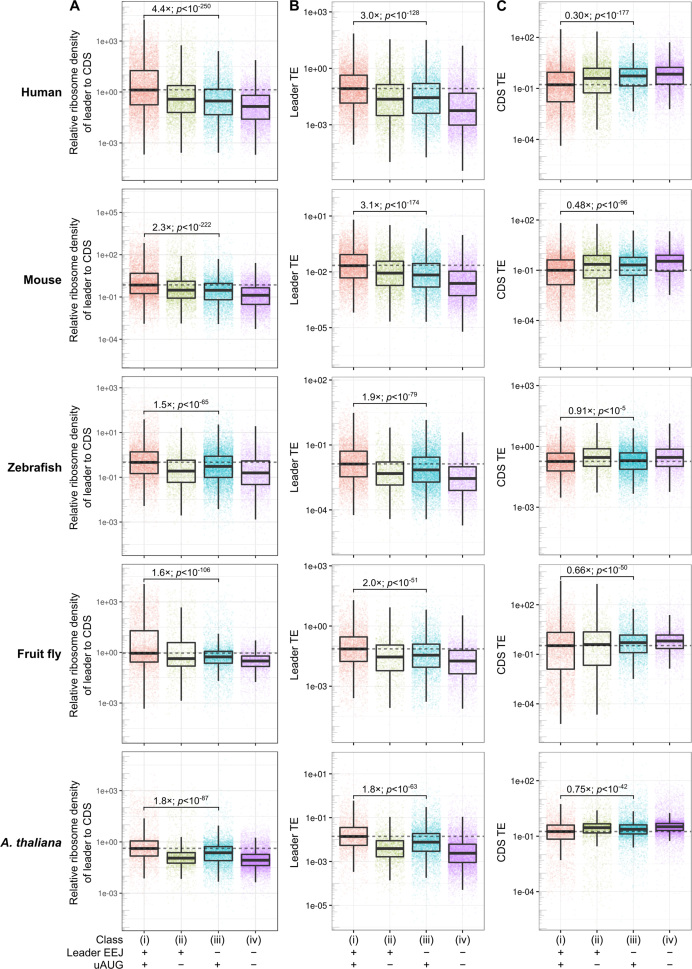
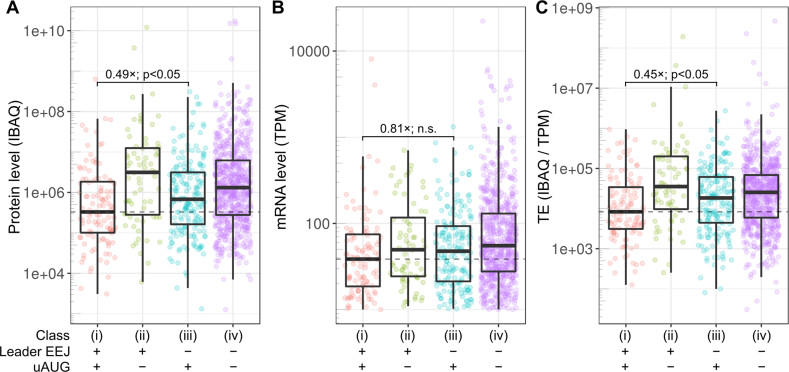
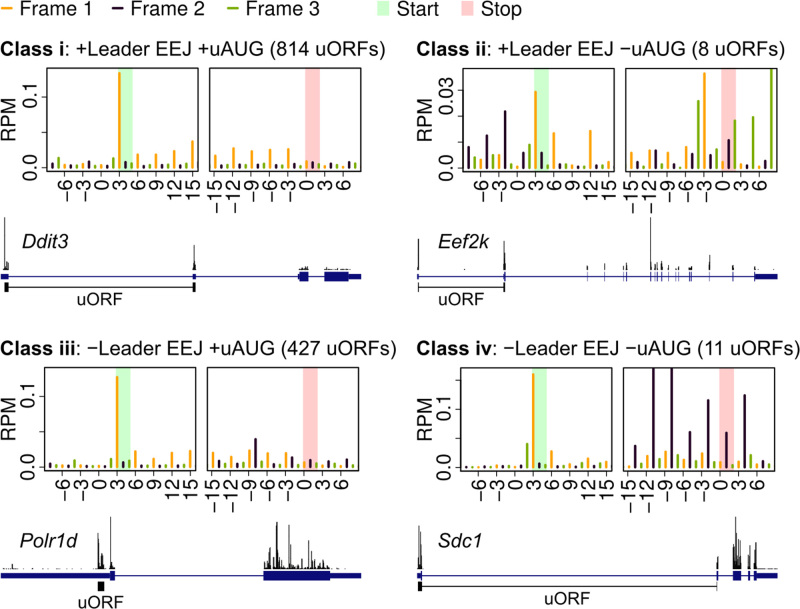
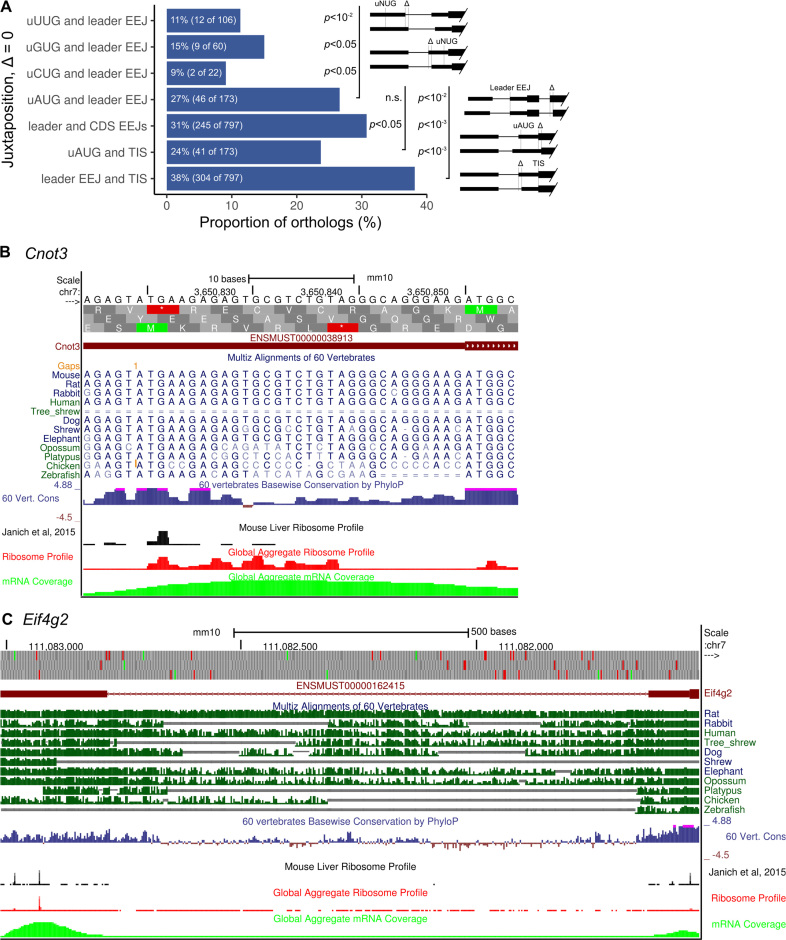
Introns in mRNA leaders are common in complex eukaryotes, but often overlooked. These introns are spliced out before translation, leaving exon-exon junctions in the mRNA leaders (leader EEJs). Our multi-omic approach shows that the number of leader EEJs inversely correlates with the main protein translation, as does the number of upstream open reading frames (uORFs). Across the five species studied, the lowest levels of translation were observed for mRNAs with both leader EEJs and uORFs (29%). This class of mRNAs also have ribosome footprints on uORFs, with strong triplet periodicity indicating uORF translation. Furthermore, the positions of both leader EEJ and uORF are conserved between human and mouse. Thus, the uORF, in combination with leader EEJ predicts lower expression for nearly one-third of eukaryotic proteins.
mRNA 前导区的内含子在复杂真核生物中很常见,但往往被忽视。这些内含子在翻译前被剪接,在前导 mRNA 中留下外显子-外显子连接(前导 EEJ)。我们的多组学方法表明,前导 EEJ 的数量与主蛋白翻译呈负相关,上游开放阅读框(uORF)的数量也是如此。在研究的五个物种中,前导 EEJ 和 uORF 都存在的 mRNA 的翻译水平最低(29%)。这类 mRNA 在 uORF 上也有核糖体足迹,三联体周期性强表明 uORF 翻译。此外,人类和小鼠之间前导 EEJ 和 uORF 的位置是保守的。因此,uORF 与前导 EEJ 一起预测了近三分之一真核蛋白的低表达。