Hirschberger Kristin, Jarzebinska Anita, Kessel Eva, Kretzschmann Verena, Aneja Manish K, Dohmen Christian, Herrmann-Janson Annika, Wagner Ernst, Plank Christian, Rudolph Carsten
Ethris GmbH, Planegg 82152, Germany.
Pharmaceutical Biotechnology, Department of Pharmacy, Ludwig-Maximilians-Universität München, Munich 81377, Germany.
Mol Ther Methods Clin Dev. 2017 Dec 24;8:141-151. doi: 10.1016/j.omtm.2017.12.006. eCollection 2018 Mar 16.
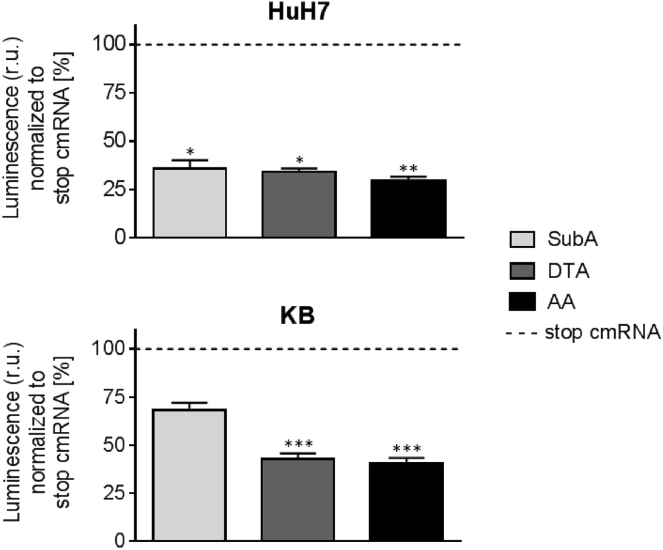
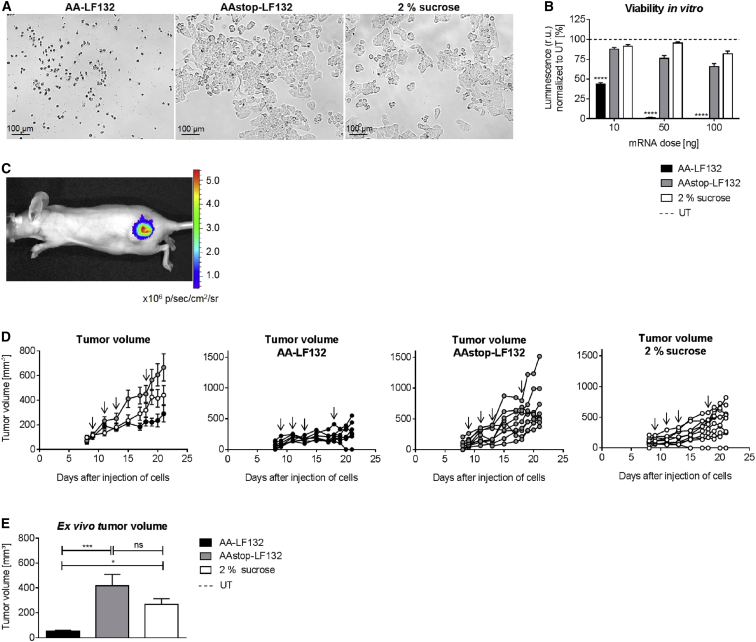
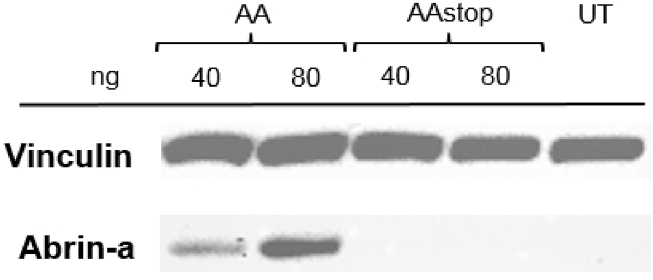
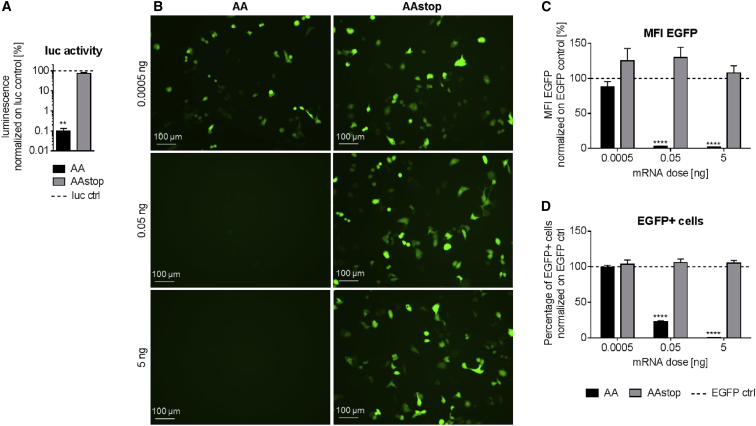
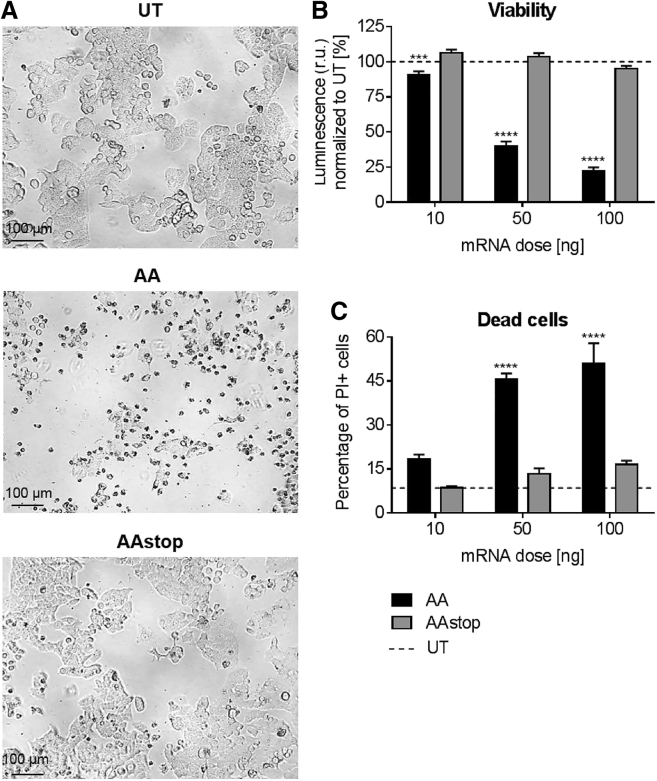
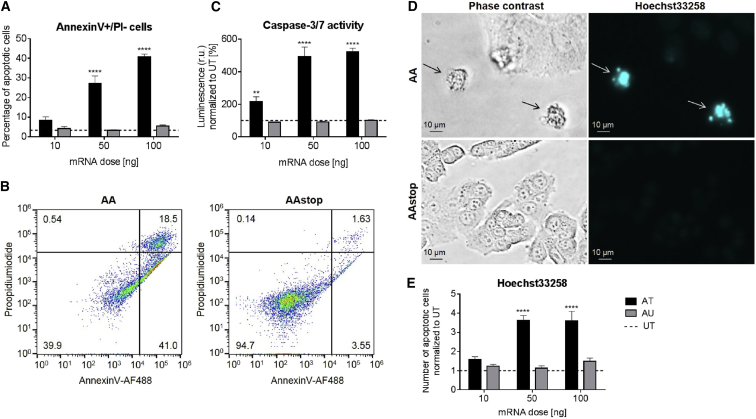
New treatments to overcome the obstacles of conventional anti-cancer therapy are a permanent subject of investigation. One promising approach is the application of toxins linked to cell-specific ligands, so-called immunotoxins. Another attractive option is the employment of toxin-encoding plasmids. However, immunotoxins cause hepatoxicity, and DNA therapeutics, among other disadvantages, bear the risk of insertional mutagenesis. As an alternative, this study examined chemically modified mRNAs coding for diphtheria toxin, subtilase cytotoxin, and abrin-a for their ability to reduce cancer cell growth both and . The plant toxin abrin-a was the most promising candidate among the three tested toxins and was further investigated. Its expression was demonstrated by western blot. Experiments with firefly luciferase in reticulocyte lysates and co-transfection experiments with EGFP demonstrated the capability of abrin-a to inhibit protein synthesis. Its cytotoxic effect was quantified employing viability assays and propidium iodide staining. By studying caspase-3/7 activation, Annexin V-binding, and chromatin condensation with Hoechst33258 staining, apoptotic cell death could be confirmed. In mice, repeated intratumoral injections of complexed abrin-a mRNA resulted in a significant reduction (89%) of KB tumor size compared to a non-translatable control mRNA.
克服传统抗癌疗法障碍的新治疗方法一直是研究的热门课题。一种有前景的方法是应用与细胞特异性配体相连的毒素,即所谓的免疫毒素。另一个有吸引力的选择是使用编码毒素的质粒。然而,免疫毒素会导致肝毒性,而DNA疗法除其他缺点外,还存在插入诱变的风险。作为替代方案,本研究检测了编码白喉毒素、枯草杆菌蛋白酶细胞毒素和相思子毒素a的化学修饰mRNA抑制癌细胞生长的能力。在三种测试毒素中,植物毒素相思子毒素a是最有前景的候选物,并对其进行了进一步研究。通过蛋白质免疫印迹法证实了其表达。在网织红细胞裂解物中进行的萤火虫荧光素酶实验以及与增强绿色荧光蛋白的共转染实验证明了相思子毒素a抑制蛋白质合成的能力。采用活力测定法和碘化丙啶染色对其细胞毒性作用进行了定量。通过研究半胱天冬酶-3/7激活、膜联蛋白V结合以及用Hoechst33258染色检测染色质凝聚,证实了细胞凋亡死亡。在小鼠中,与不可翻译的对照mRNA相比,重复瘤内注射复合相思子毒素a mRNA可使KB肿瘤大小显著减小(89%)。