Division of Immunobiology, Cincinnati Children's Hospital Medical Center and Department of Pediatrics, University of Cincinnati College of Medicine, Cincinnati, Ohio.
Division of Gastroenterology, Cincinnati Children's Hospital Medical Center and Department of Pediatrics, University of Cincinnati College of Medicine, Cincinnati, Ohio.
Gastroenterology. 2018 Aug;155(2):501-513. doi: 10.1053/j.gastro.2018.04.017. Epub 2018 Apr 22.
BACKGROUND & AIMS: Intestinal microbiota modulate metabolism and associate closely with epithelial cells in the intestine. In intestinal epithelial cells (IECs), histone deacetylase 3 (HDAC3) integrates microbiota-derived signals to control intestinal homeostasis. We investigated whether HDAC3 in IECs regulates metabolism and the development of obesity in mice.
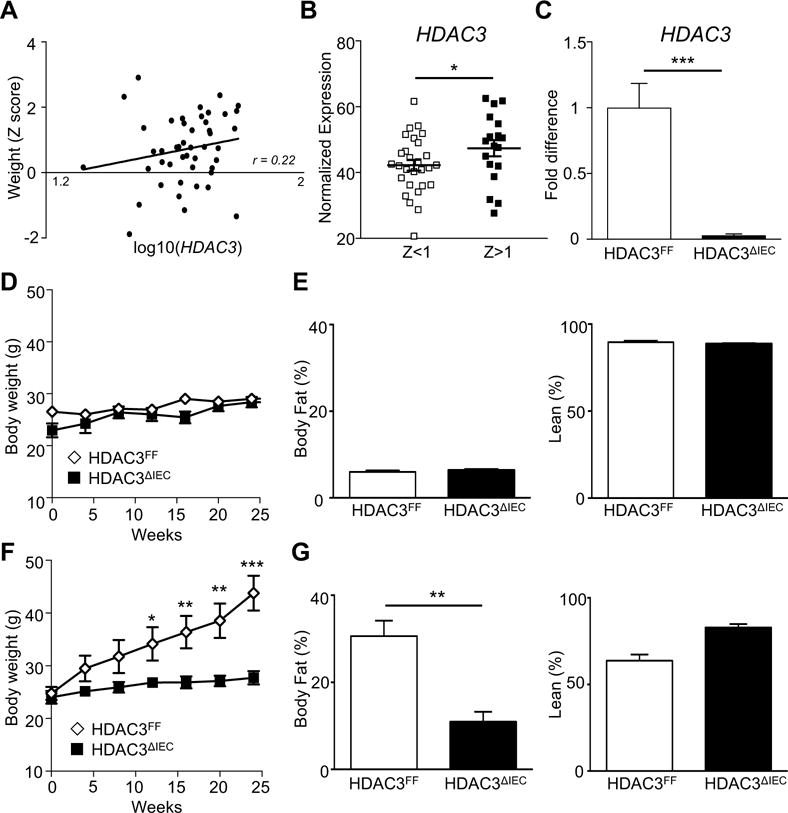
Adult C57BL/6 (control) mice and mice with constitutive or inducible IEC-specific disruption of Hdac3 (HDAC3 mice) were placed on a standard chow or high-fat diet (HFD, 60% kcal from fat). We measured body composition, weight, glucose tolerance, and energy expenditure. IECs were isolated from small intestine and gene expression, and lipid levels were analyzed. HDAC3 levels were determined in 43 pediatric patient ileal biopsy samples and compared with body weight.
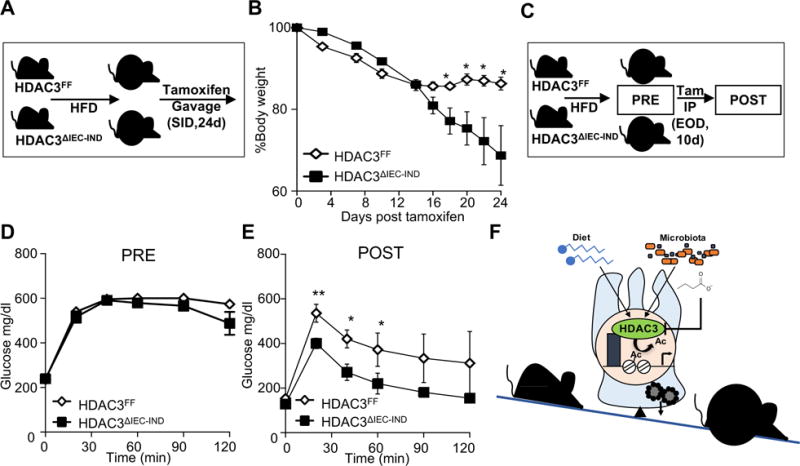
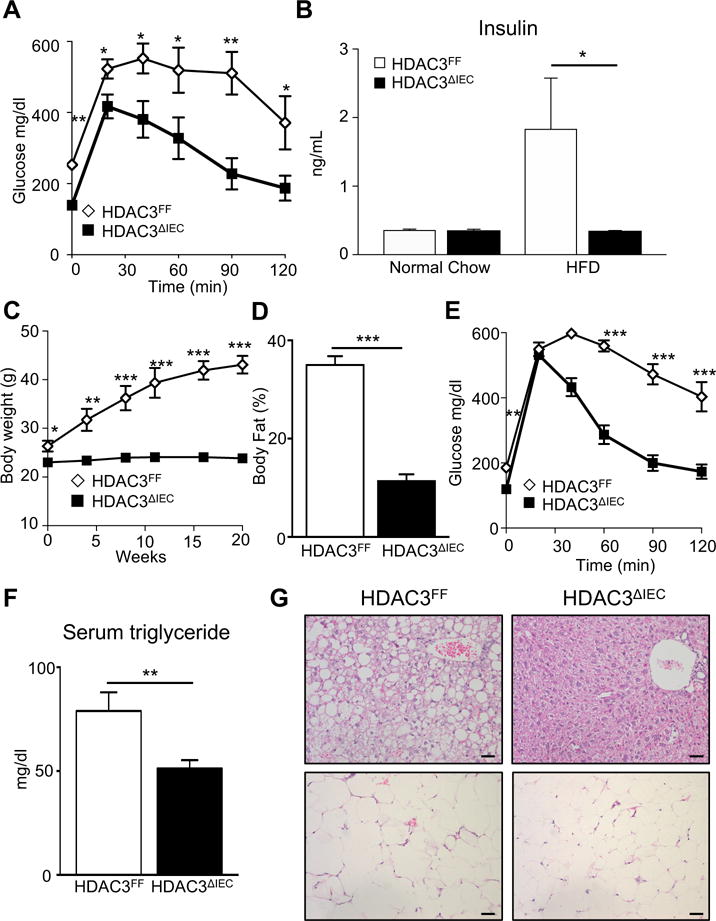
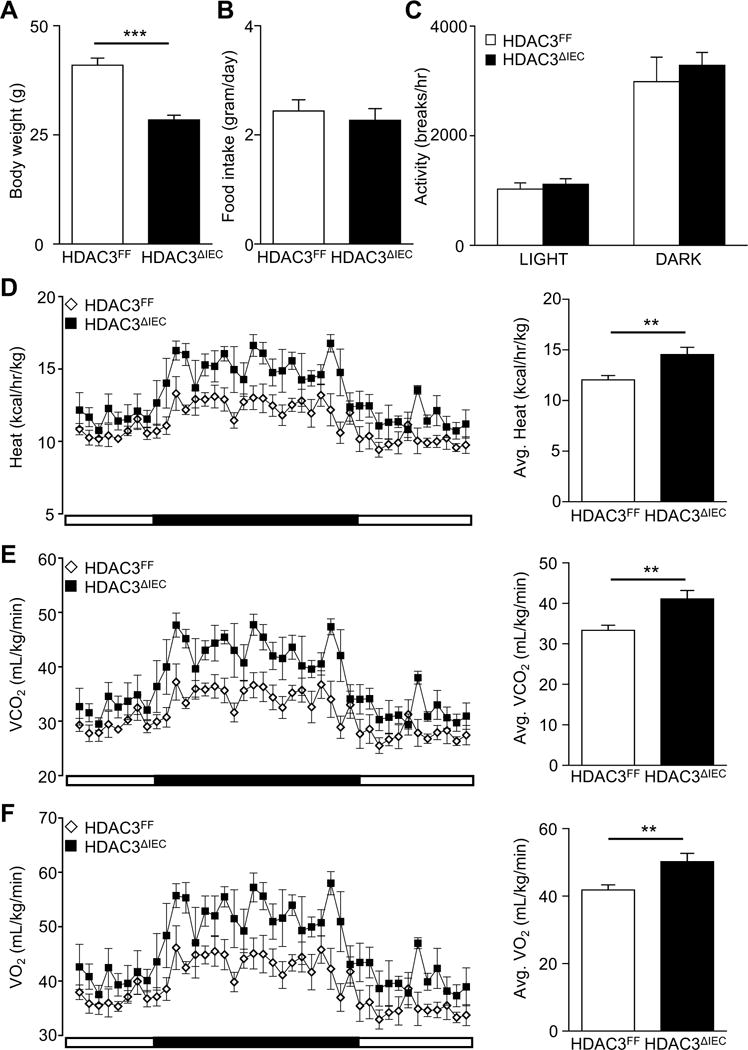
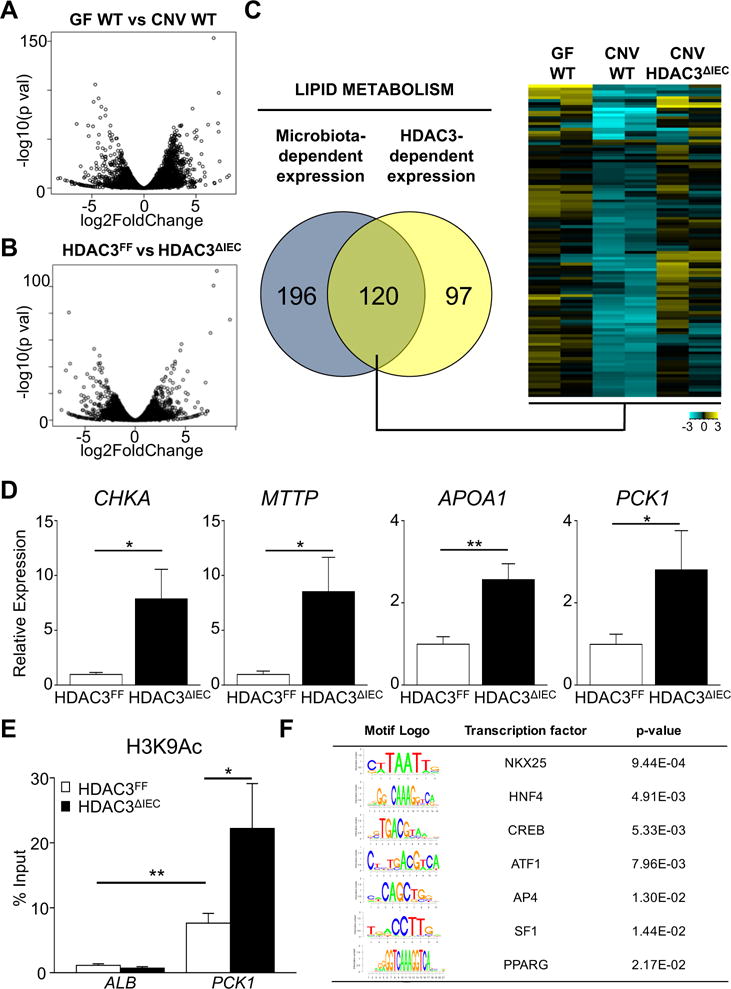
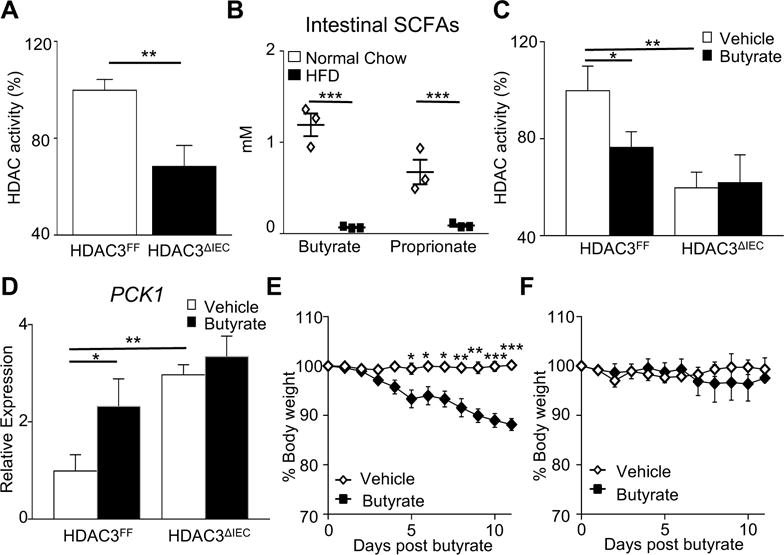
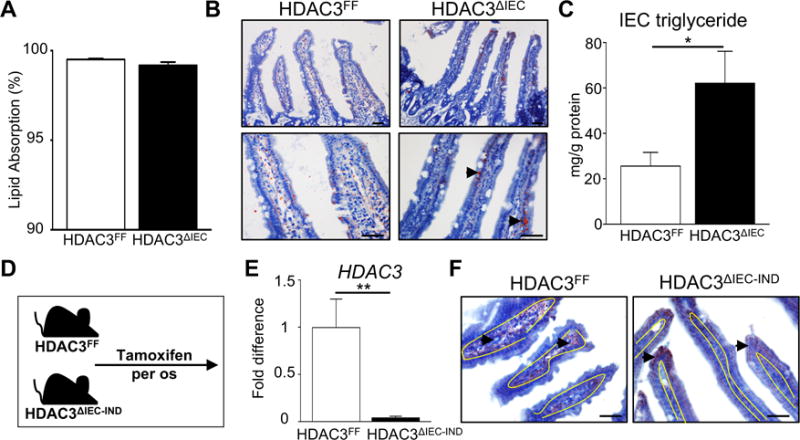
Control mice fed an HFD gained weight, became obese, and had reduced glucose tolerance with increased serum insulin, whereas HFD-fed HDAC3 mice did not develop obesity. Serum levels of triglycerides were reduced in HDAC3 mice, and these mice had less liver fat and smaller adipocytes, compared with HFD-fed control mice. HDAC3 mice had similar food intake and activity as control mice, but higher energy expenditure because of increased catabolism. IECs from HDAC3 mice had altered expression levels of genes that regulate metabolism in response to the microbiota (such as Chka, Mttp, Apoa1, and Pck1) and accumulated triglycerides compared with IECs from control mice. The microbiota-derived short-chain fatty acid butyrate was decreased in obese mice. Butyrate significantly reduced the activity of HDAC3 and increased Pck1 expression in only control IECs. Administration of butyrate to control mice with diet-induced obesity, but not HDAC3 mice, led to significant weight loss. Disruption of HDAC3 in IECs of mice after they became obese led to weight loss and improved metabolic profile. Levels of HDAC3 in intestinal biopsy samples correlated with patient weight.
We found that epithelial HDAC3 promotes development of diet-induced obesity in studies of mice and that butyrate reduces activity of HDAC3 in IECs to prevent diet-induced obesity. This pathway might be manipulated to prevent or reduce obesity-associated disease.
肠道微生物群调节代谢,并与肠道中的上皮细胞密切相关。在肠道上皮细胞(IEC)中,组蛋白去乙酰化酶 3(HDAC3)整合微生物群衍生的信号,以控制肠道稳态。我们研究了 IEC 中的 HDAC3 是否调节代谢和肥胖的发生。
成年 C57BL/6(对照)小鼠和组成型或诱导性 IEC 特异性 Hdac3 敲除(HDAC3 小鼠)的小鼠被置于标准饲料或高脂肪饮食(HFD,脂肪热量占 60%)。我们测量了体成分、体重、葡萄糖耐量和能量消耗。从小肠分离 IEC,并分析基因表达和脂质水平。在 43 例儿科患者回肠活检样本中测定 HDAC3 水平,并与体重进行比较。
给予 HFD 的对照小鼠体重增加、肥胖、葡萄糖耐量降低、血清胰岛素升高,而 HFD 喂养的 HDAC3 小鼠则不会发生肥胖。HDAC3 小鼠的血清甘油三酯水平降低,与 HFD 喂养的对照小鼠相比,肝脏脂肪更少,脂肪细胞更小。HDAC3 小鼠的食物摄入量和活动量与对照小鼠相似,但由于分解代谢增加,能量消耗更高。HDAC3 小鼠的 IEC 对微生物群(如 Chka、Mttp、Apoa1 和 Pck1)调节代谢的基因表达水平发生改变,并与对照小鼠的 IEC 相比积累了更多的甘油三酯。肥胖小鼠的微生物群衍生的短链脂肪酸丁酸减少。丁酸仅能降低对照 IEC 中 HDAC3 的活性并增加 Pck1 的表达。丁酸给药给饮食诱导肥胖的对照小鼠,但不给 HDAC3 小鼠,导致显著的体重减轻。肥胖后在 IEC 中破坏 HDAC3 会导致体重减轻和改善代谢特征。肠活检样本中的 HDAC3 水平与患者体重相关。
我们发现,上皮细胞 HDAC3 在小鼠研究中促进了饮食诱导的肥胖的发展,而丁酸通过降低 IEC 中的 HDAC3 活性来预防饮食诱导的肥胖。该途径可能被操纵以预防或减少肥胖相关疾病。